The Best Things to Do in Uyuni
- Sunset, Stargazing and Sunrise inside the salt flat.
- Taking lots of fun perspective photos.
- Riding bicyles inside the salt flat
- Climbing the Tunupa volcano
- Barbecue inside the salt flat
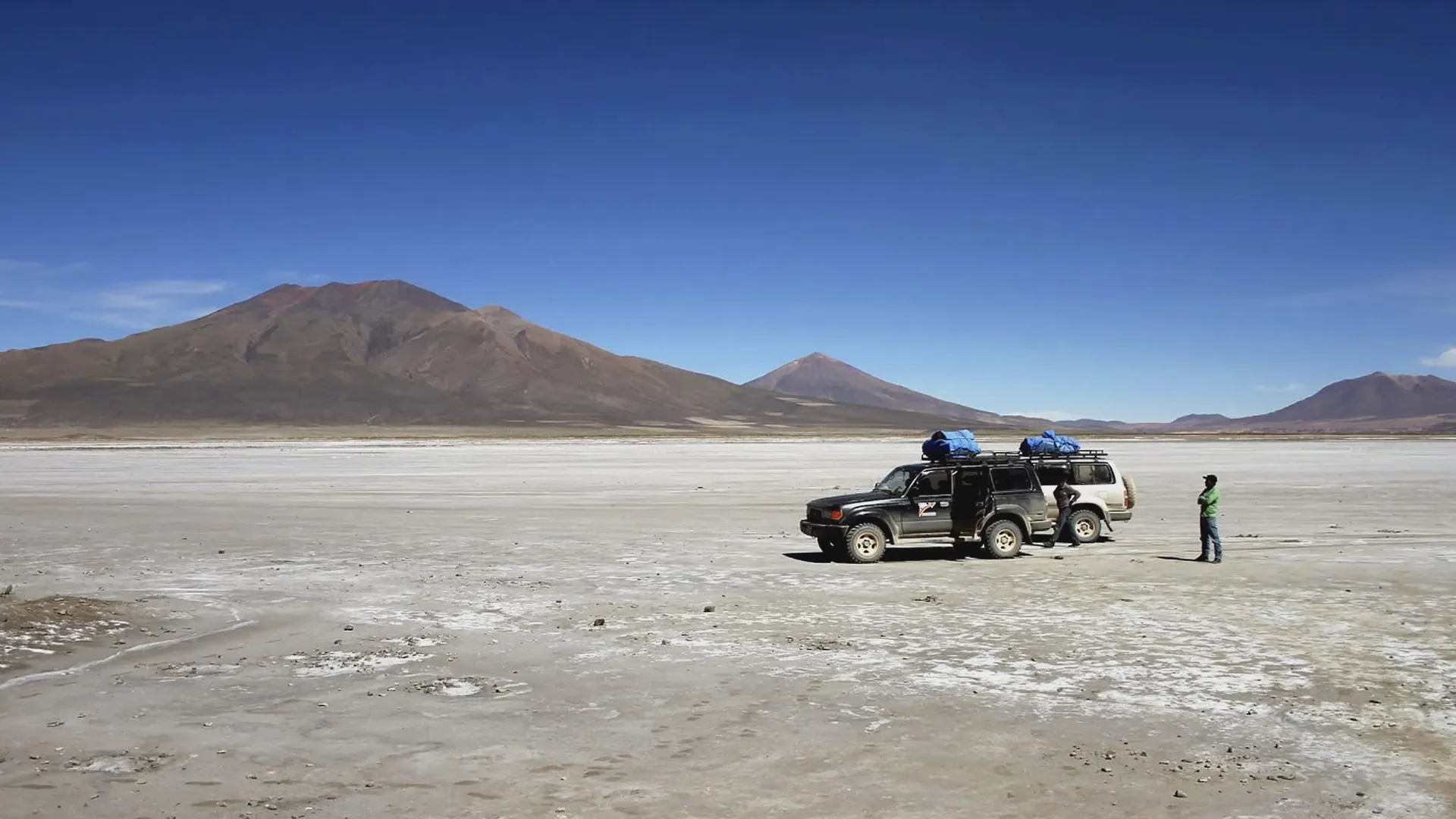
A common mistake made by tourists is to think that the salt flat can be visited in a simple day trip. While there are single-day tours to the Salar de Uyuni as it is locally known, the best way to explore the area and get the most out of your visit is to book a longer, 3 day 2 night tour.
What can I see in Uyuni?
You will find endless rocky deserts, high snowcapped mountains, wonderful colored lagoons teeming with pink, white and grey flamingos, erupting geysers, lakes belching sulfur, dormant and active volcanoes, hot springs where you can take a bath at nearly 5000 meters, cactus covered ancient coral islands, a cemetery for trains, and many more things! Keep reading to find out what attractions are worth visiting!
Tourist Attractions inside or near the Uyuni salt flat:
Salar de Uyuni
The Uyuni Salt Flats (Salar de Uyuni) located at about 3800 meters above sea level amid the Andes in southwest Bolivia, is the largest salt flat in the world. The salt was deposited here after a prehistoric inland ocean dried out, leaving behind a nearly 11000 square kilometer (about 4086 square miles) vast blinding white salt desert up to 120 meters deep. The Uyuni Salt Flat is the most popular tourist attraction in Bolivia, one which must be seen to be believed.
Isla Incahuasi
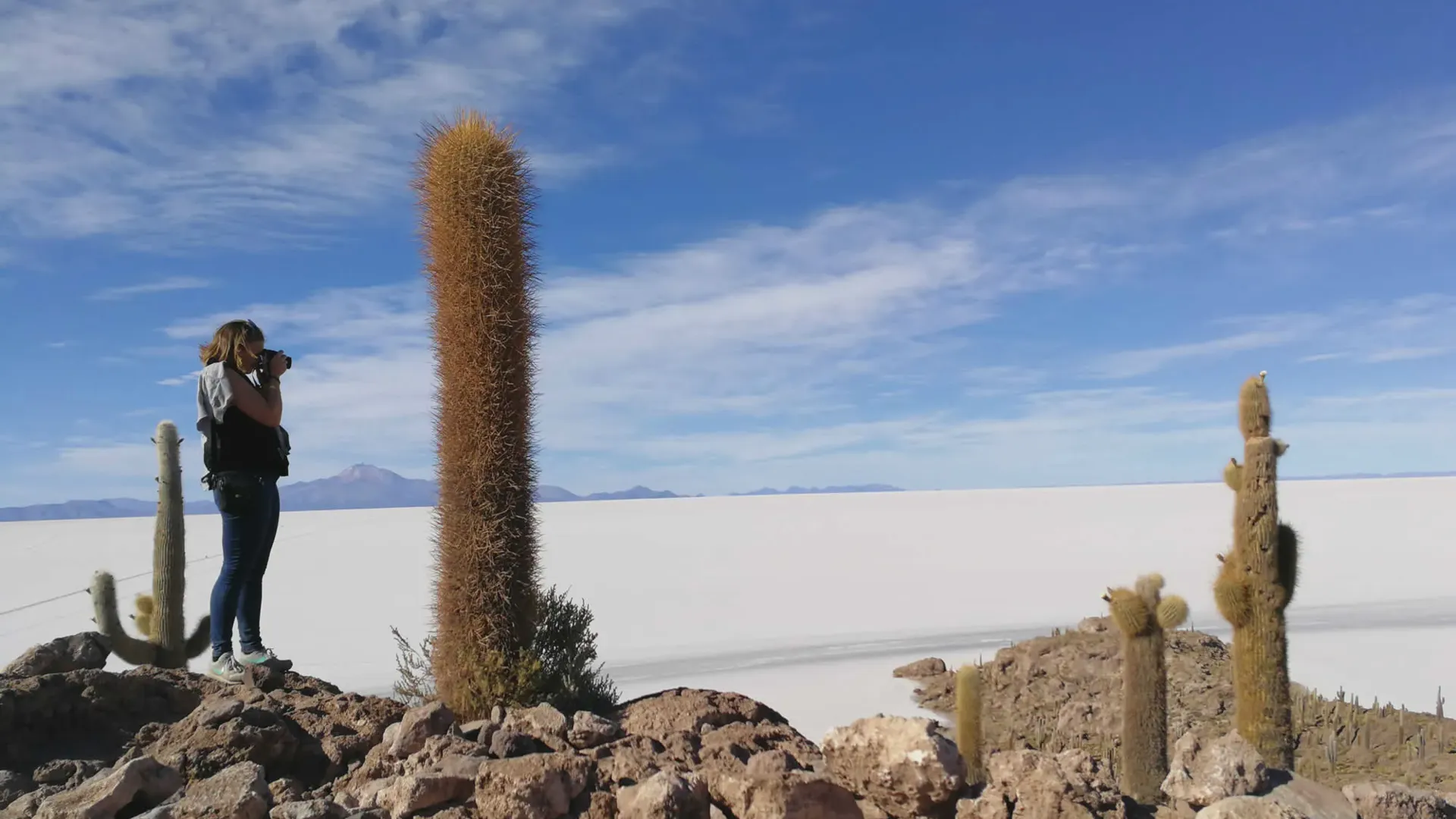
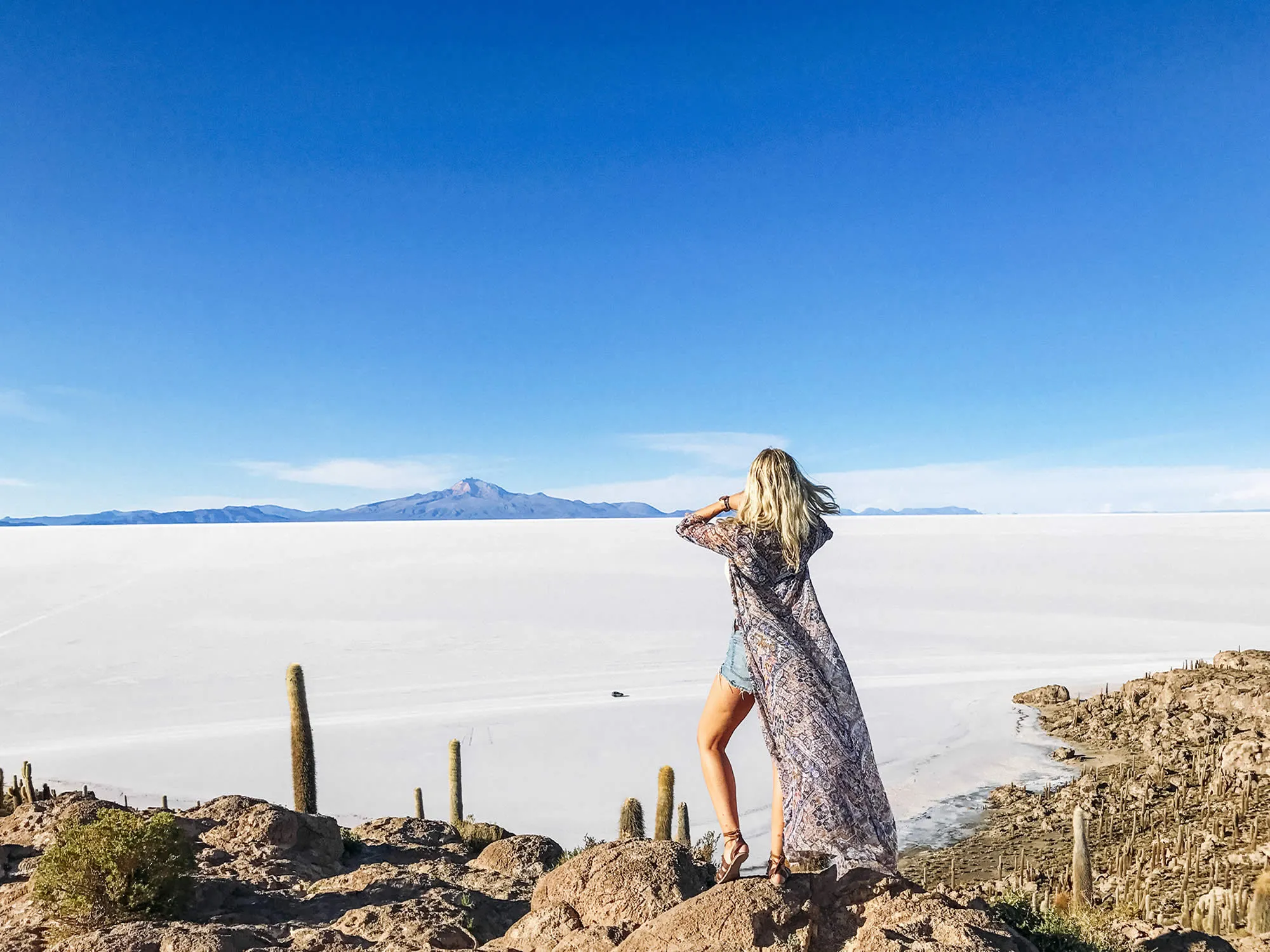
One of the main destinations during the Uyuni tours is the spectacular Isla Incahuasi (Inkawasi or Inka Wasi), an island in a sea of salt covered with giant Trichocereus cacti. It is famous for the spectacular panoramic views of the salt flat surrounding it. Most tour groups have their lunch here and there is also a cafe-restaurant that serves excellent llama stakes!
You can take a 15-minute walk to the top of the island, with a trail that loops back, and it is definitely worth it. At sunrise Isla Incahuasi casts a long shadow over the salar and the island is filled with colors.
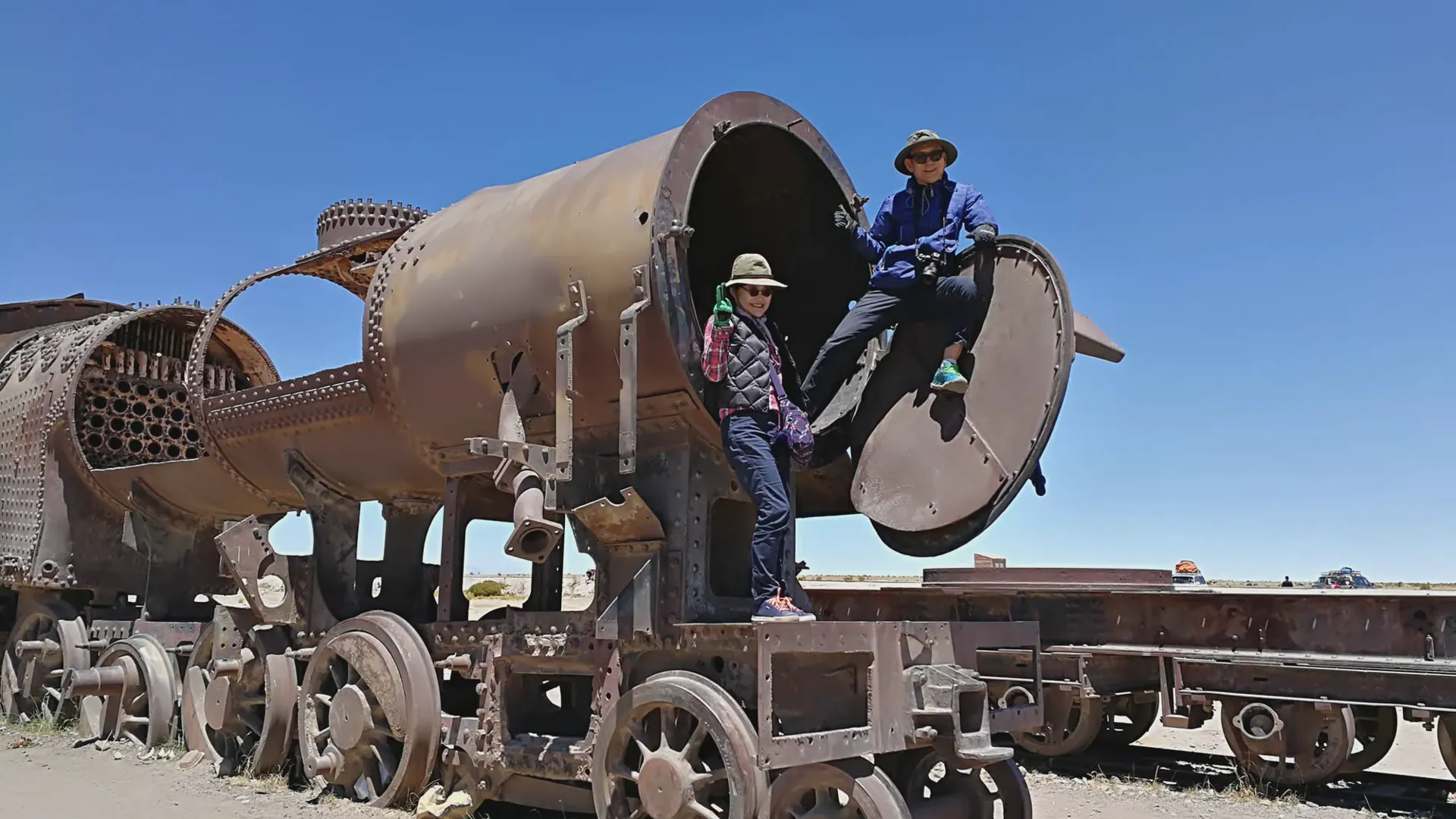
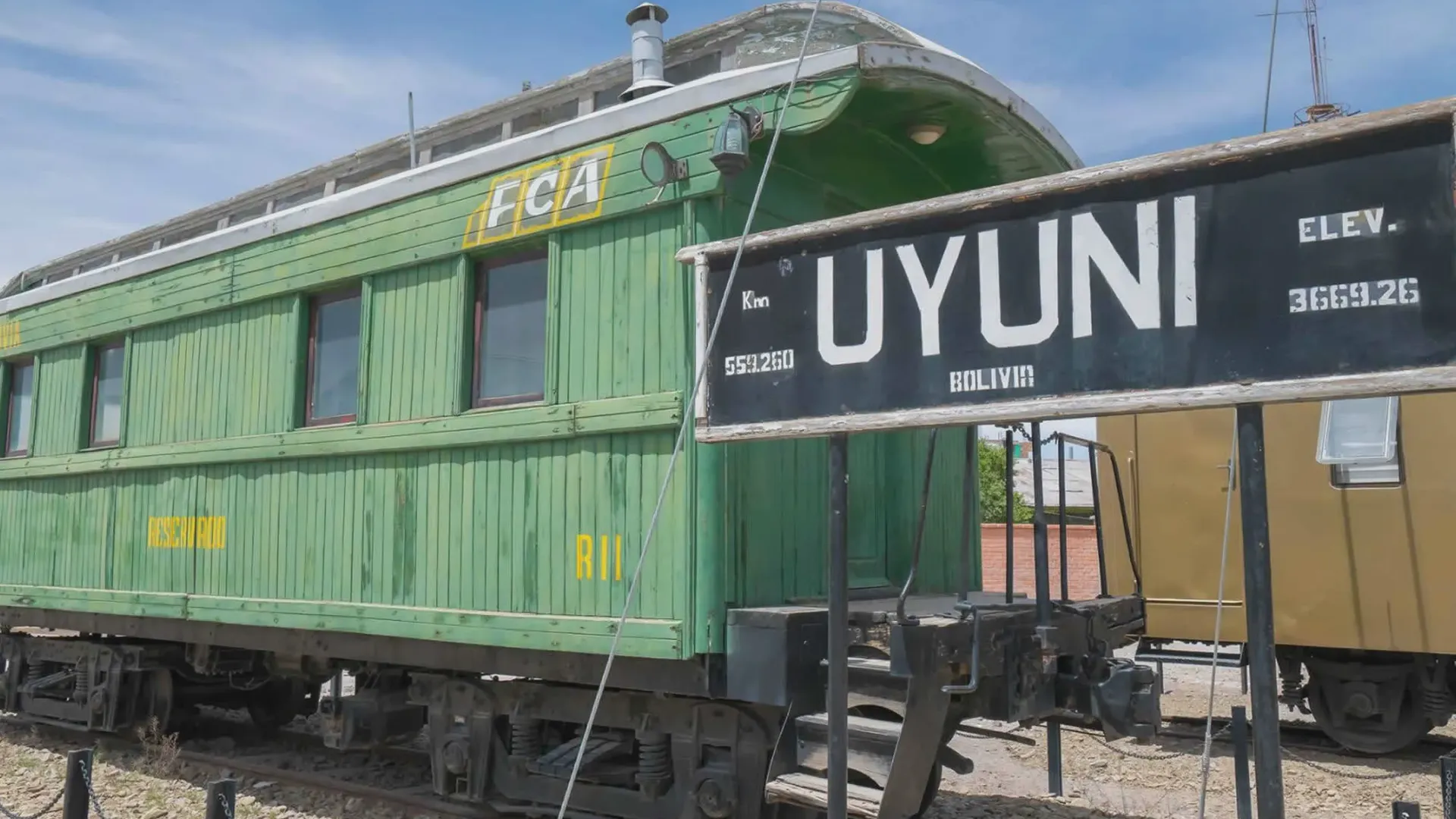
Cementerio de trenes
In the 19th century, big plans were made to build a bigger network of trains out of Uyuni, but the project was abandoned because of difficulties and tension with the indigenous communities. The trains and other equipment were left behind to rust and now serve as a fantastic backdrop for tourist photos.
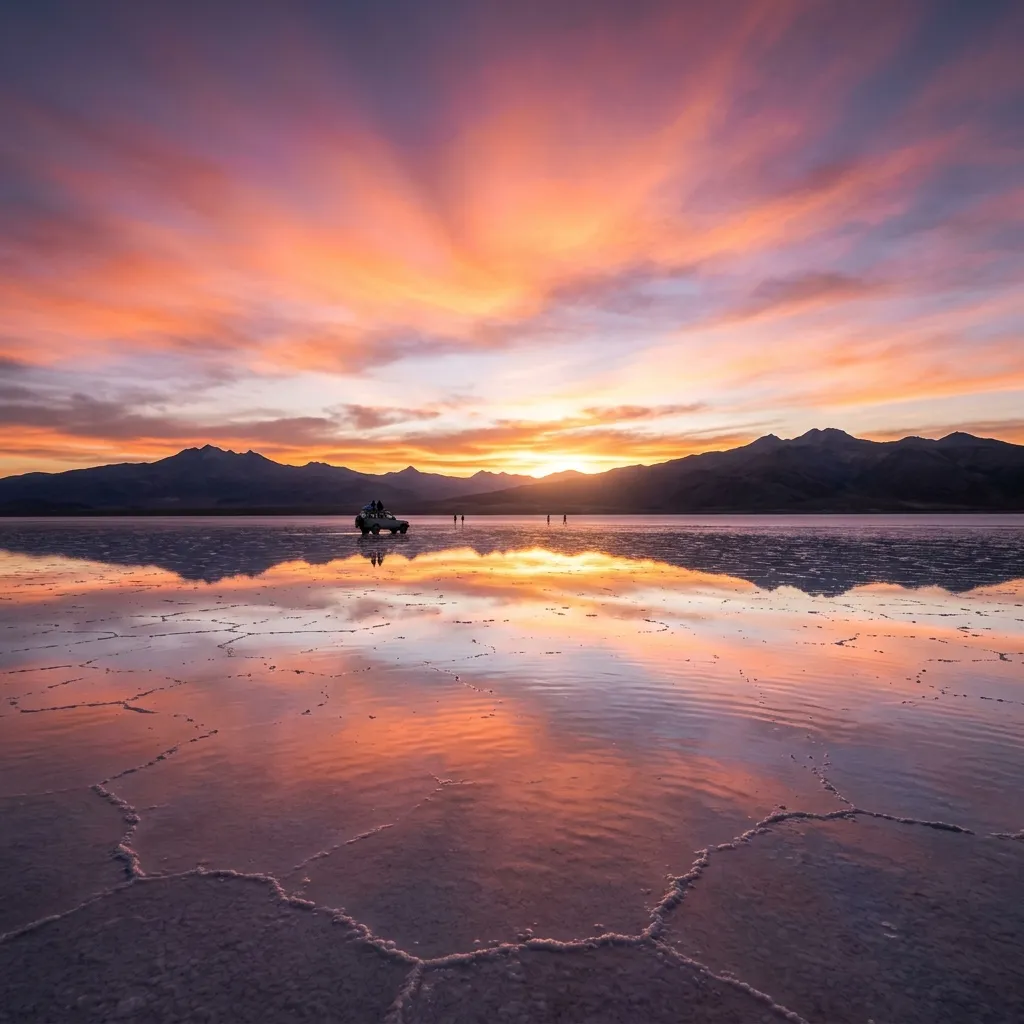
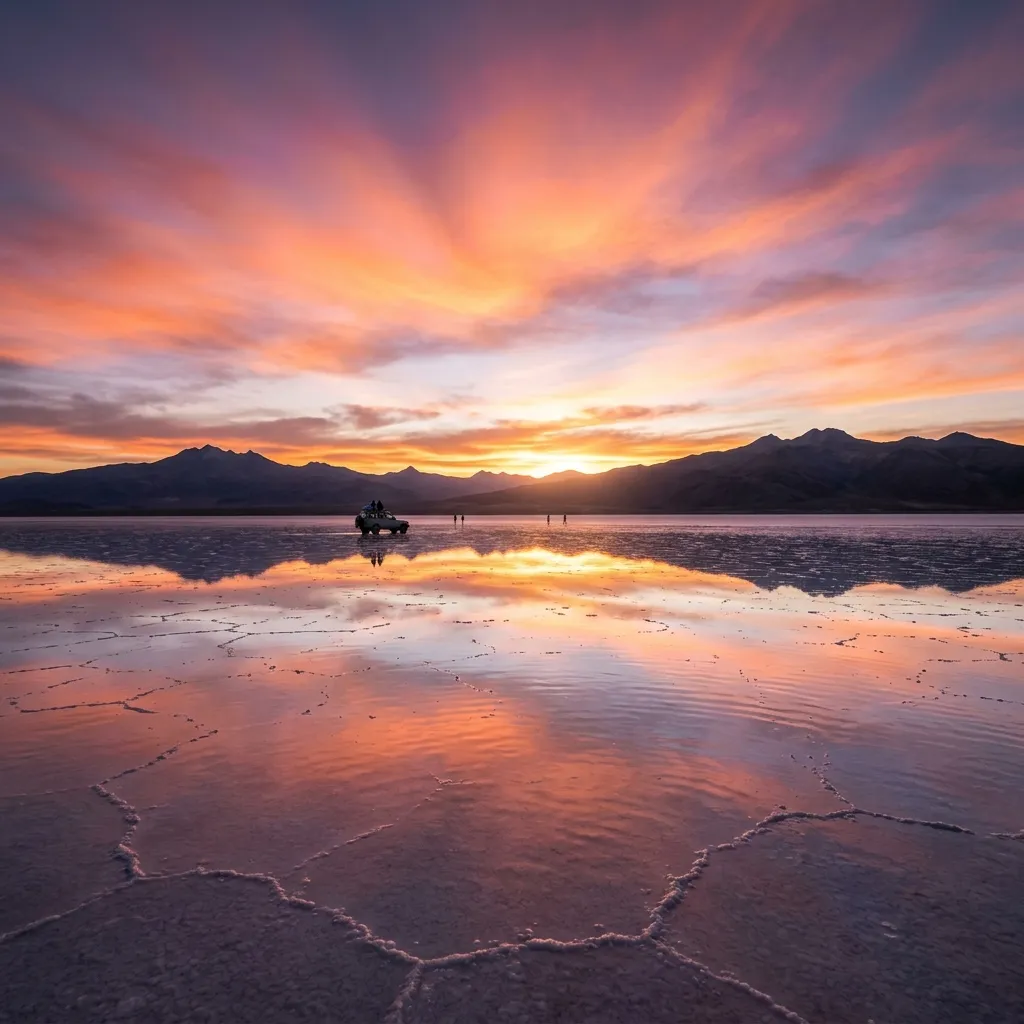
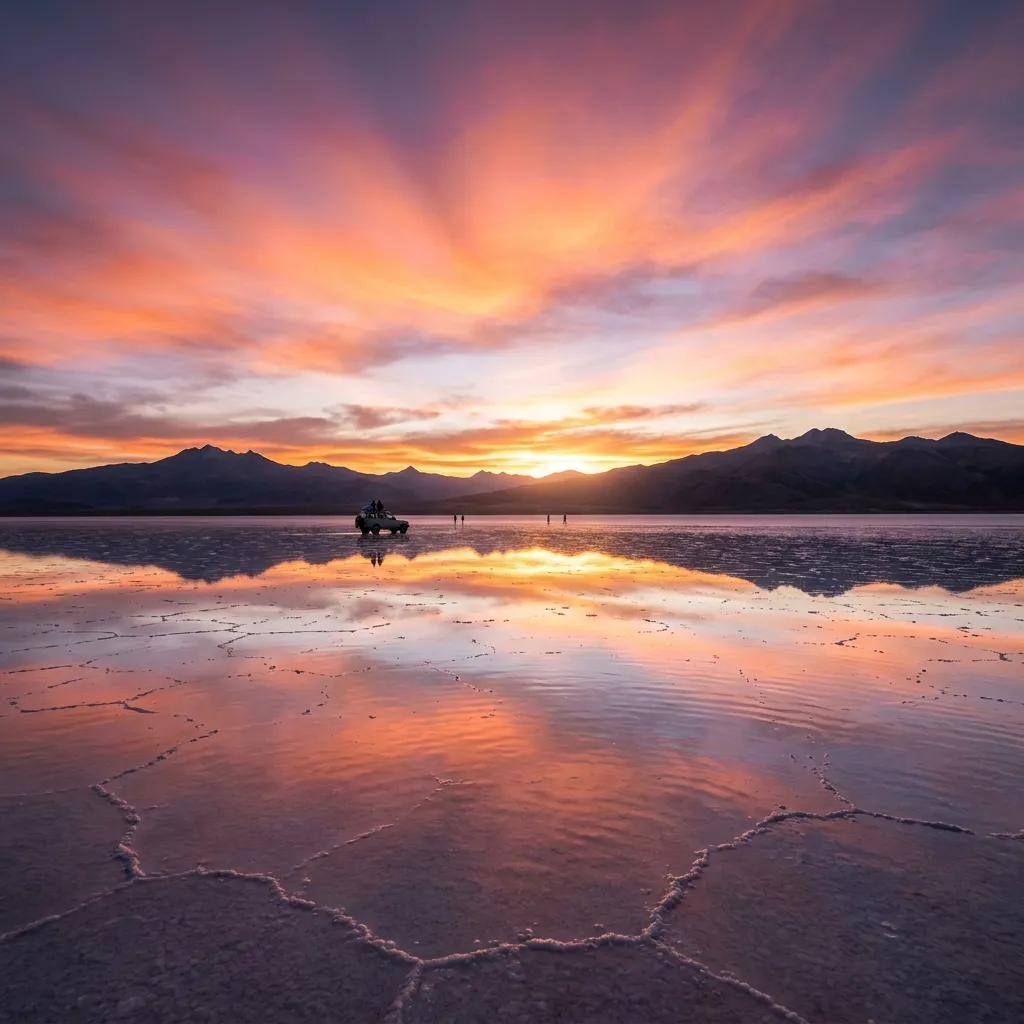
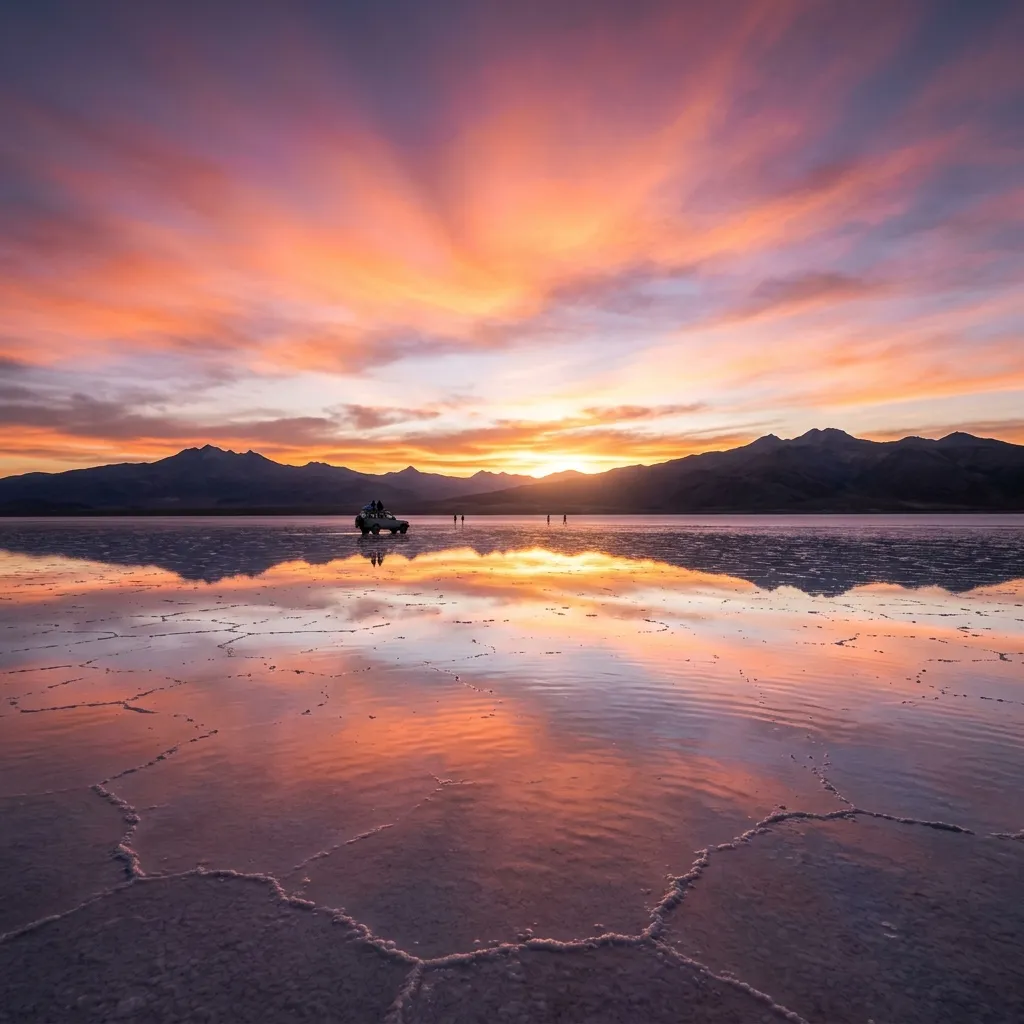
Beautiful Sunsets, breathtaking stargazing, magical sunrise: heavenly reflections.
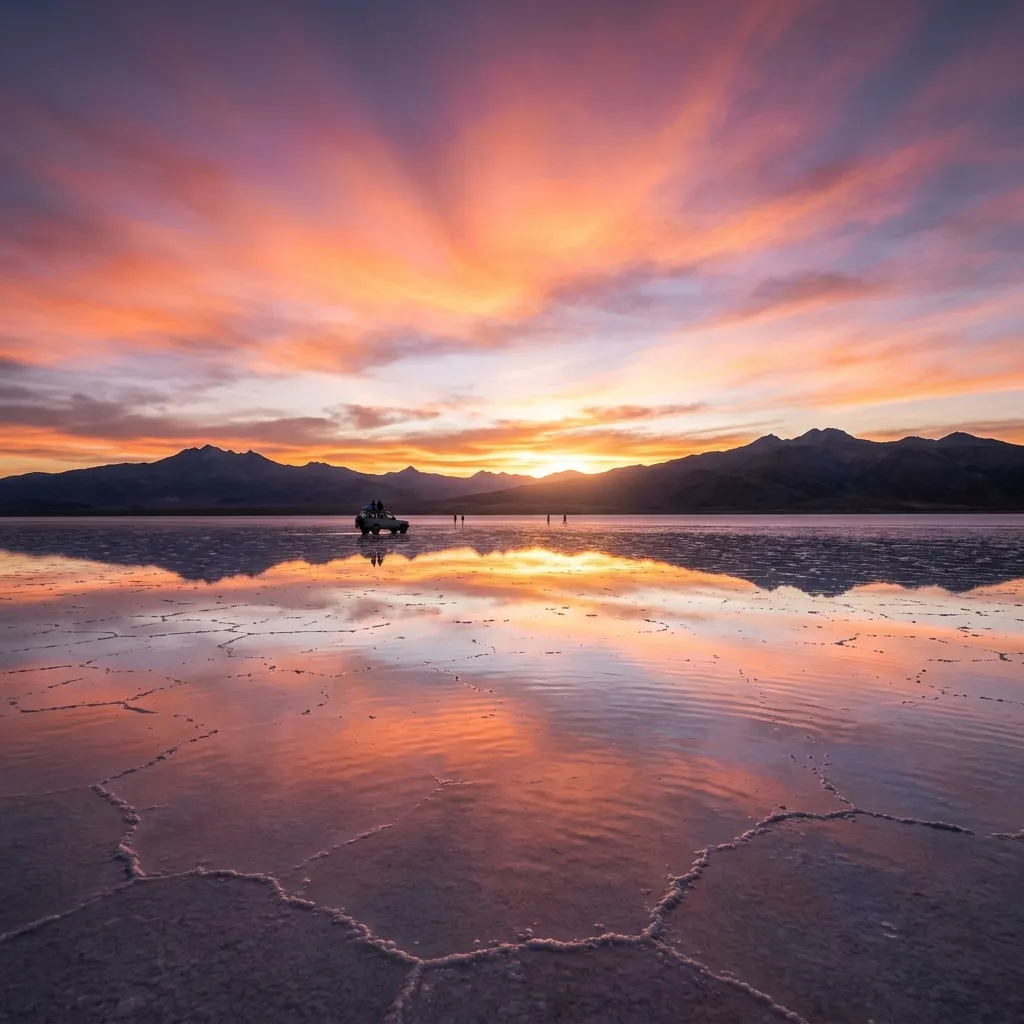
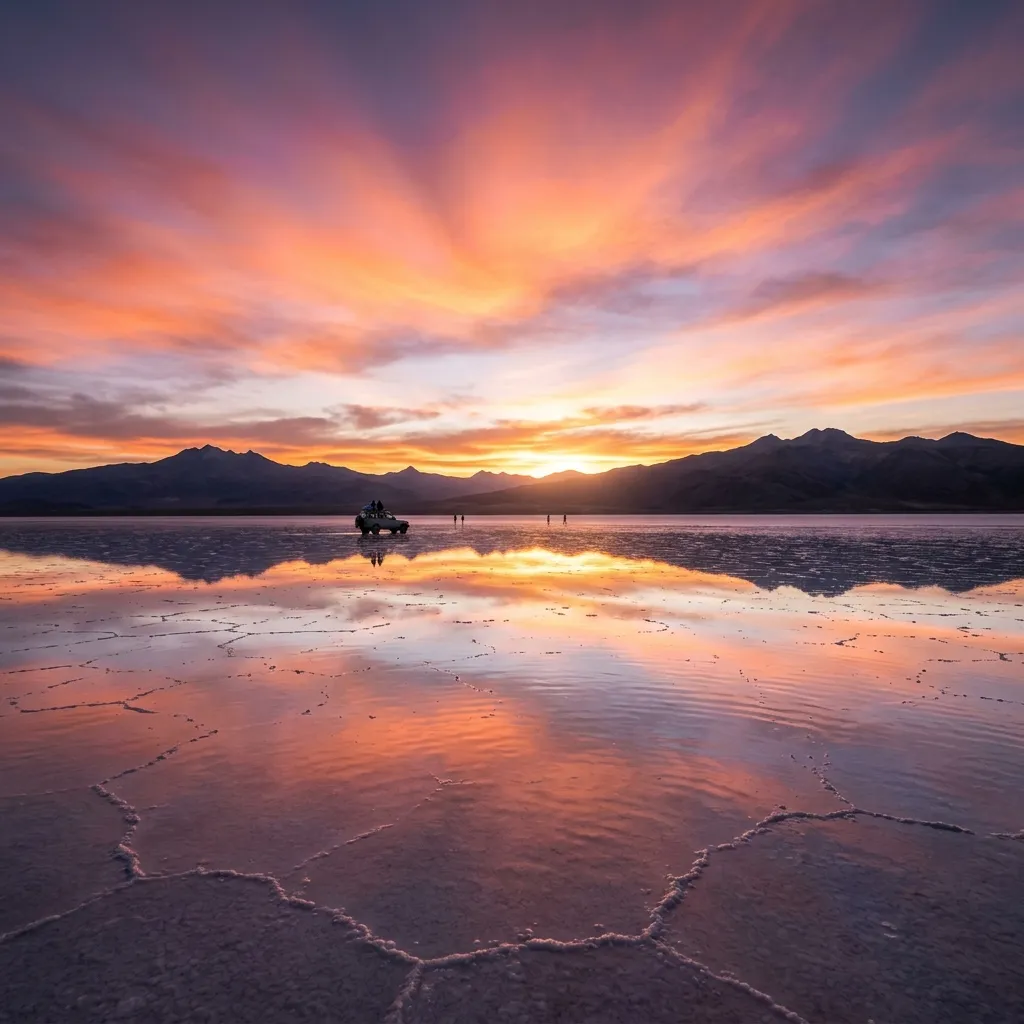
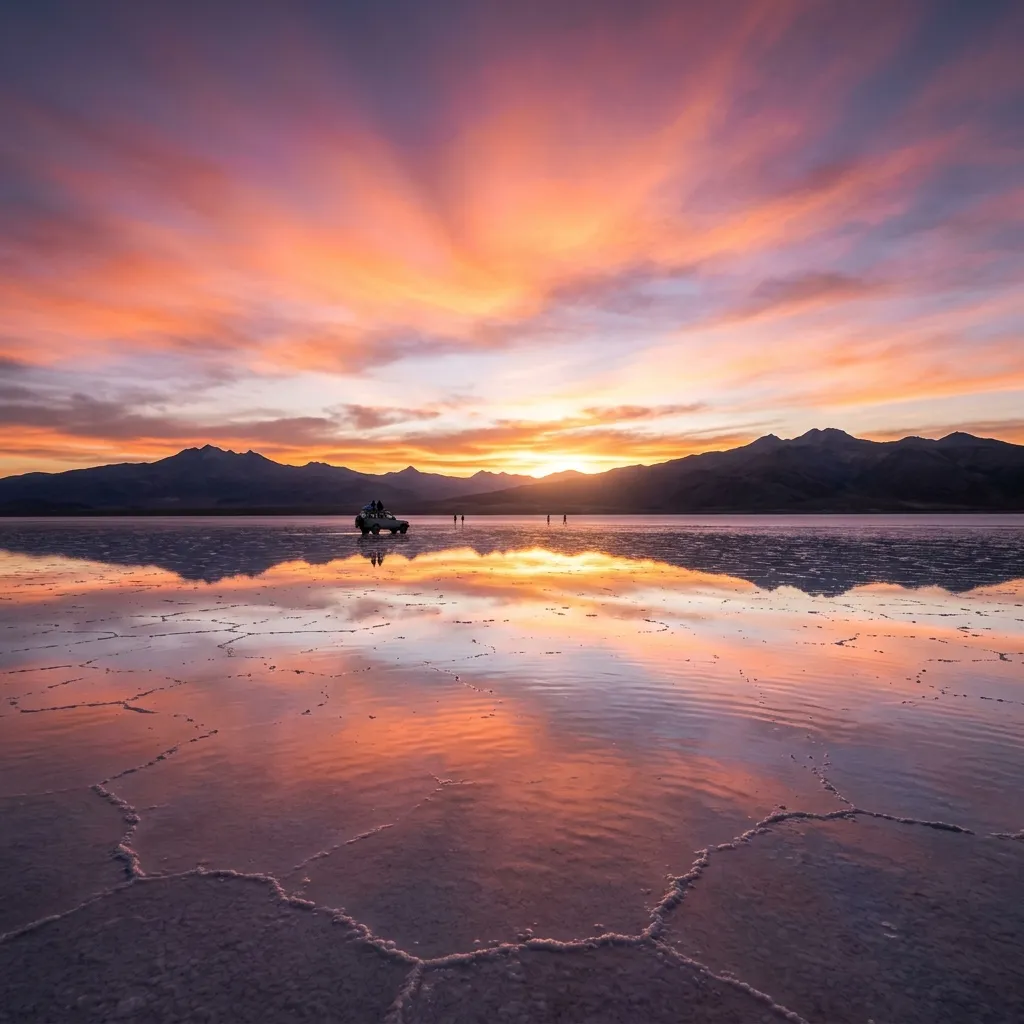
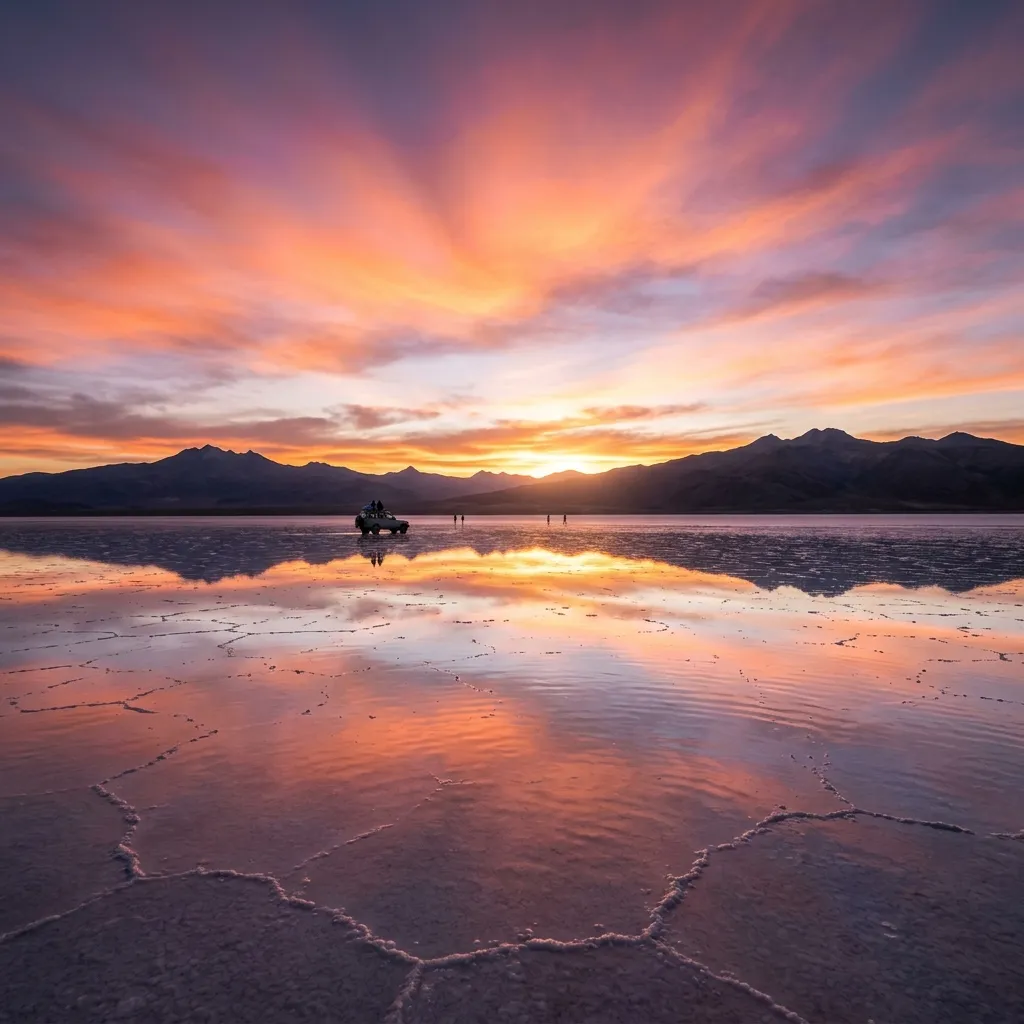
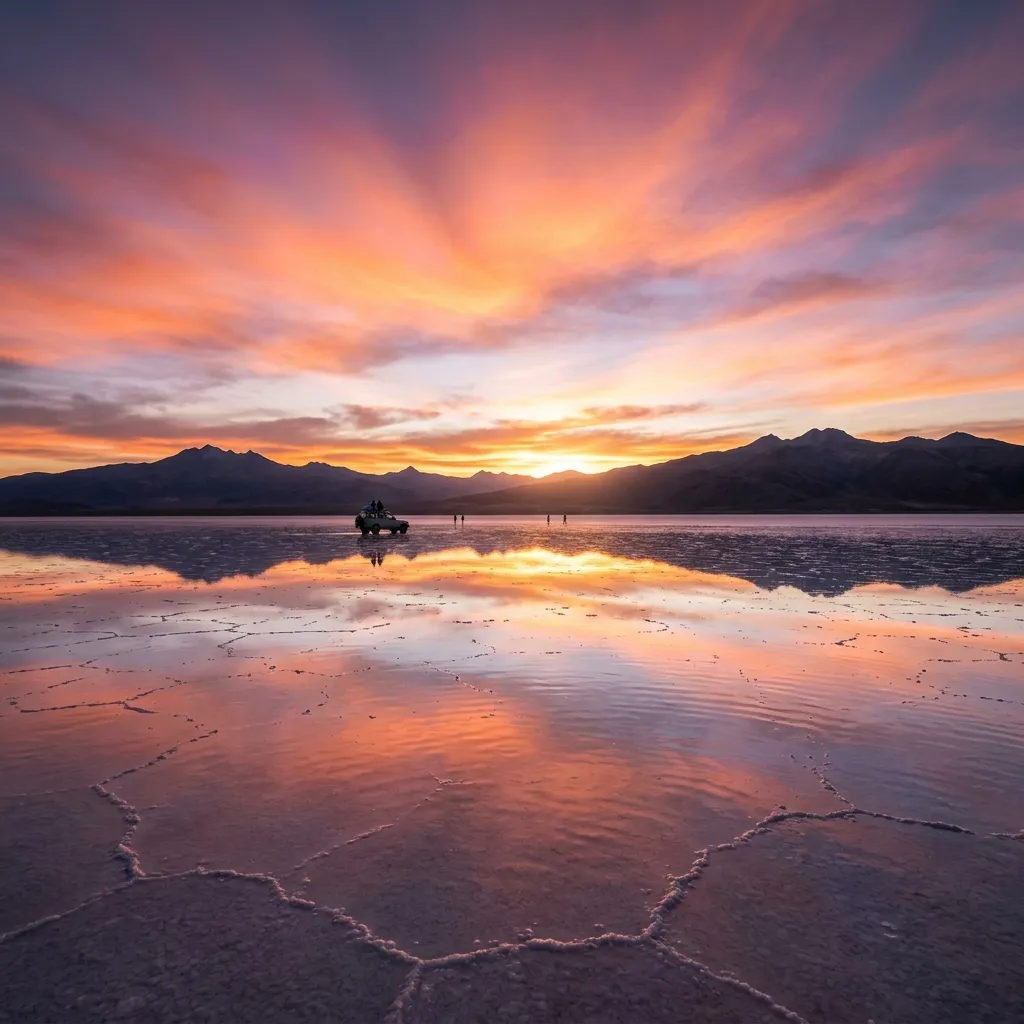
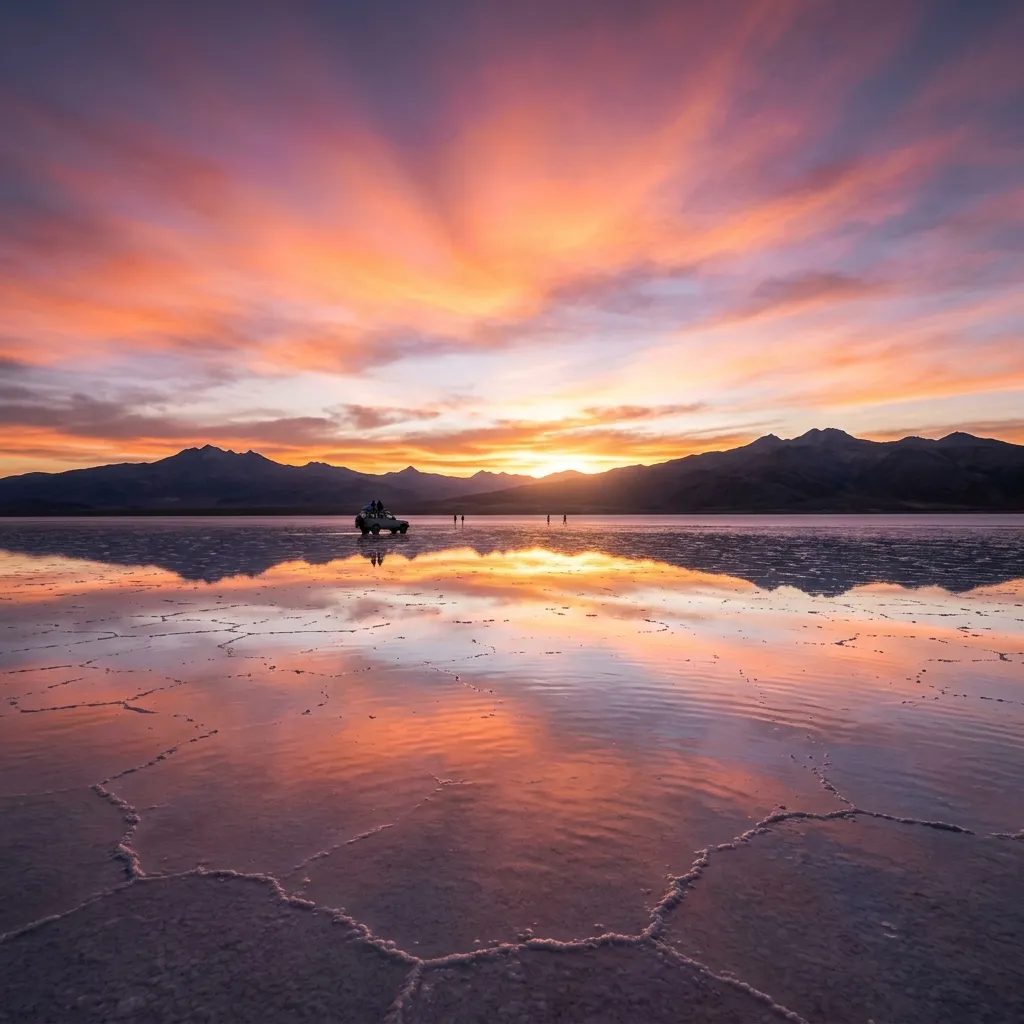
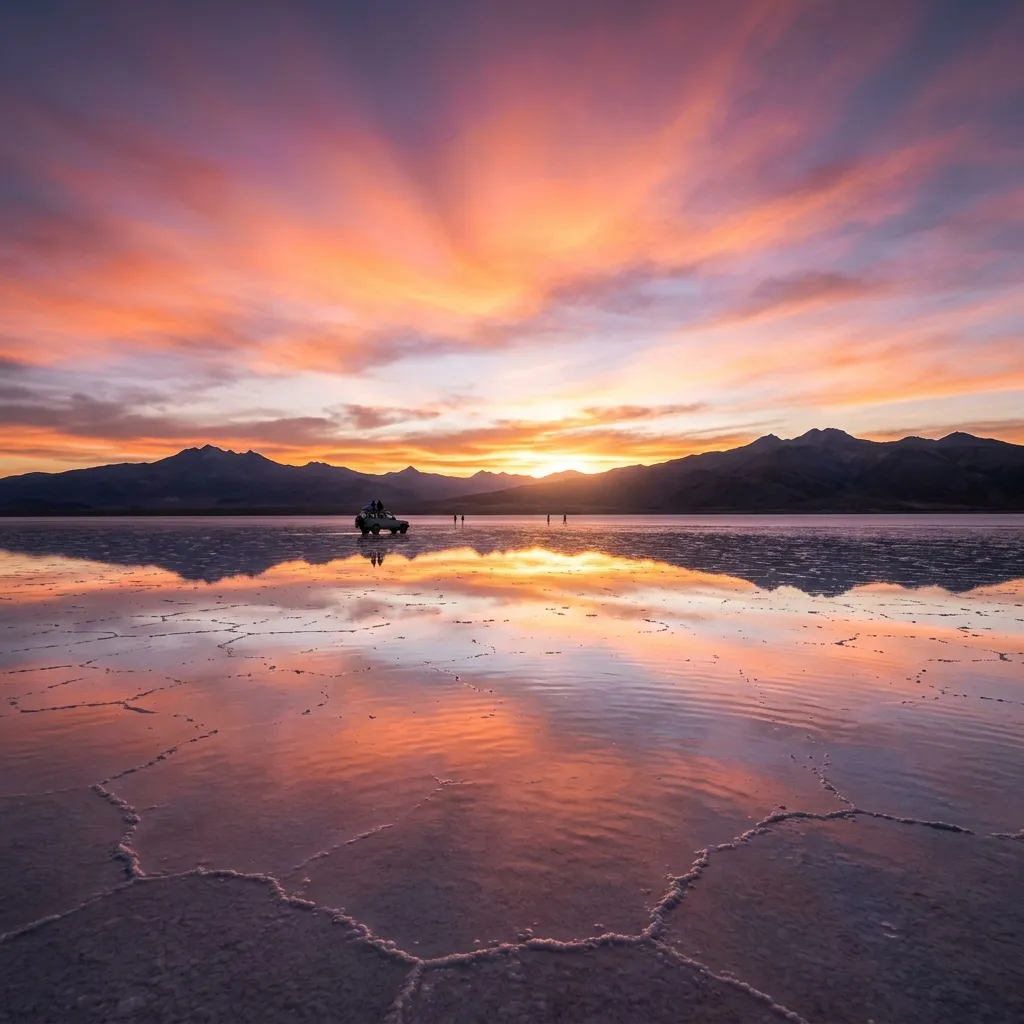
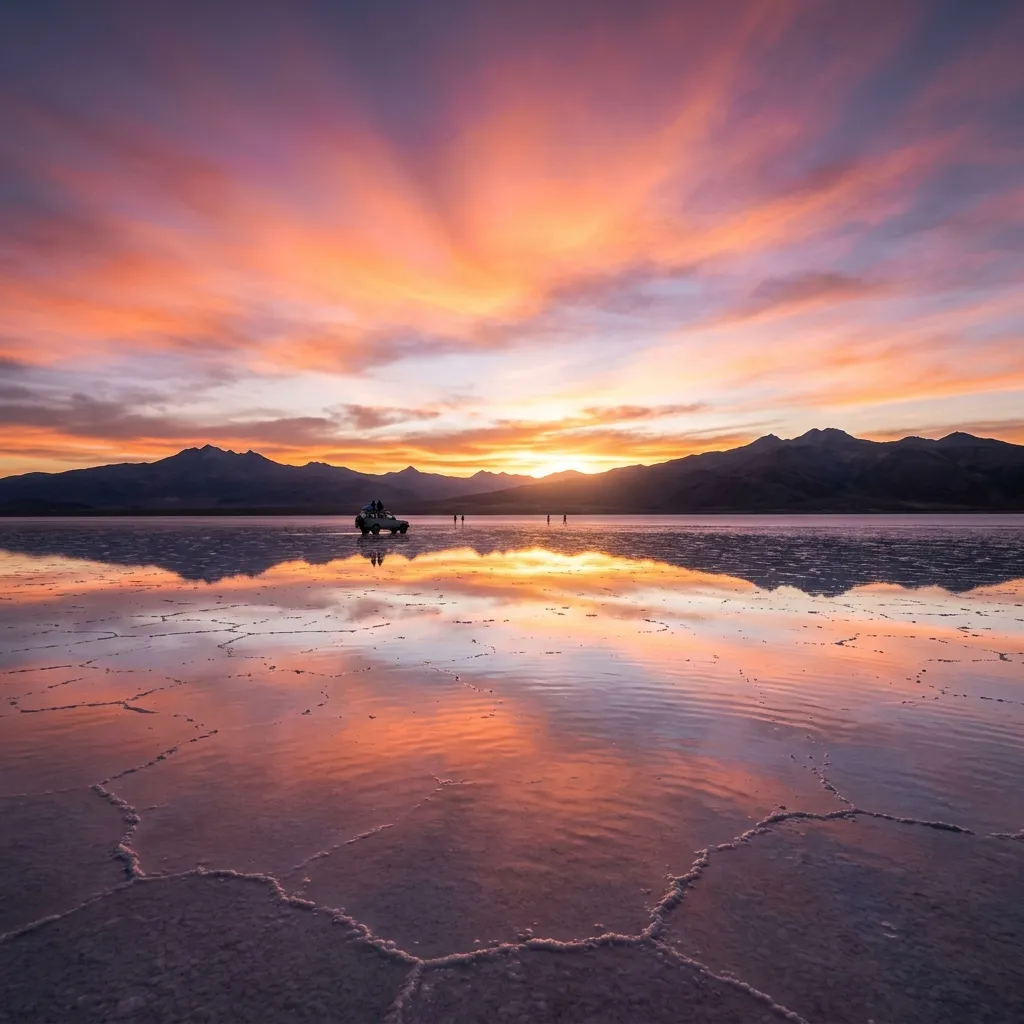
The sunset inside the salt flat is an attraction you should not miss. If you are lucky and the salar is covered by water, the sunset will reflect off the flats with spectacular colours. The wonderful reflections that the water create are literally mesmerizing and the brilliance and variety of colors created is breathtaking.
Stargazing inside the Uyuni Salt Flat is one of the most sublime things you can do for enjoyment and inspiration. There is just something so wonderful about standing (or lying or sitting) under a starry sky that evokes feelings of awe and wonder.
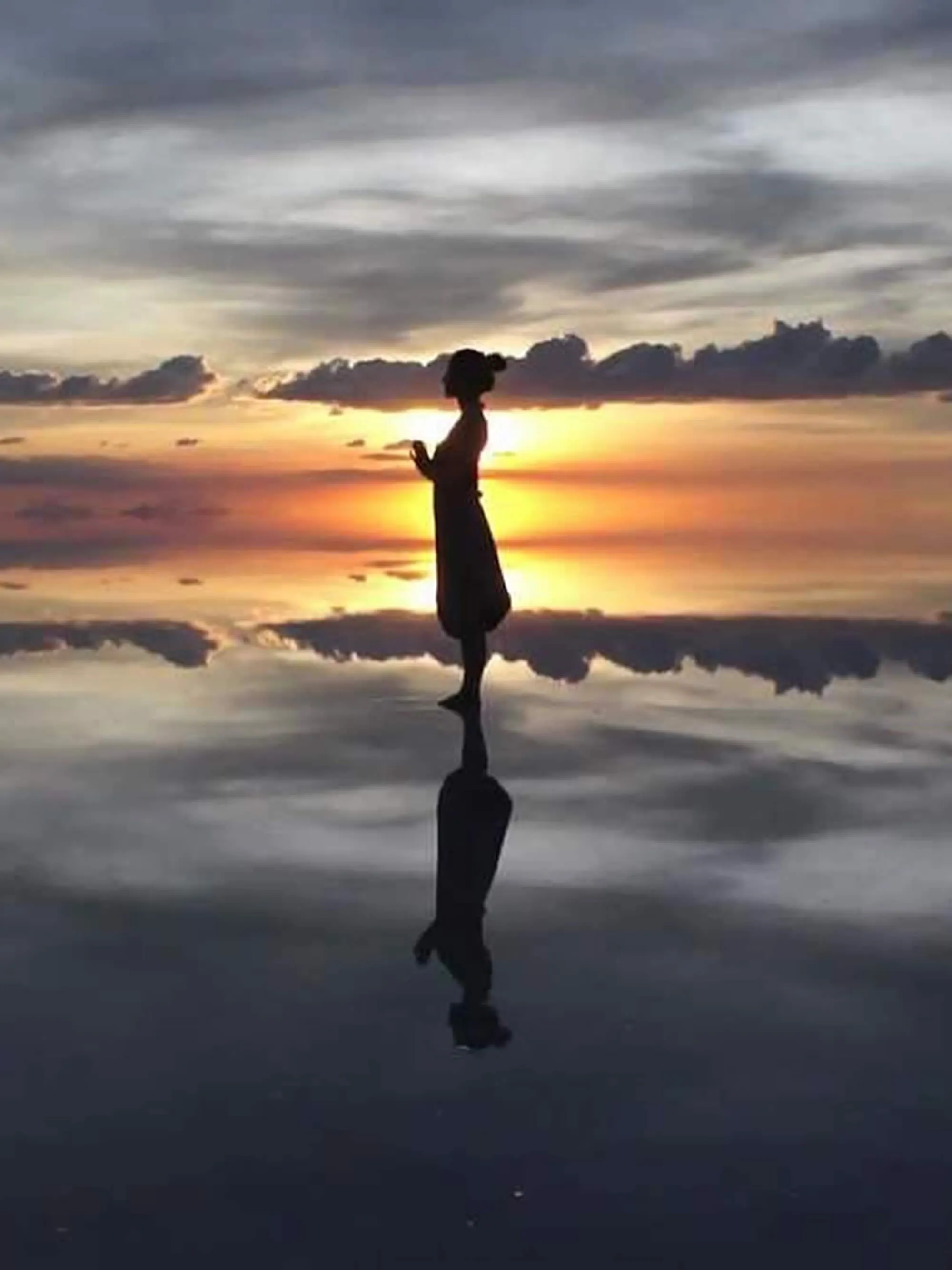
During the rainy season, stargazers in Uyuni get an added bonus when relaxing under the night sky as the water reflects everything just like a giant mirror. The feeling is one of walking in space amongst the stars.
Colours, shades and the first light of the Sun create an absolutely surreal experience that will make you forget about the freezing cold. Resist your sleepiness and wait for it inside the salar, as this will definitely be one of the best highlights of your trip!
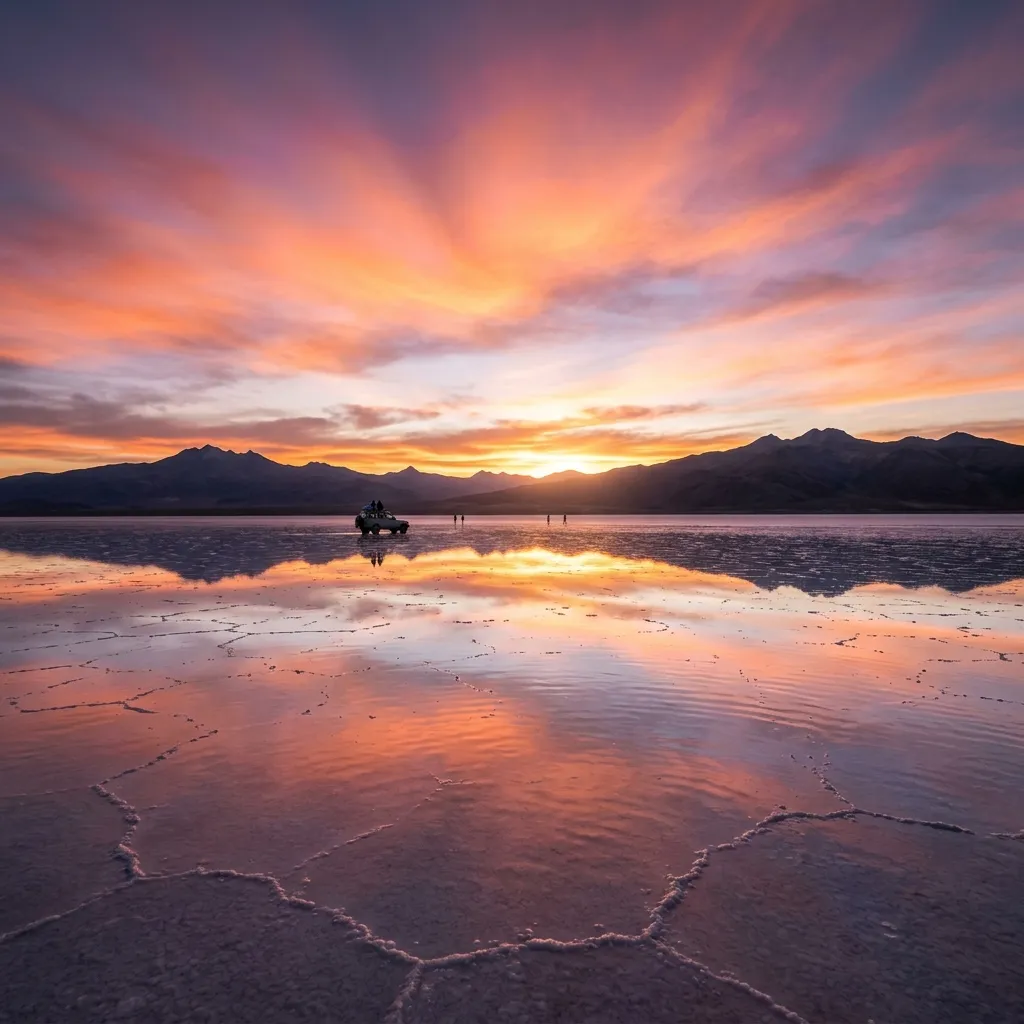
Visit planet Crait, last stand of the Resistance
Uyuni was the location for a major scene in Star Wars: The Last Jedi. Planet Crait, the last stand of the Resistance is now open for visits by the general public. While we cannot offer you real Imperial Walkers, you can still take cool photos with Star Wars props that you bring along.
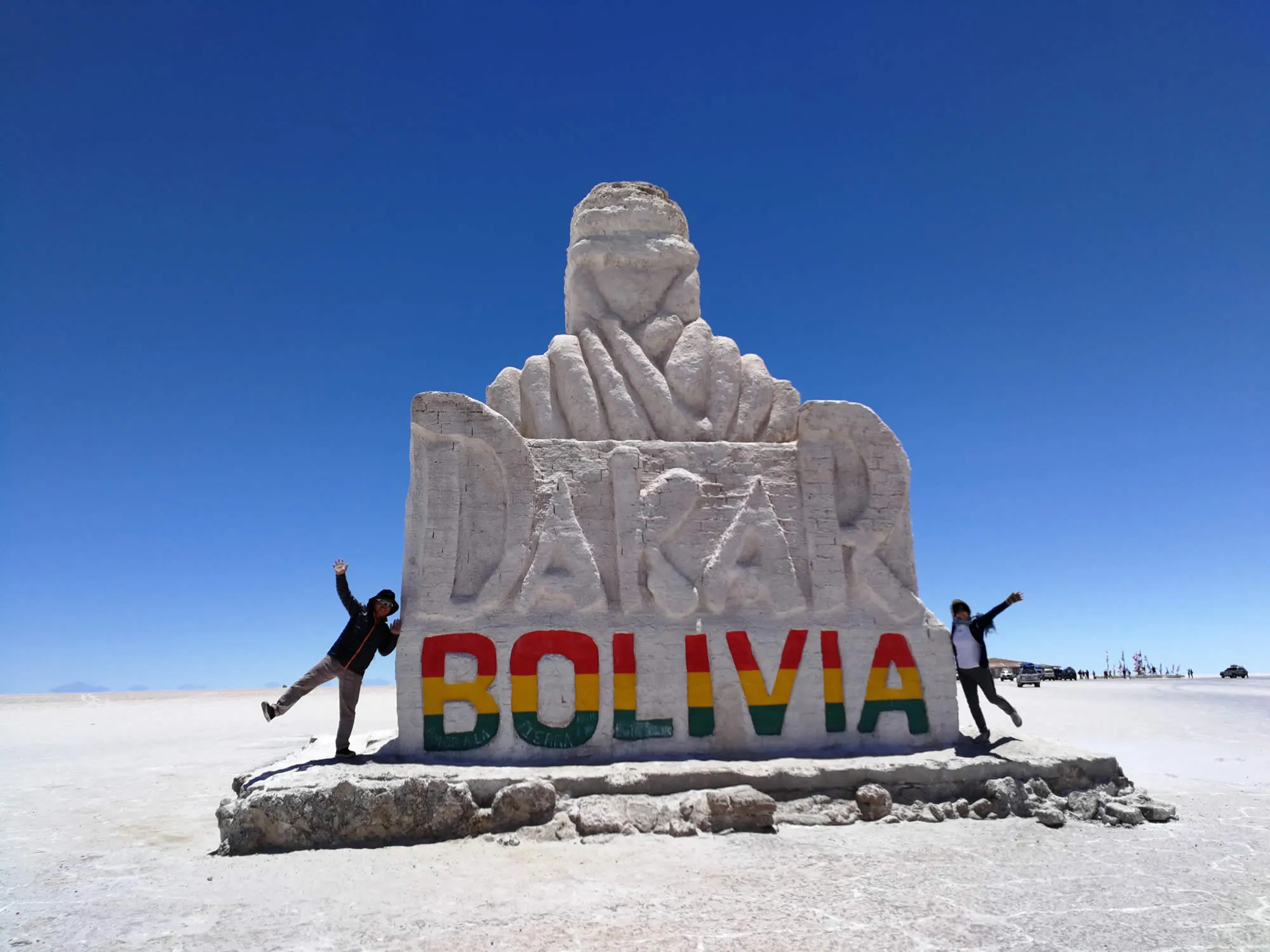
Dakar Monument
This large salt statue was erected to commemorate the passing of the Dakar Rally through Bolivia. Great photo opportunities.
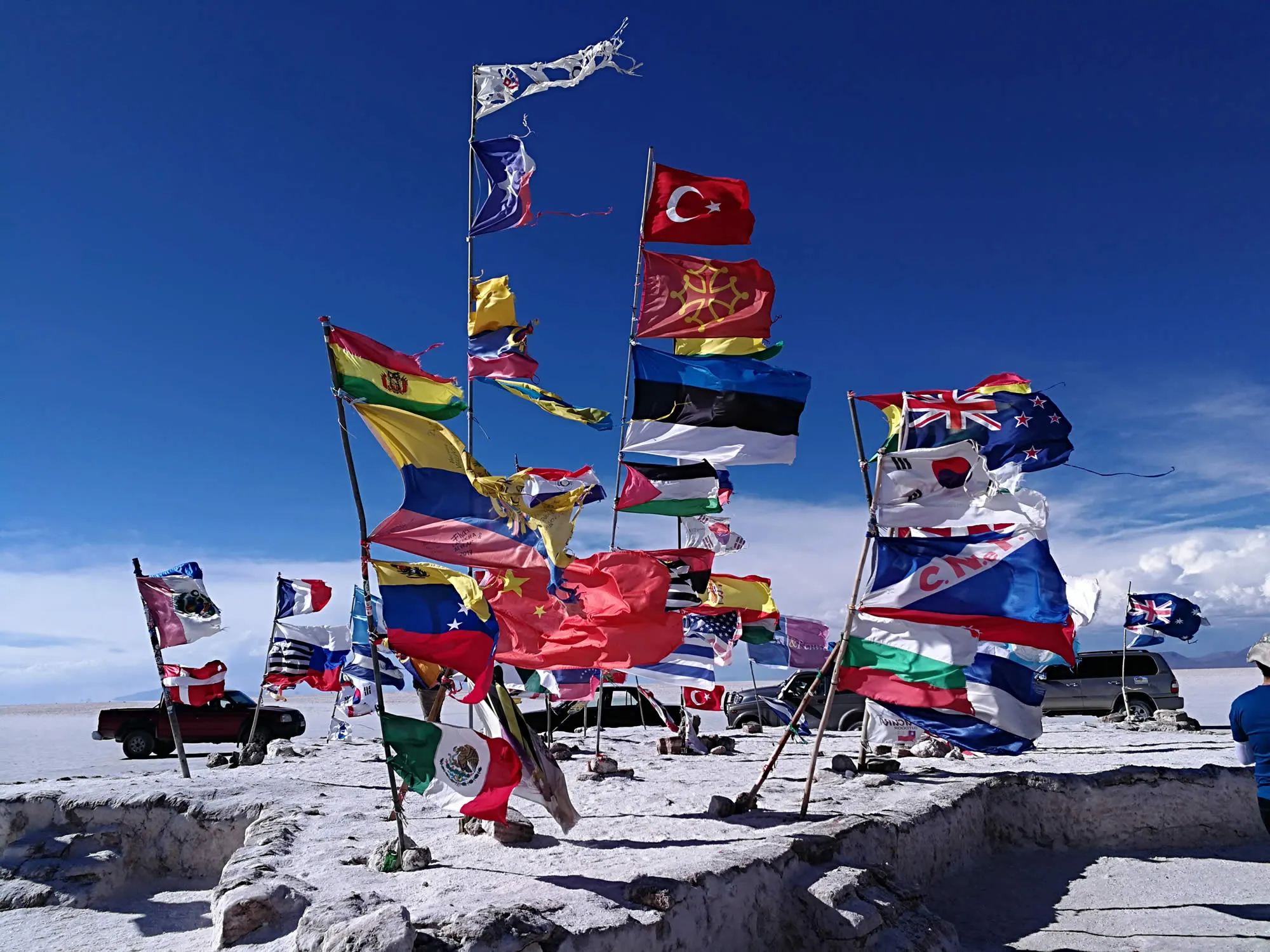
Nearby there is in abandoned salt Hotel, called Playa Blanca, that now functions as a small cafe and exhibition room. A mound of salt has been decorated with flags brought by visitors from all over the world.
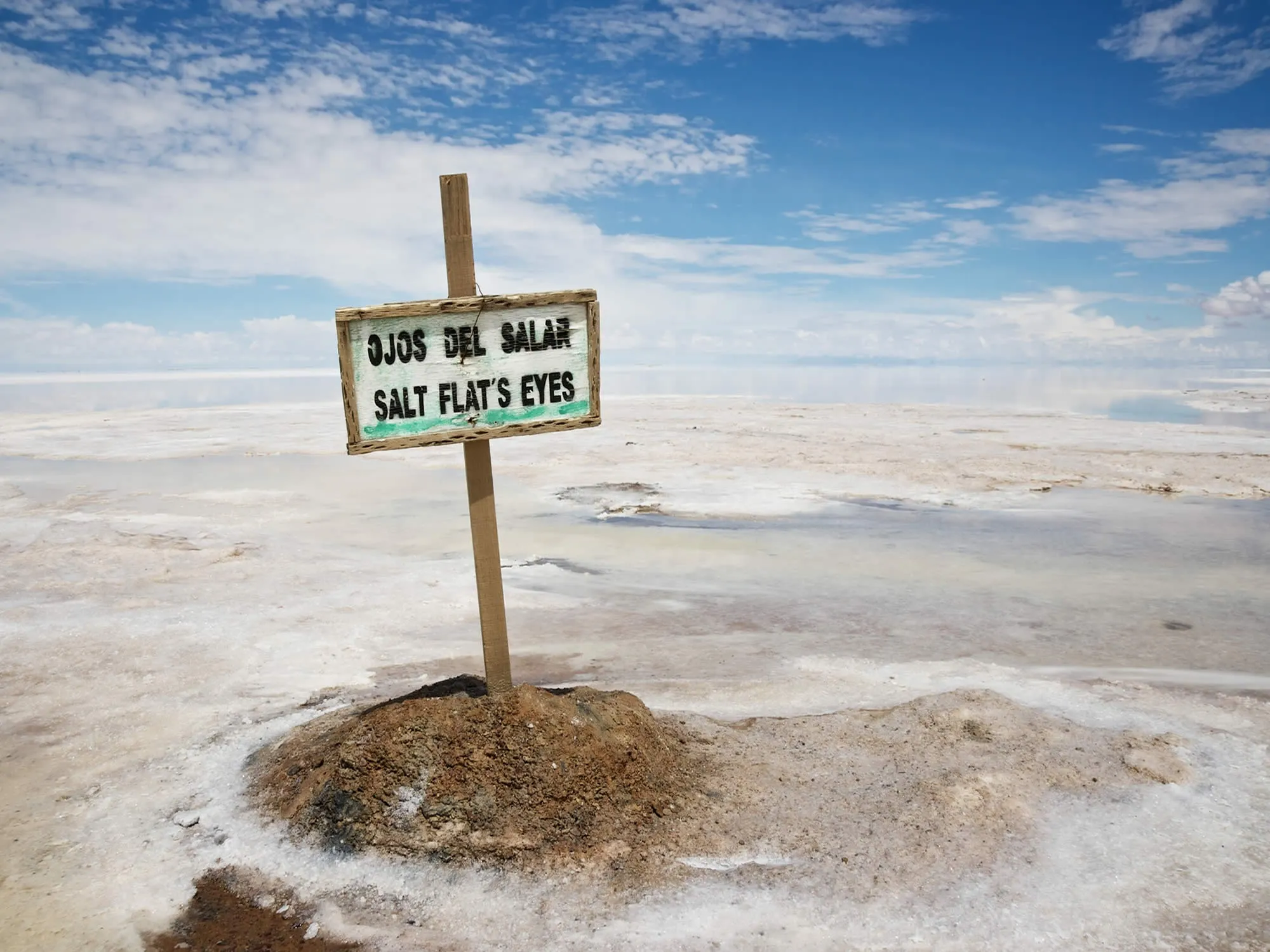
Eyes of the Salt Falt - Ojos del Salar
The eyes of the salt flat are the outlets for subterranean rivers flowing under the Uyuni Salt Flat. The waters flowing from inside the salt flat have particular acidic concentrations and are considered medicinal waters by the locals.
Perspective photos, mirror effect, white desert
Fun perspective photos in Salt Flat
The Uyuni Salt Flats are the largest in the world at over 10000 square kilometers. In this strange place the white vastness blends with the horizon, giving you the chance to take spectacular perspective-defying photos.
Tourist Attractions in the Uyuni region:
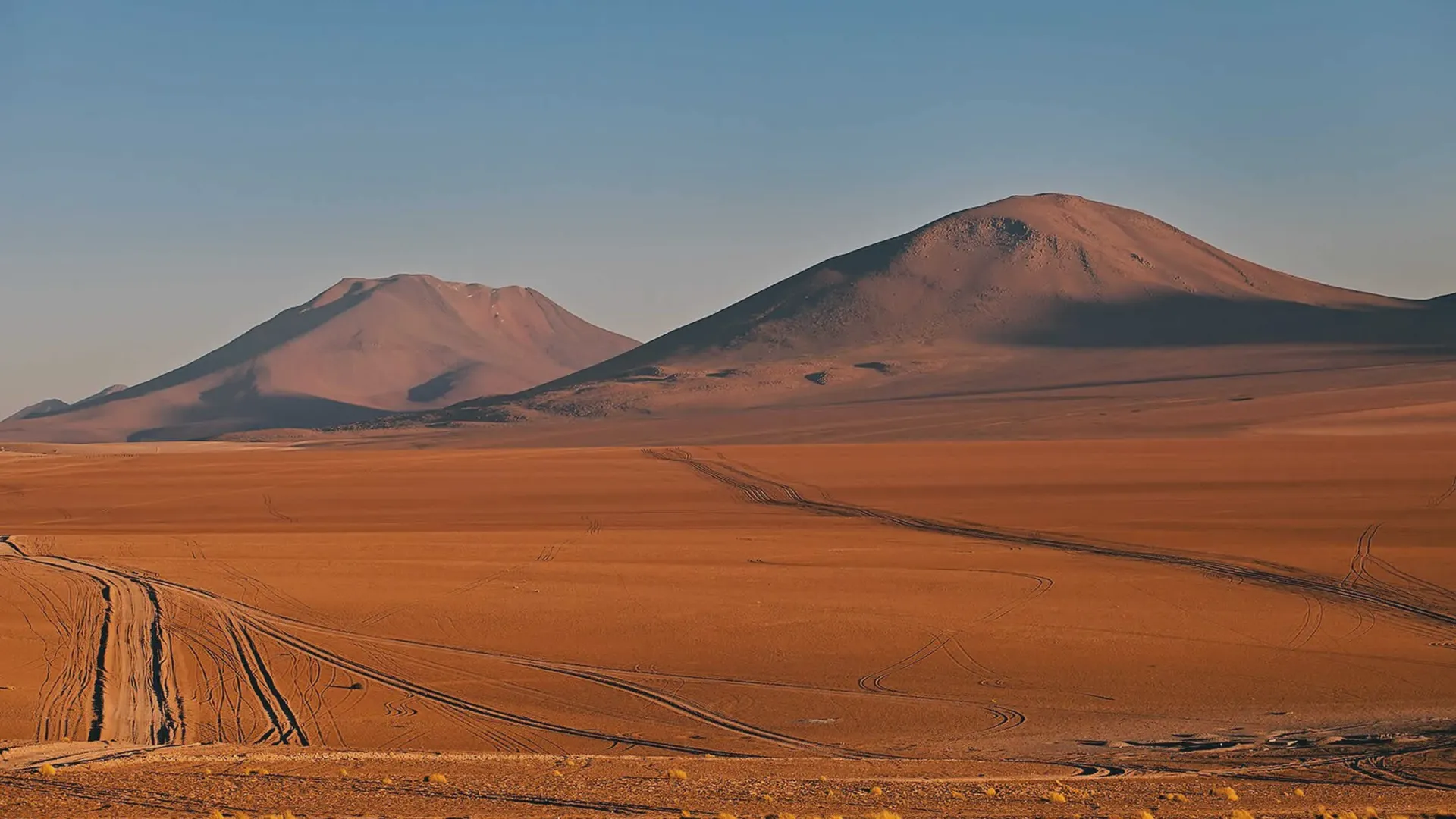
Siloli Desert - Desierto de Siloli
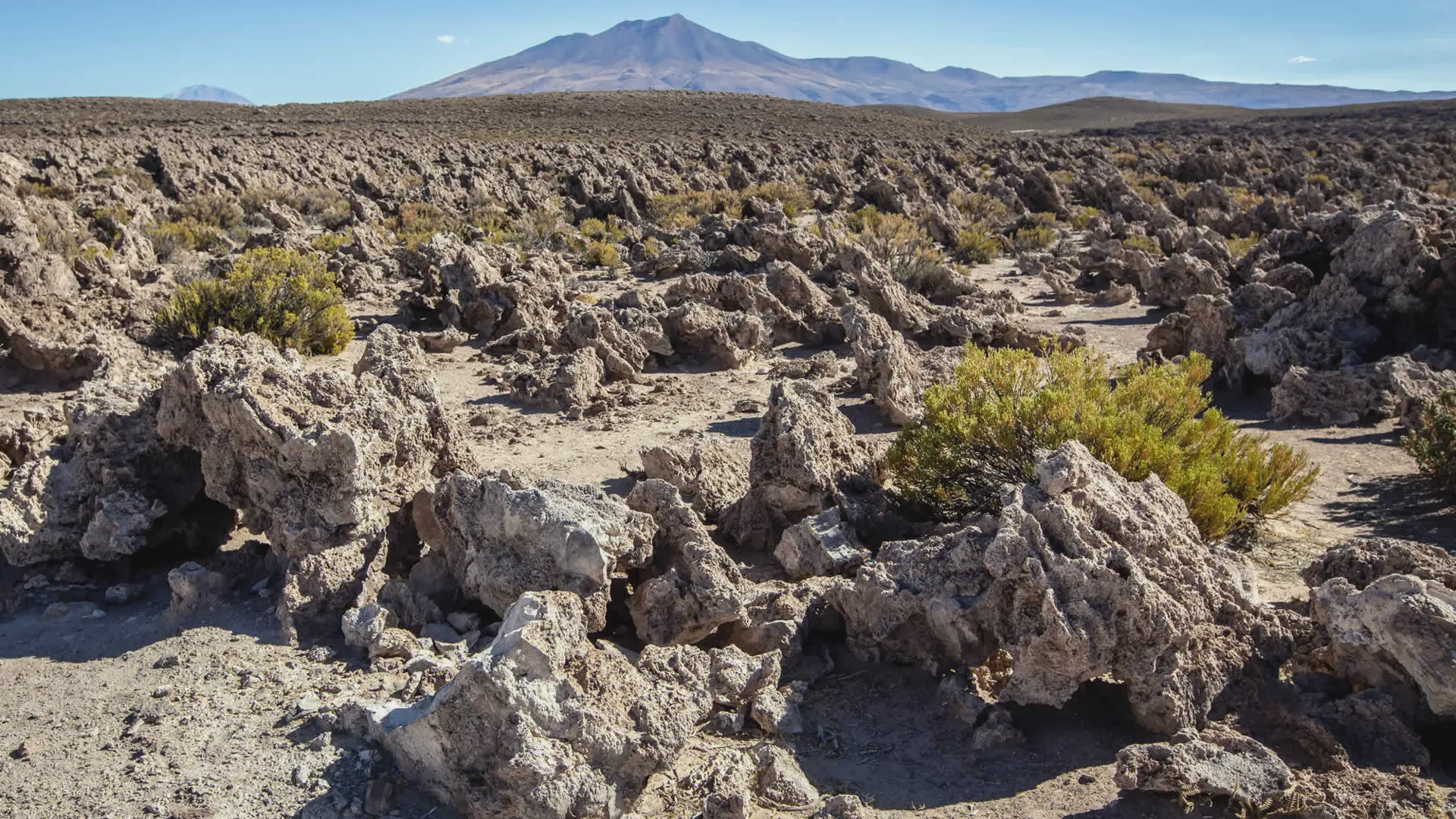
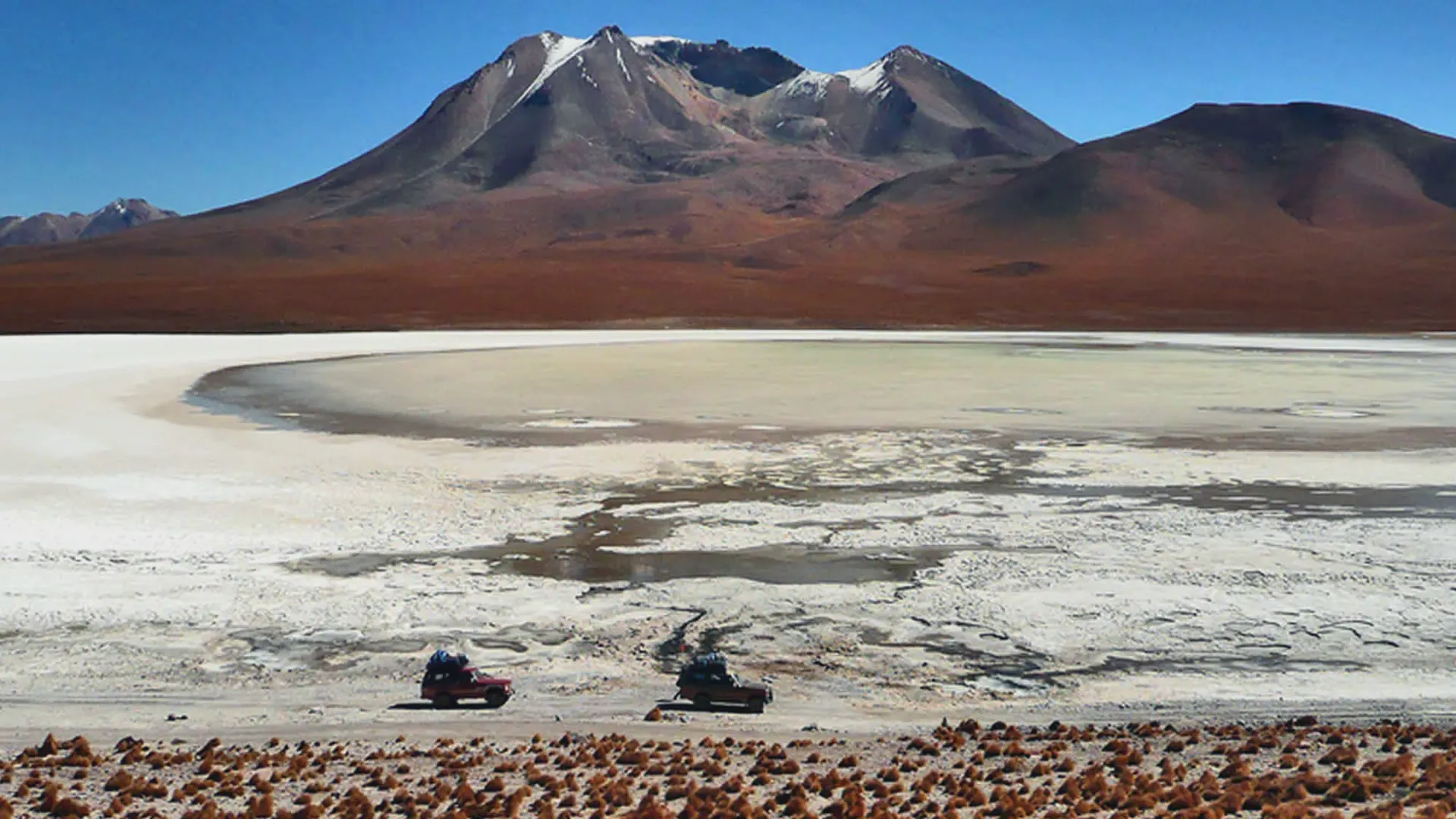
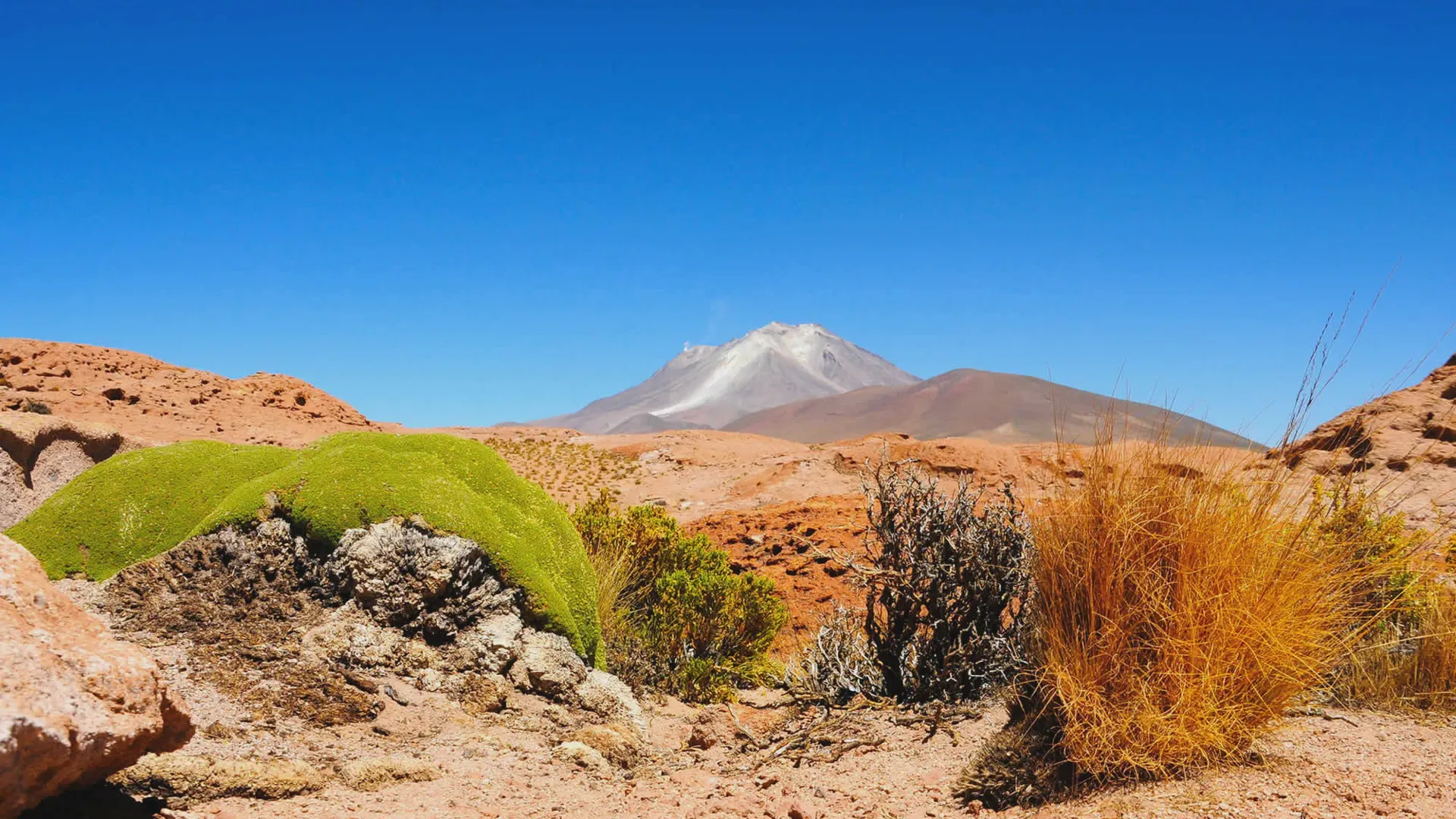
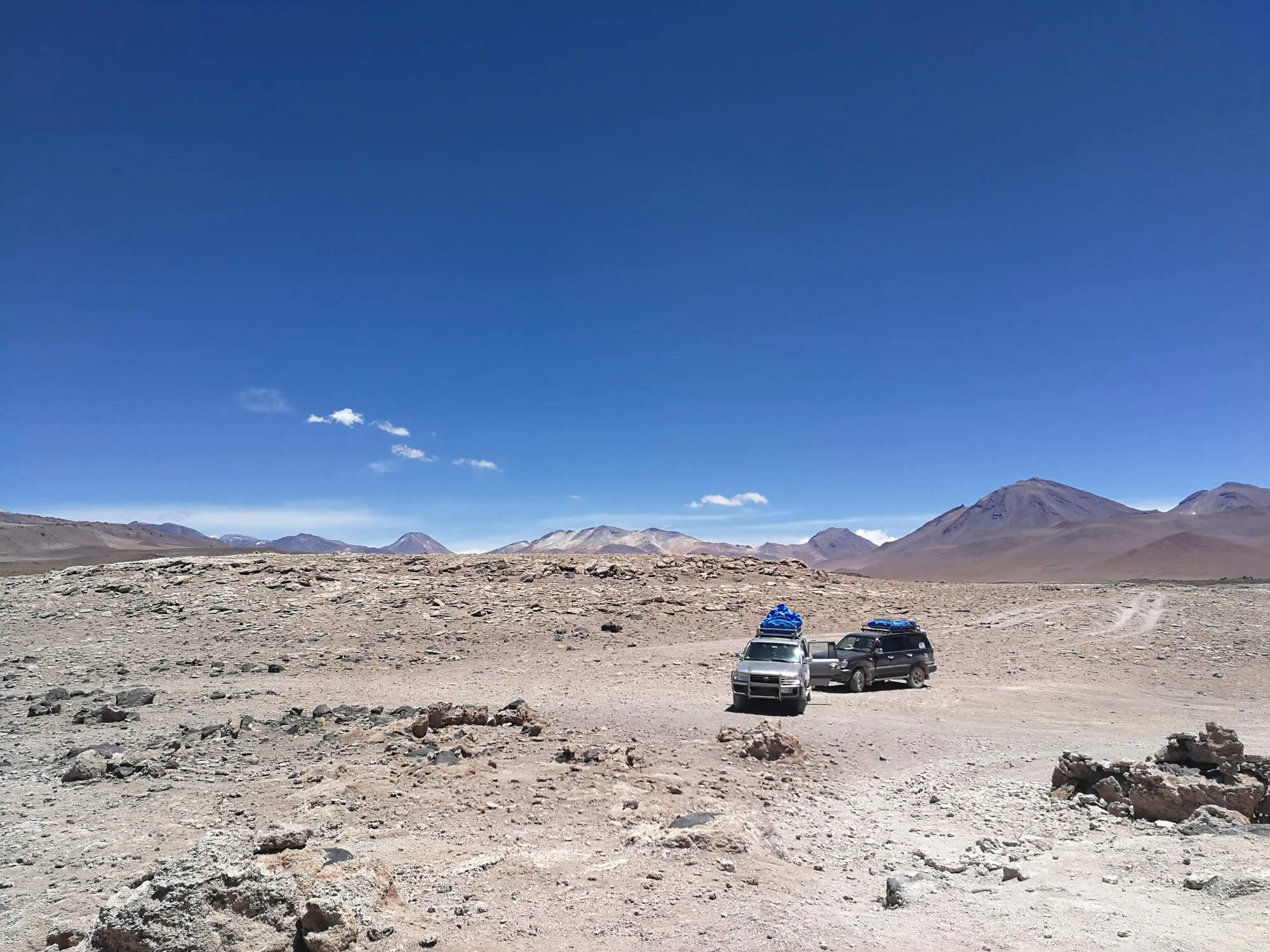
The desert is characterized by rock formations produced by the strong winds in the region. The desert is considered one of the most arid in the world due to the low rainfall that occurs in the area. The Siloli desert will give you a horizon full of ochres and browns.
It is located at almost 5000 meters above sea level.
Tunupa volcano - Volcan Tunupa
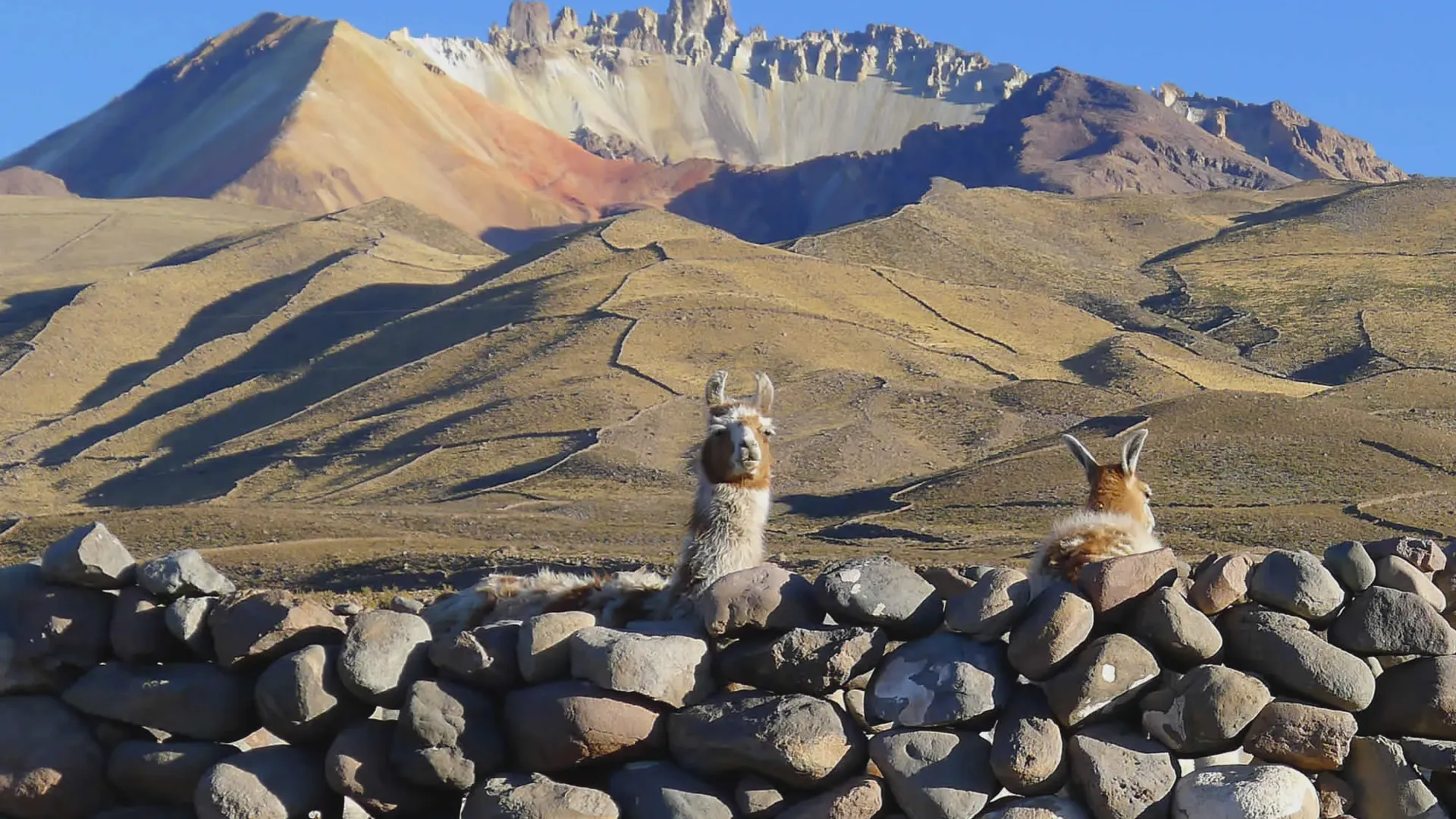
The Tunupa volcano is considered sacred by the communities that surround it such us Jirira, Ayk'e, Moqueta, Chantani, Vinto, Central Tawa, Chirivilla and Huaylluma.
It is called Tunupa in honor of the God of thunder "Tunupa", supreme creator of nature and master of order in the world. According to the legend Tunupa had power over the thunders, volcanoes and water and he died on his raft at Titicaca Lake. His raft was lead by the wind until the edges of Chacamarca were it crashed with the shore and opened a big river at the south side of Titicaca Lake. The lake started dripping and formed a river known as Aullagas named today as Desaguadero.
Climbing the Tunupa Volcano is not difficult and won't be hard if you're in a good shape. Three to four hours hiking are needed to reach 4700 meter viewpoint of the Tunupa. It's considered the first level of the volcano where you'll enjoy exceptional views of the Uyuni Salt Flat.
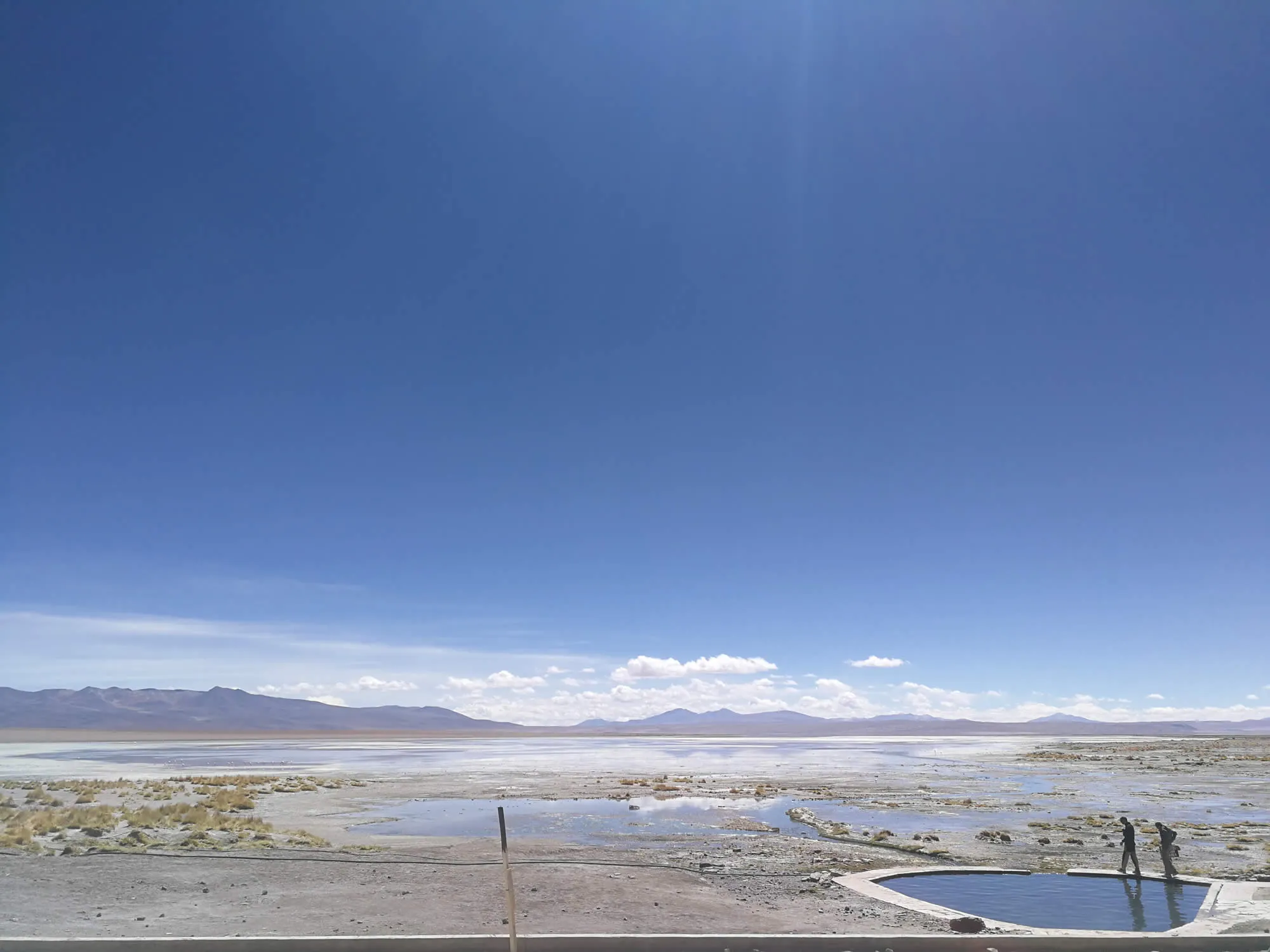
Polques thermal waters pool
Aguas Termales de Polques
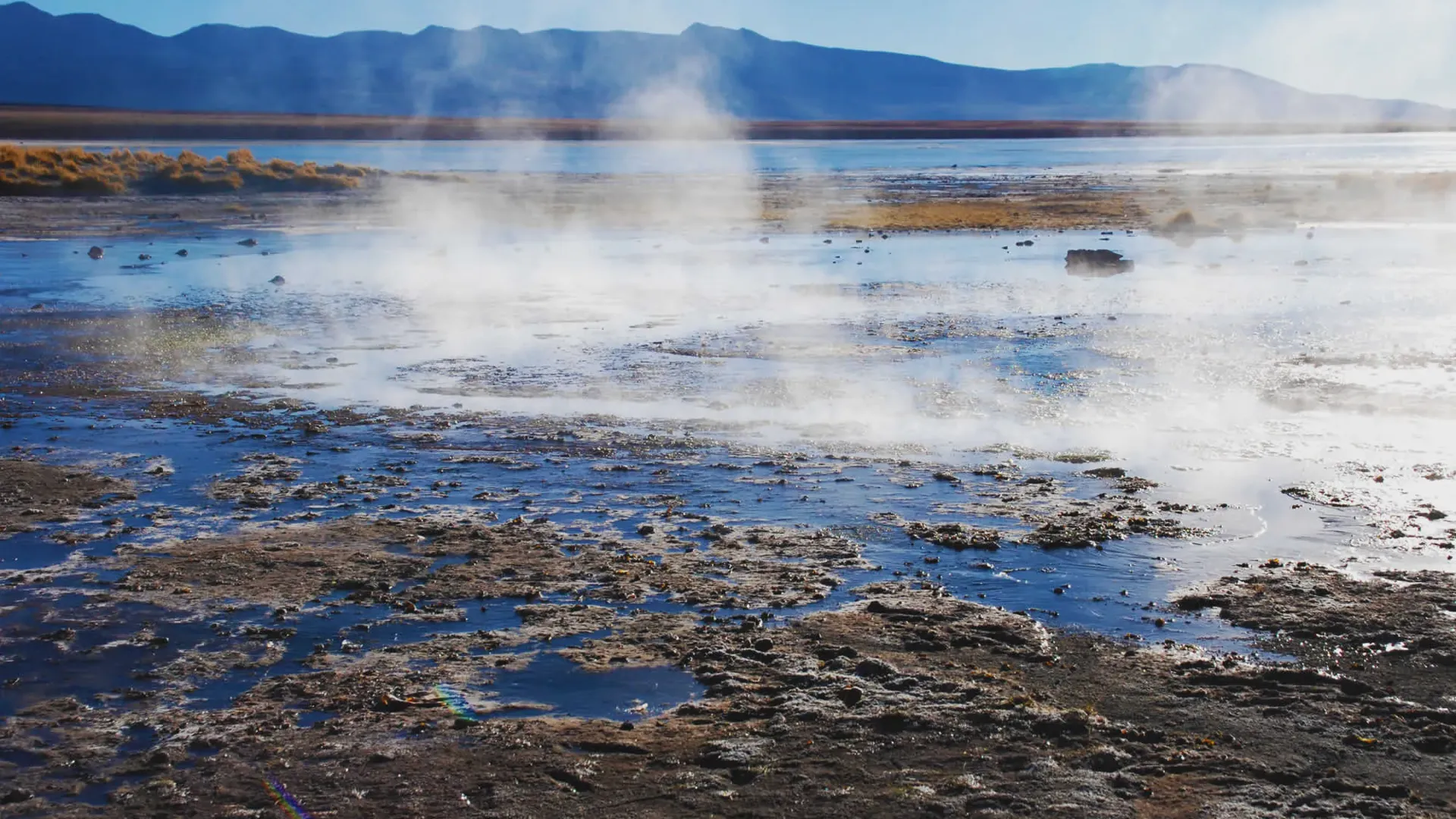
This enormous salty lagoon features open-air hot thermal water swimming pools where you can take a bath. The water temperature rises from 28 to 30 Degrees and is famous for curing arthritis and rheumatism.
The hot Springs of Polques are located to the West from Chalviri town and is well-known because of its intense volcanic activity.
Sol de la Mañana geyser
The Sol de la Mañana (Morning Sun) Geyser, is an active geothermal field that extends over 10 square kilometers. It is located at a height of between 4800 and 5000 meters above sea level.
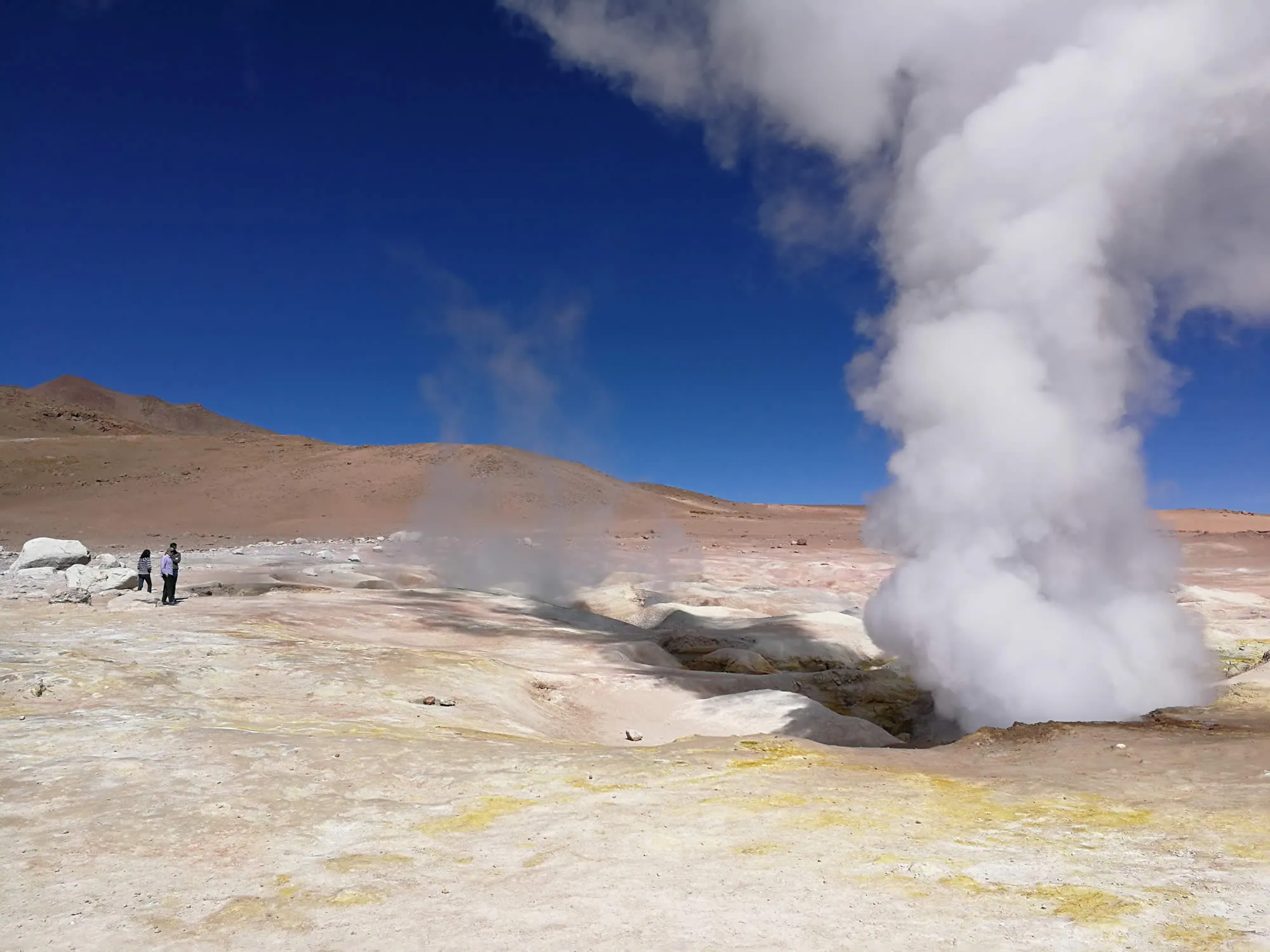
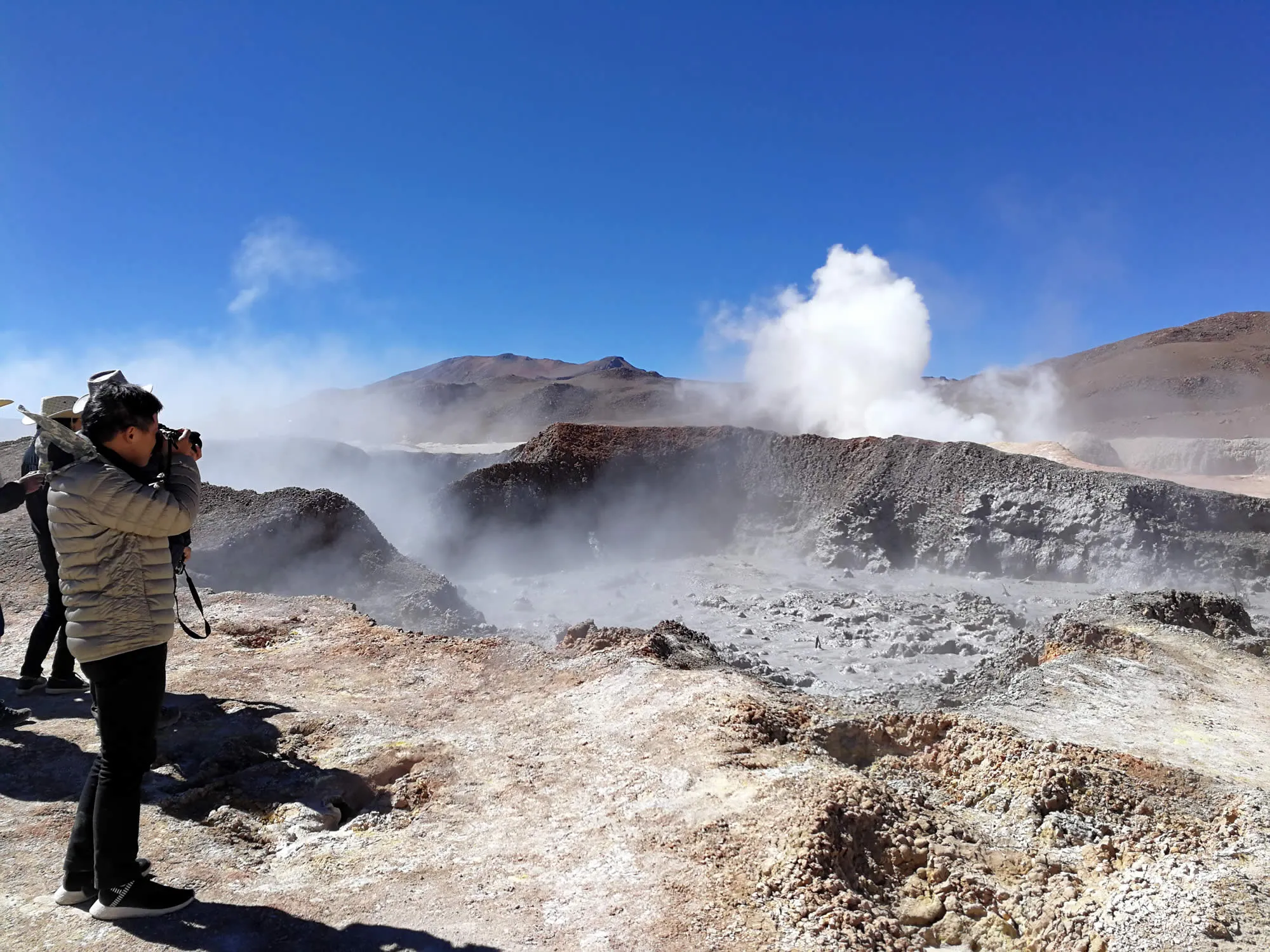
Hot steam erupts from the ground, making for a marvelous spectacle, especially early in the morning. There pits of bubbling hot mud. These can be quite dangerous as the ground is unstable around them. Think twice about getting too close for that selfie as the burns can be fatal.
Rock Tree - Árbol de Piedra
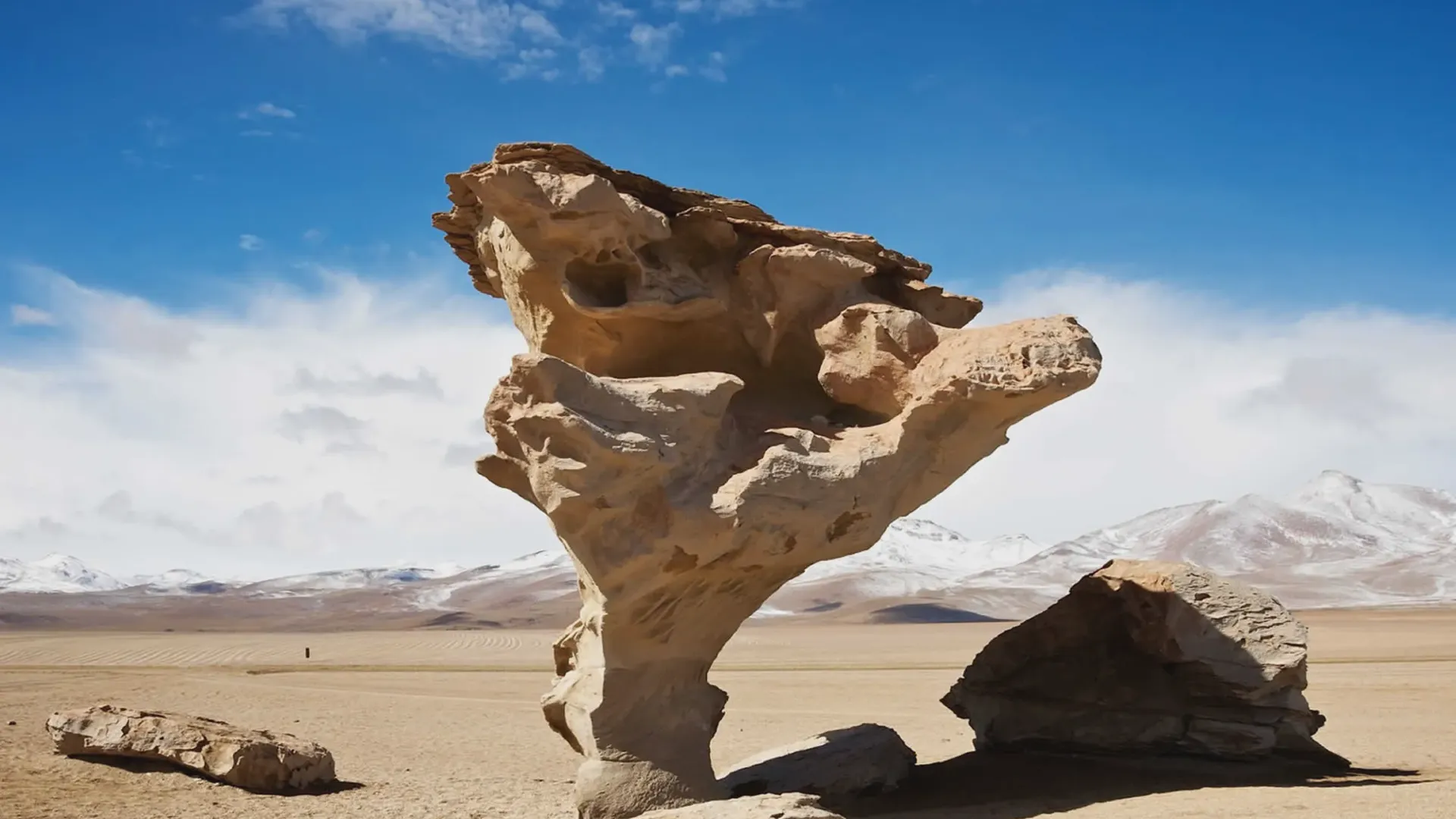
The Rock Tree (Árbol de Piedra) is a tree-like rock formation in the Siloli Desert desert the shape, particularly the thin stem, are due to strong winds carrying sand and eroding the soft sandstone.
The Árbol de Piedra is about 7 meters high and seems to have the whole structure of a petrified tree. Near the Árbol de Piedra are many other unusual rock formations formed by the same erosion.
Green Lagoon and Licancabur
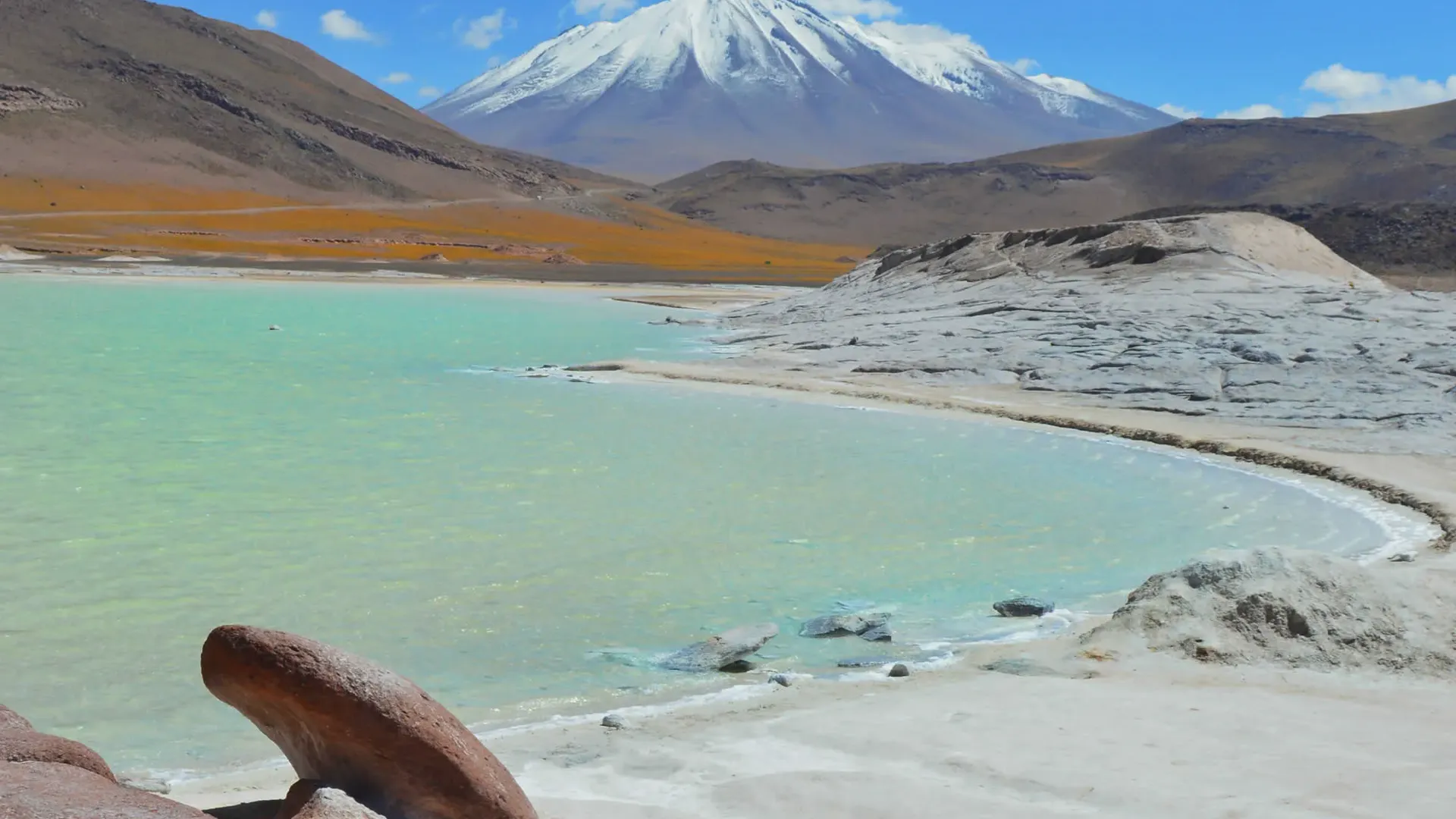
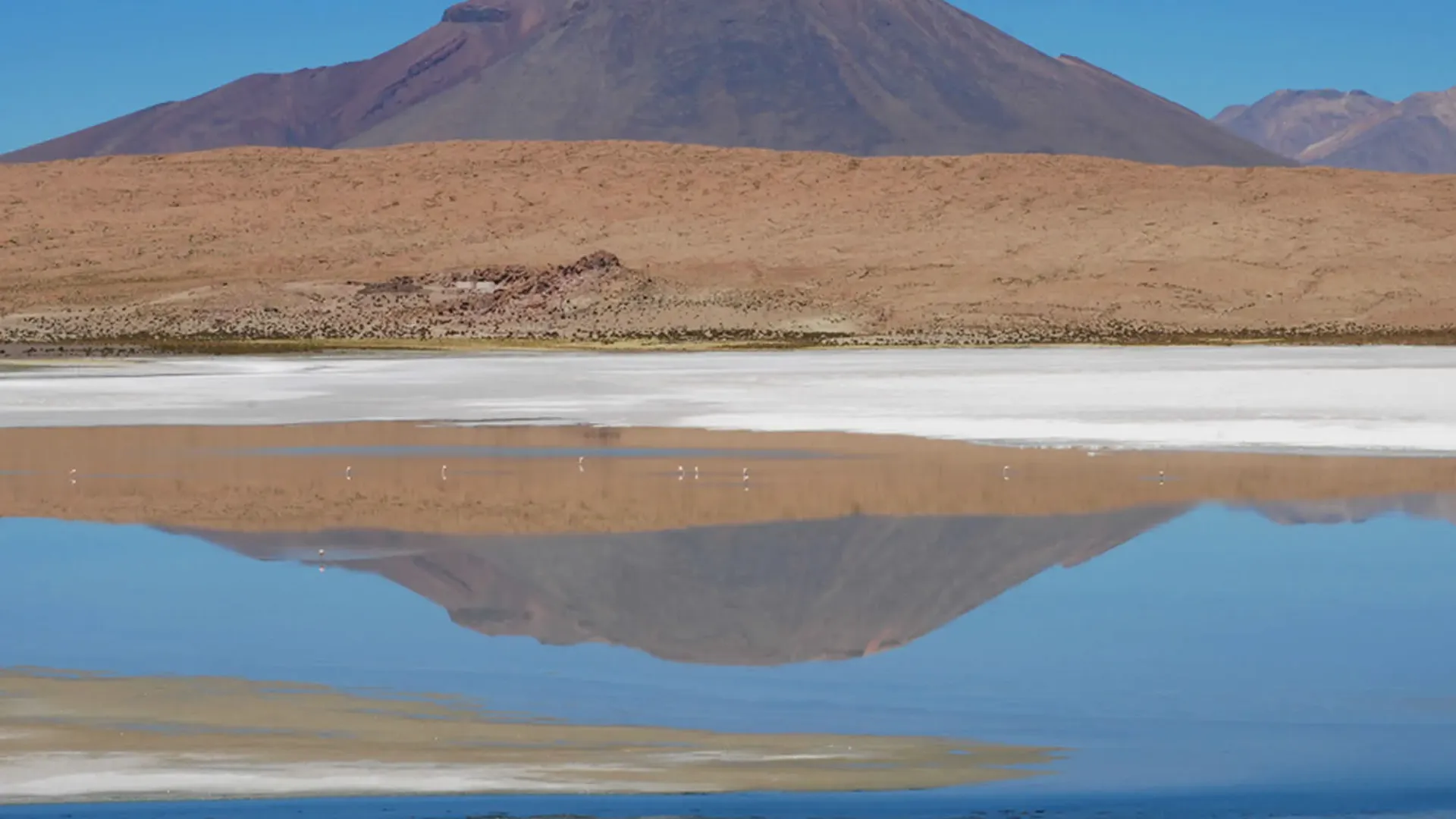
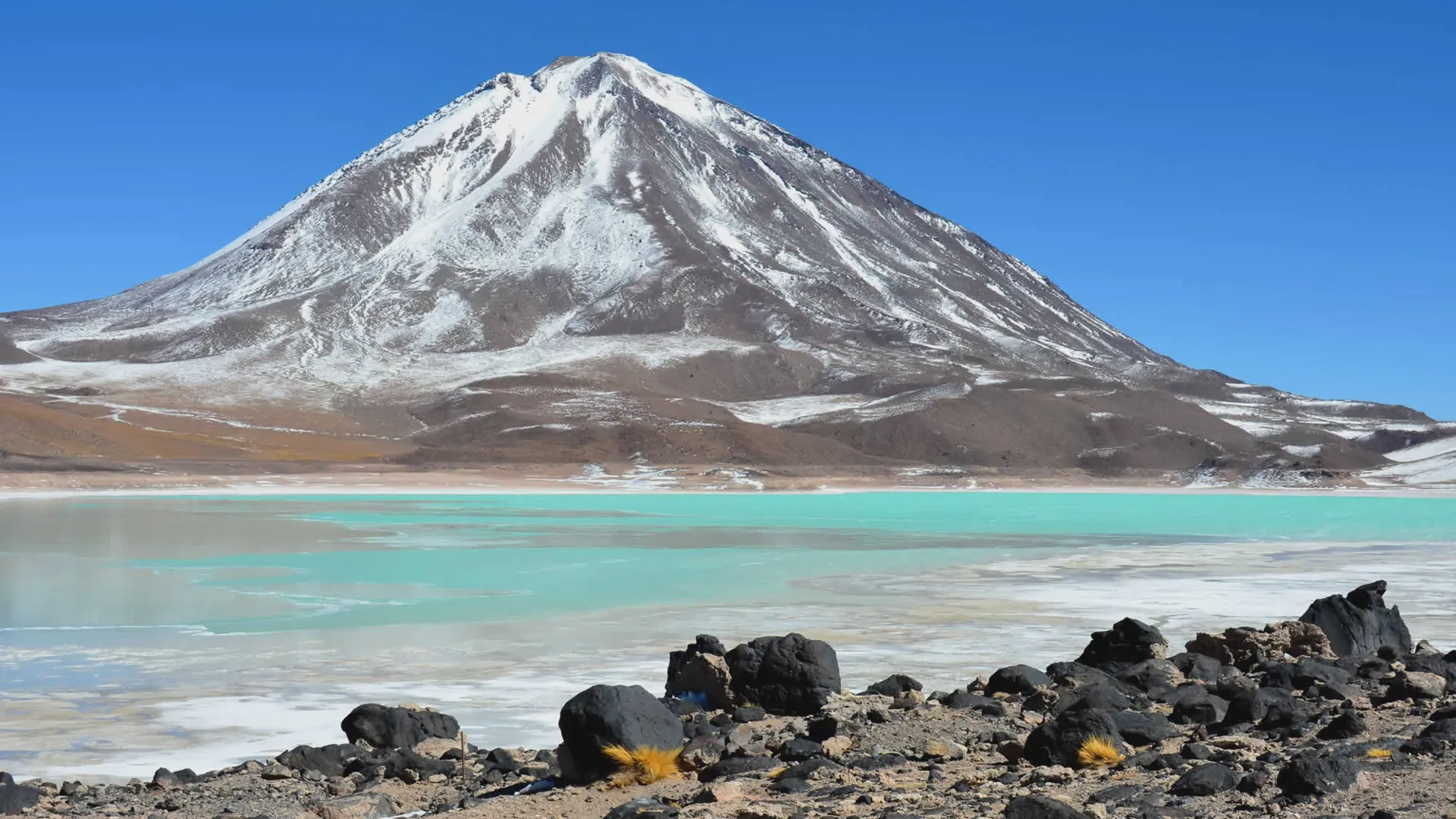
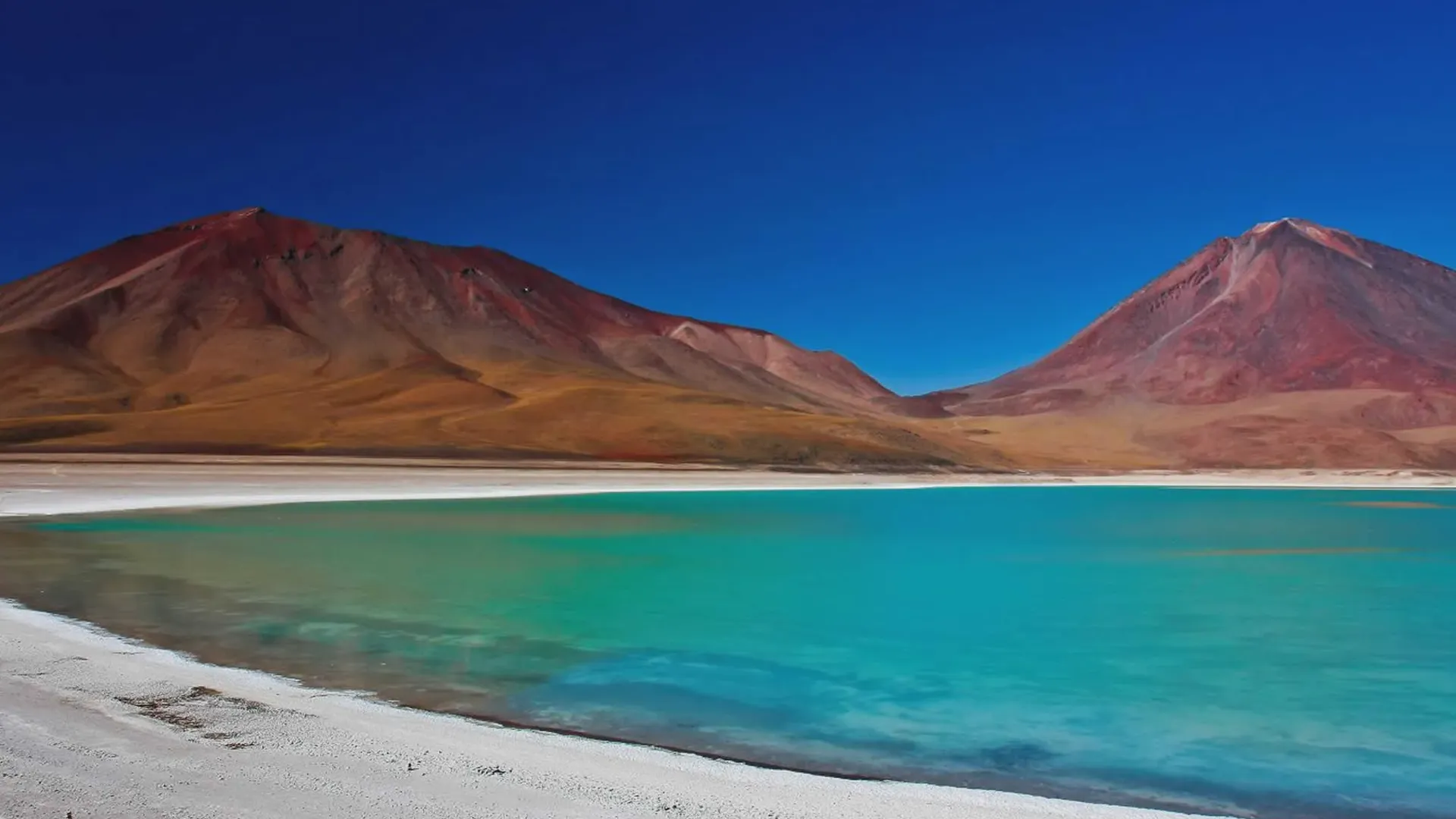
Laguna Verde (Green lagoon) is a high-altitude mineral lake in the Eduardo Avaroa Reserve, known for its beautiful green color. It sits at the foot of 2 volcanoes, Licancabur and Juriques, which straddle the border with Chile and are reflected in the water when the weather is calm.
The Licancabur is a stratovolcano on the border between Bolivia and Chile, south of the Sairecabur volcano and west of Juriques. It overlooks the Green Lagoon and looms over San Pedro de Atacama.
The Green Lagoon is located at 4350 meters above sea level. It has a total surface of 17 km2 and when seen for the first time, it has often been described as a vision of the end of the world.
The Laguna Verde is divided into 2 major bodies of water. The reason for its particular coloring is the high content of magnesium that exists in most of the geologic formations of the area. The landscape is truly fascinating especially when the sun sets on the zenith.
On the shores of the lagoon there are several enormous volcanic black-stones and saline rock formations that seem to be coming from the ground.
It has been impossible to determine the exact depth of this lagoon. Throughout the area there is a large amount of straw, most of which is curled or bent according to the direction of the wind.
While walking around the shore, an amazing view of the whole lagoon can be seen with the various mountains that surround it in the background. This allows visitors to see a beautiful and abrupt contrast of colors and shapes which are reflected on the surface of the lagoon as well.
This is a perfect area for long, peaceful and memorable hikes; it is also a great place for adventure and ecological tourism.
The best dates to vist the Green Lagoon include the months of June, July and August. During these months the soil is fairly dry, which makes it easy to ascend and descend the rocky formations throughout the entire area.
The Licancabur Volcano (5,868 meters above the sea level) has the shape of an almost perfect cone. It is an inactive volcano and it does not have much vegetation (straw and some grass). It is located towards the West end of the Lagoon and it is the landmark that indicates the border line between Chile and Bolivia. It is clearly visible from San Pedro de Atacama in Chile.
It takes about five hours to climb the Licancabur volcano. It has a very steep and rocky slope, and whoever dares to climb it must face strong currents of wind, which come from the Pacific Ocean. From the summit you can see several deep valleys and the numerous lagoons that are inside and outside the Eduardo Avaroa National Park.
Red Lagoon
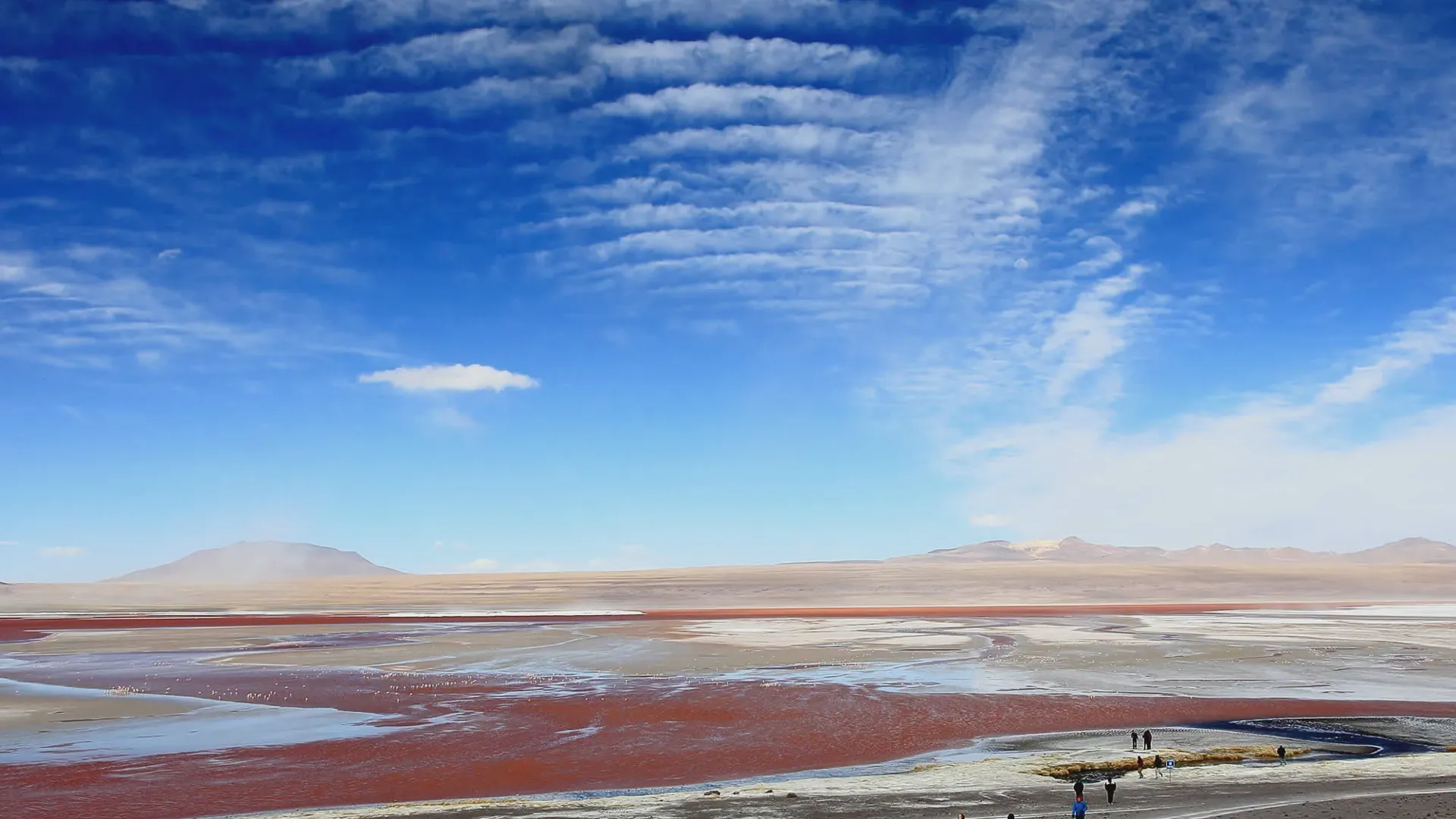
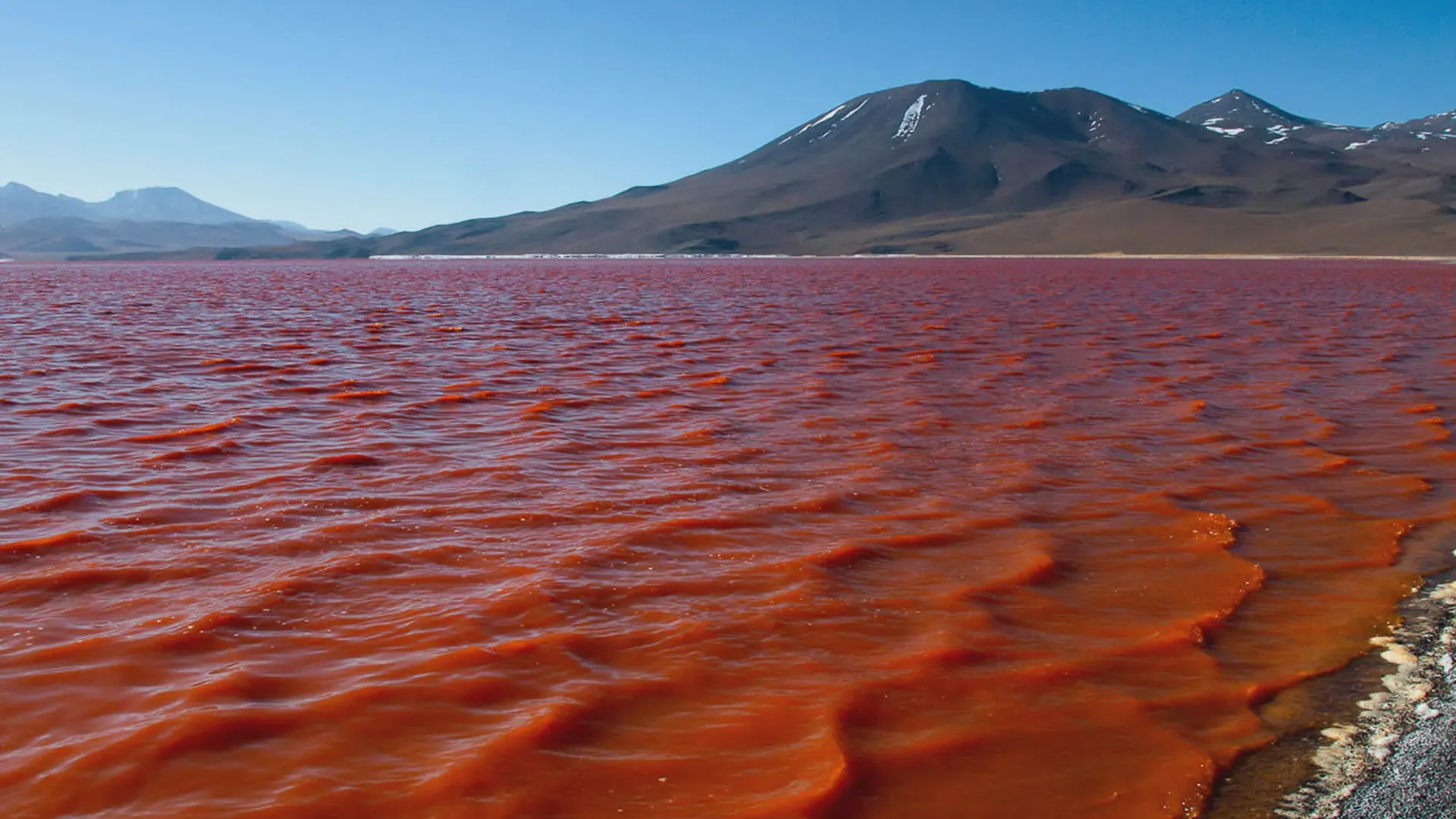
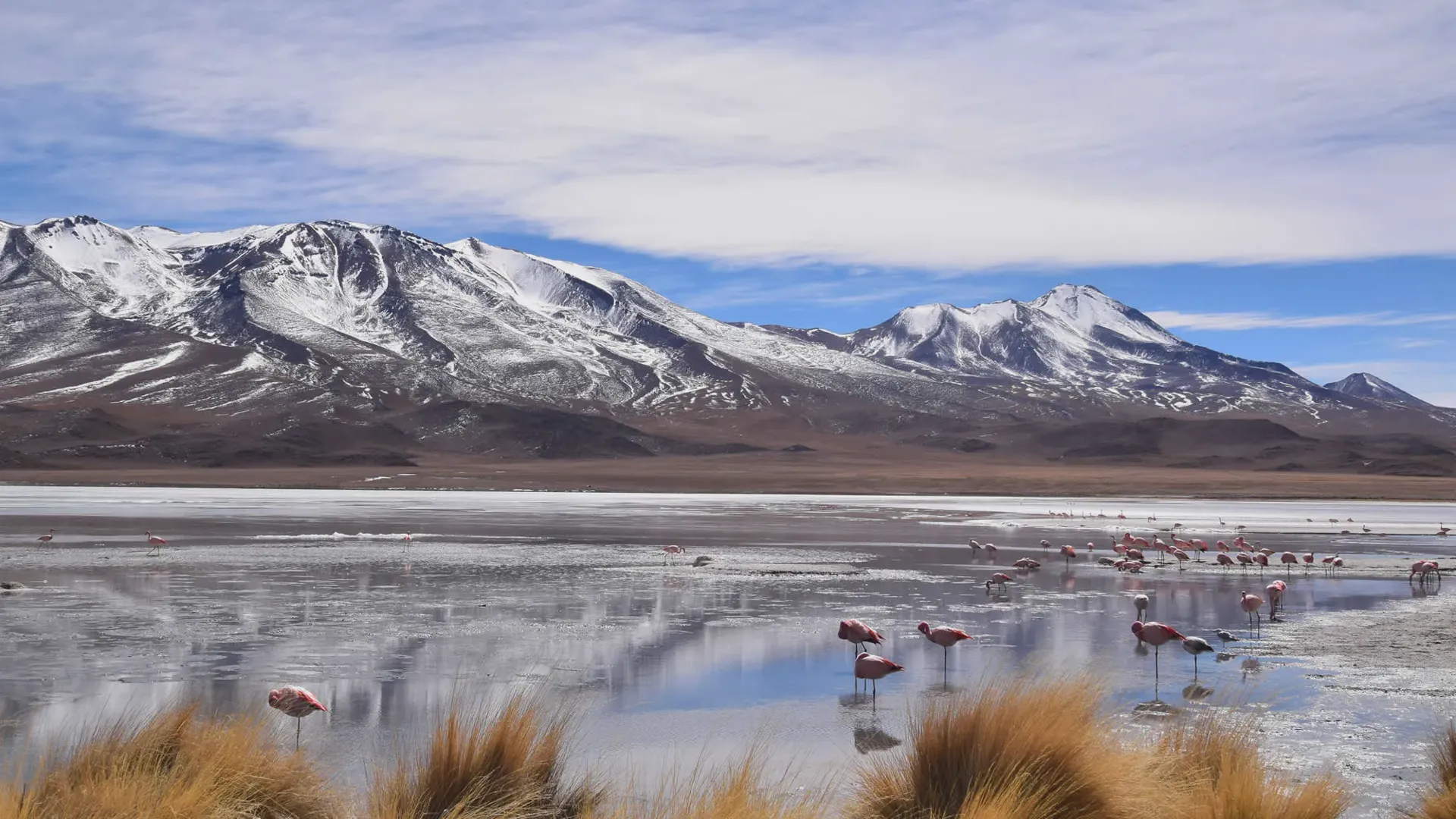
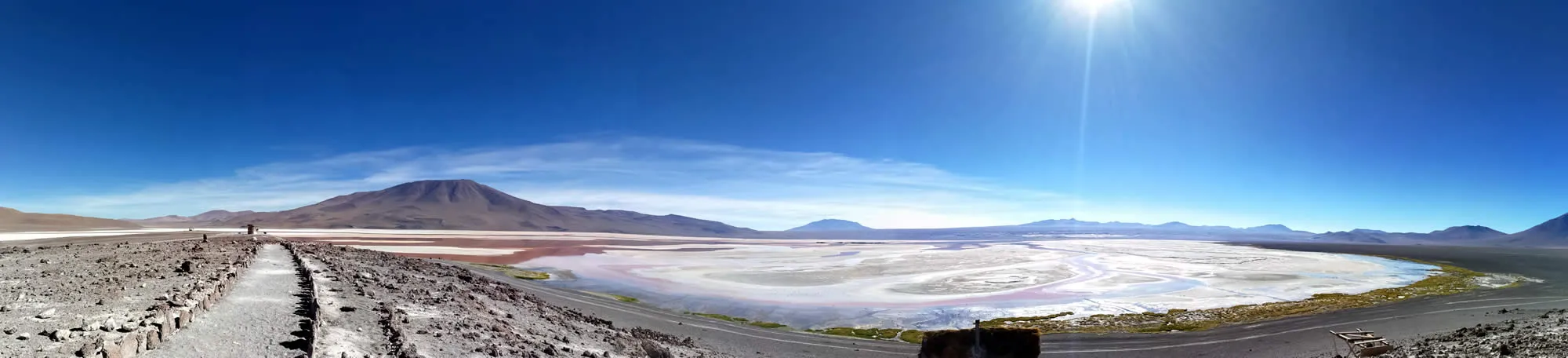
Laguna Colorada (Coloured or Red lagoon) is a shallow lake within the Eduardo Avaroa Andean Fauna National Reserve and close to the border with Chile. The lake is famous for its strong red colour caused by algae that provide food for large flocks of pink flamingos.
This place is also known as the "Nest of the Andes" as it shelters more than 30.000 flamencos of three different species. It is also home to the "Parihuana Chica" (a species of flamingo), the largest of its kind in South America.
The view becomes even more spectacular with the presence of a generally large collection of flamencos that reside all over the red waters of the lake. There are three major species of birds: "parina chica" or "Chururu", the "Totoko" or "parina grande". All of these species of birds make a stop here before continuing their journey towards the North.
Laguna Hedionda
"Stinking Lagoon"
This Lagoon, named for its aroma, is located 10 kms north-east of the Salar Chalviri at 4.532 meters above sea level. It is 2,52 kms long and 2,43 kms wide, with a surface of 3,2 km2. The length of the shore is 8 kms.
Naturally pink flamingos congregate in the salty waters.
Chiarkota Lagoon
The Shiarkhota (Chiarkota) Lagoon is a 35 hectare sweet water body situated at the feet of the Condoriri Mountain range in Sud Lipez province, Potosi, Bolivia.
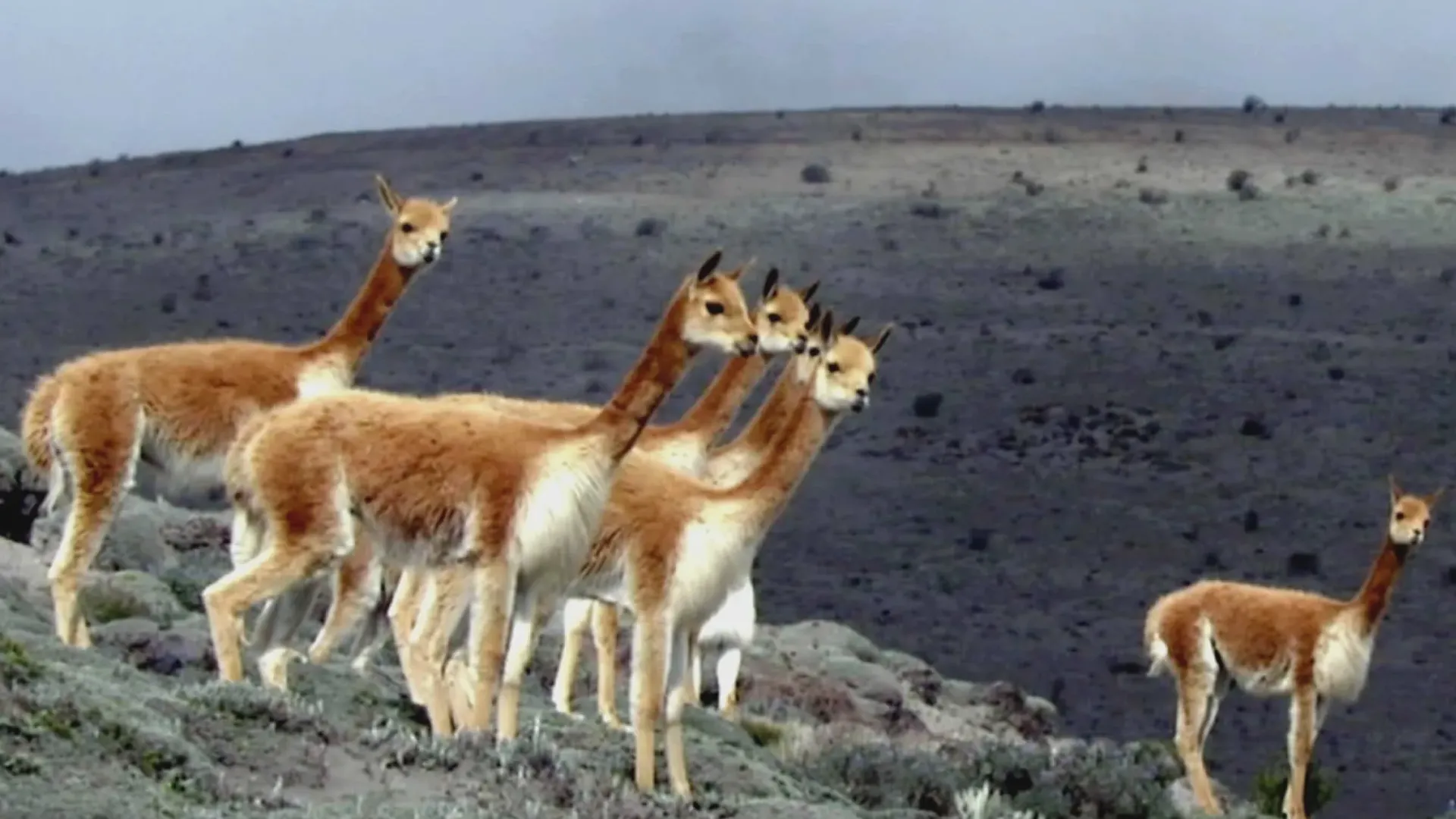
The Shiarkhota (Chiarkota) Lagoon is located at 4600 m.a.s.l. and has small numbers of flamingos, Andean geese, wild ducks and wild vicunas. It is a water spectacle of tranquility in the Bolivian highlands.
Honda Lagoon
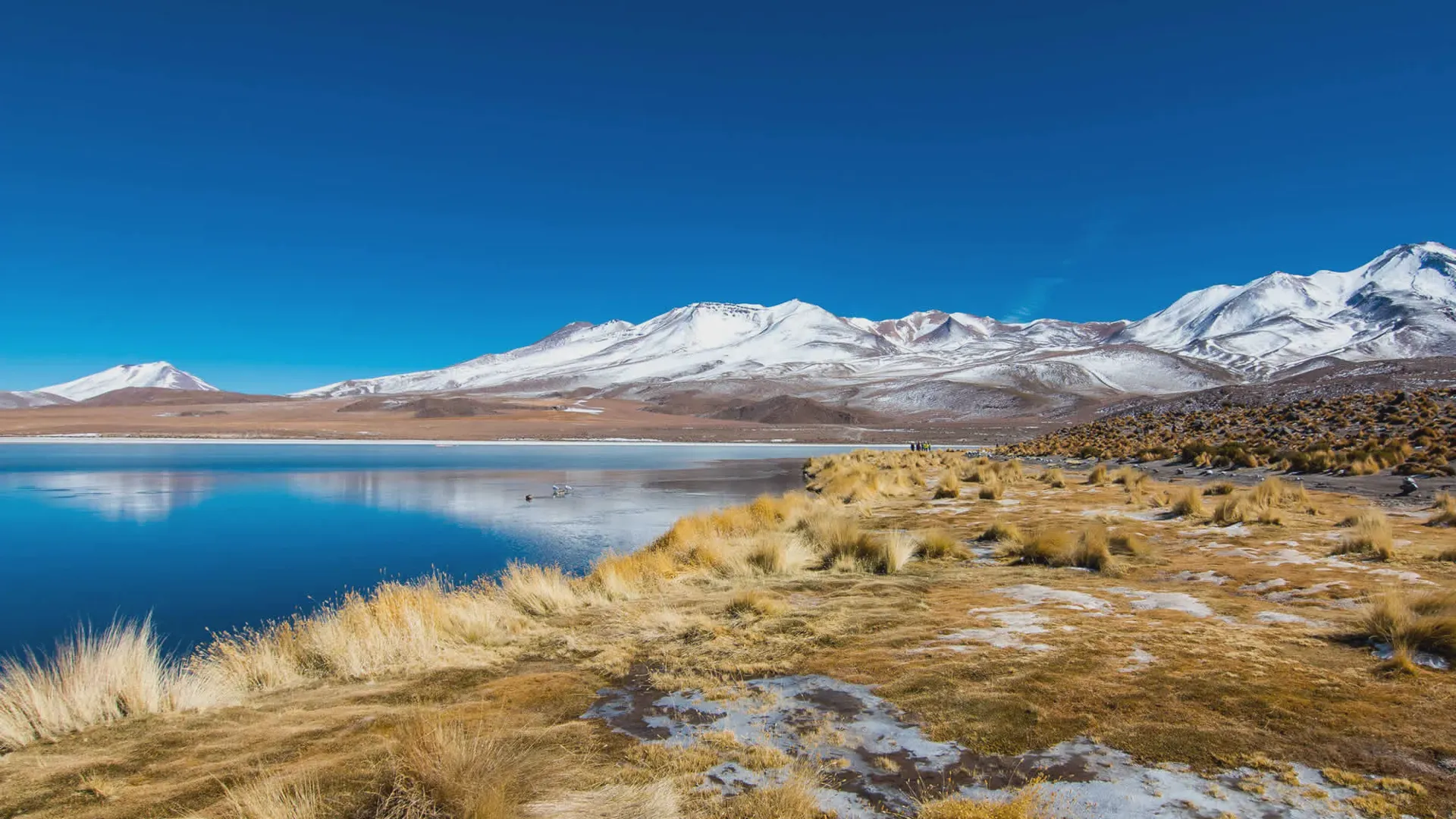
The Honda lagoon is situated in the middle of a low concentration salt flat field. It is the deepest lagoon of the circuit: its light blue waters contrast with the highland's earthy colors, creating a unique landscape.
Ramaditas Lagoon
The Ramaditas Lagoon is a sweet water lagoon with a surface area of about 4 square kilometers. It is situated inside the Eduardo Avaroa National Reserve in Sud Lipez Province of Potosi, close to smaller salt flats with no economical interest due to the low salt concentration.
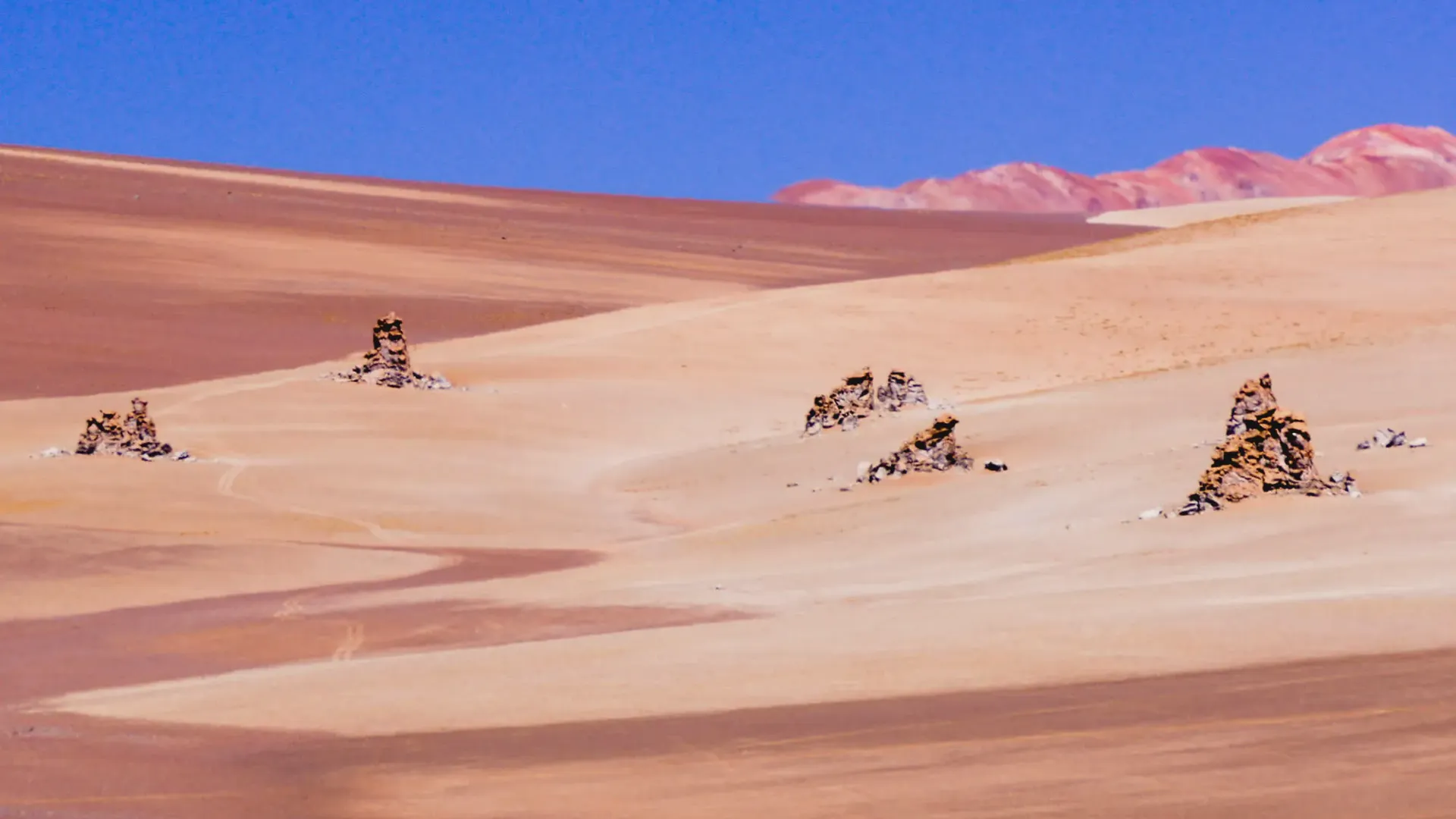
Salvador Dalí Desert
The Salvador Dalí Desert is an extremely barren valley characterized by landscapes that resemble surrealist paintings by Salvador Dalí.
Ollague Volcano
Ollague Volcano (also known as Oyahue) is a massive volcano in the Andes on the border between Bolivia and Northern Chile. It is located southeast of the village that shares its name and 83 Km. far from San Juan town. It has an elevation of 5870 meters.