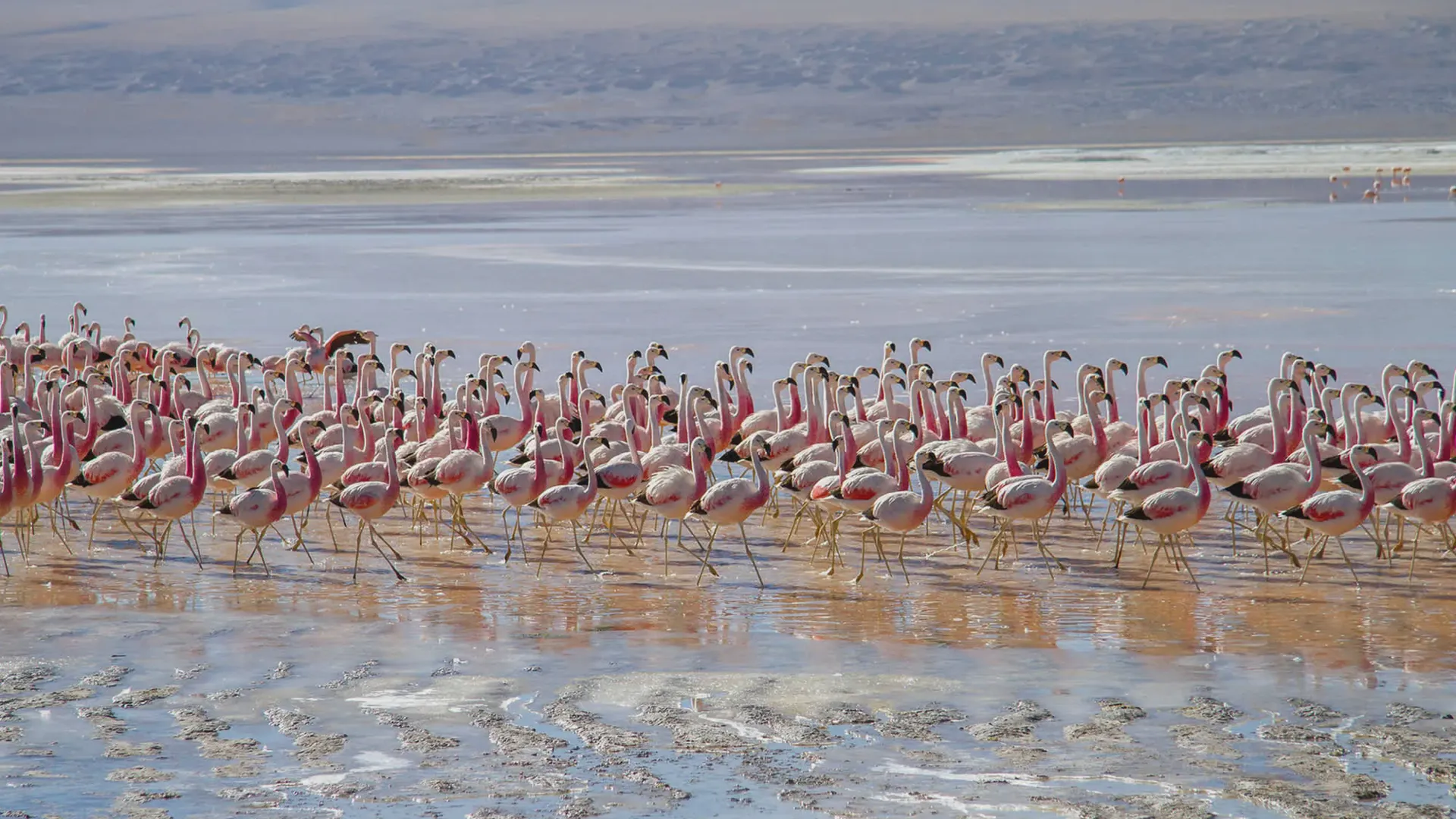
Eduardo Avaroa National Reserve in Bolivia
Uyuni

Eduardo Avaroa National Reserve in Bolivia

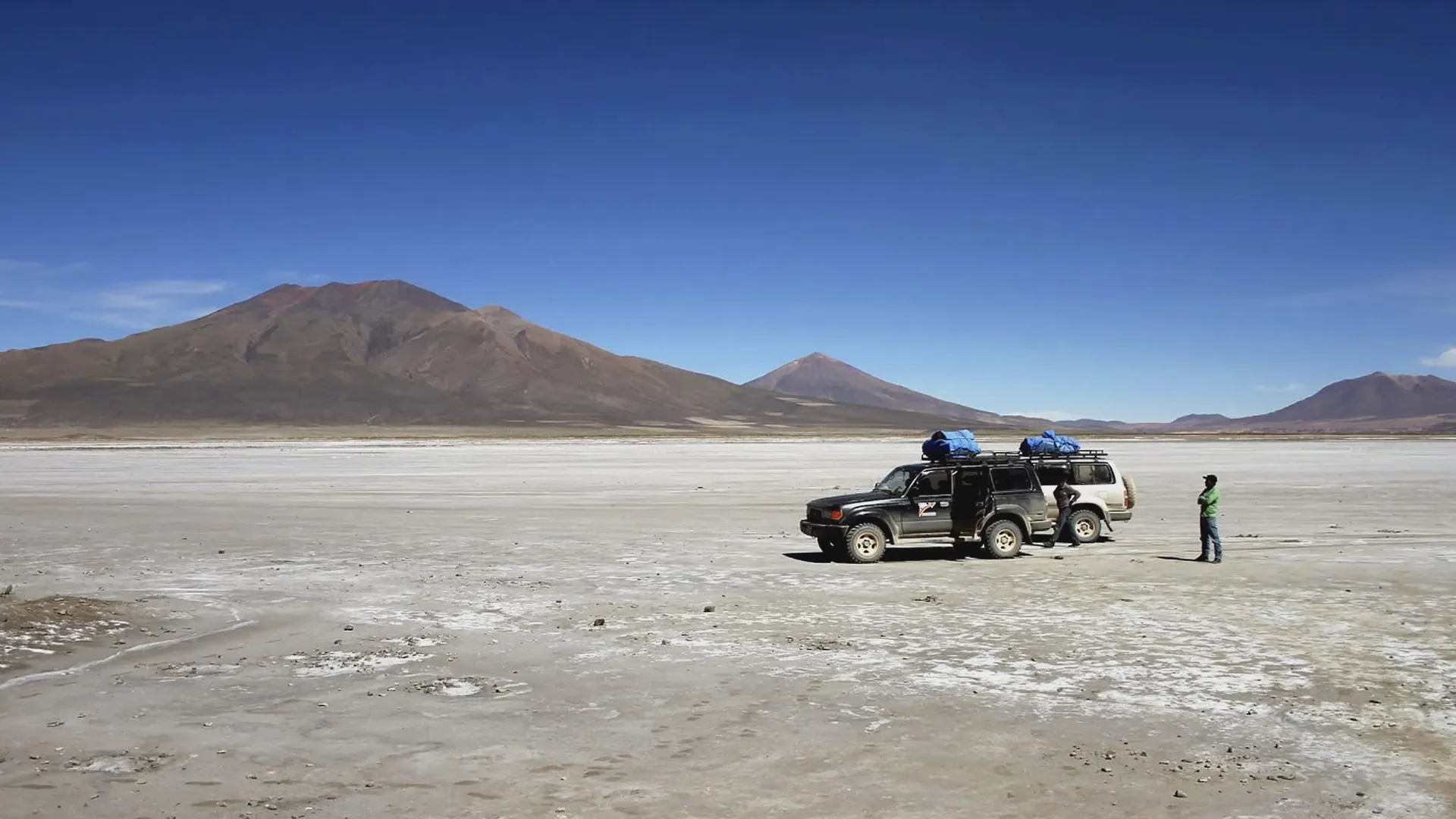
This high-altitude desert spans an area of over 7000 square kilometers in the south-western corner of Bolivia, bordering Chile and Argentina, in an extremely remote location but not too far from the famous Salar de Uyuni.

Updated: July 4, 2026

Everybody knows about the great salt flats of Bolivia, the Salar de Uyuni, but few know about the Eduardo Avaroa National Reserve.

Created in 1973 to protect the fauna, wildlife and indigenous residents, the Eduardo Avaroa National Reserve with its striking landscapes is one of Bolivia's most popular parks.

A rainbow of lakes, twisted rock pillars, alien vegetation, plumes of hot steam, pink flamingos and colorful volcanoes stun the senses. The Reserve is basically a tropical Iceland and a must-see highlight of the Andes.

This high-altitude desert spans an area of over 7000 square kilometres in the south-western corner of Bolivia, bordering Chile and Argentina, in an extremely remote location but not too far from the famous Salar de Uyuni. The reserve lies at 15,000 feet on the Altiplano (high plains) of the Andes, which is the world's largest area of high plateau outside Tibet. The rugged mountains in the reserve are among the highest in the Andes, and go up to 6000 meters.

How to get there?

Most people fly into La Paz then either take another flight or a tourist night bus to the city of Uyuni.

To visit the Eduardo Avaroa Reserve you will need to get on a tour. Be aware of the very high altitude here, which starts at 4600 meers and ends at 4970 meters.

The entrance to the reserve is about a 160 km drive south from the southern shore of the salt flat.

When is the best time to go?

The climate is dry and cold all year round. In winter (May to August), and summer (December to April) temperatures average 3 °C (37 °F).

What to see?

Named after Colonel Eduardo Avaroa, Bolivia's hero of the War of the Pacific, the reserve is known for its lakes of outlandish colours, weird rock formations, thermal springs, geysers and semi-active volcanoes.

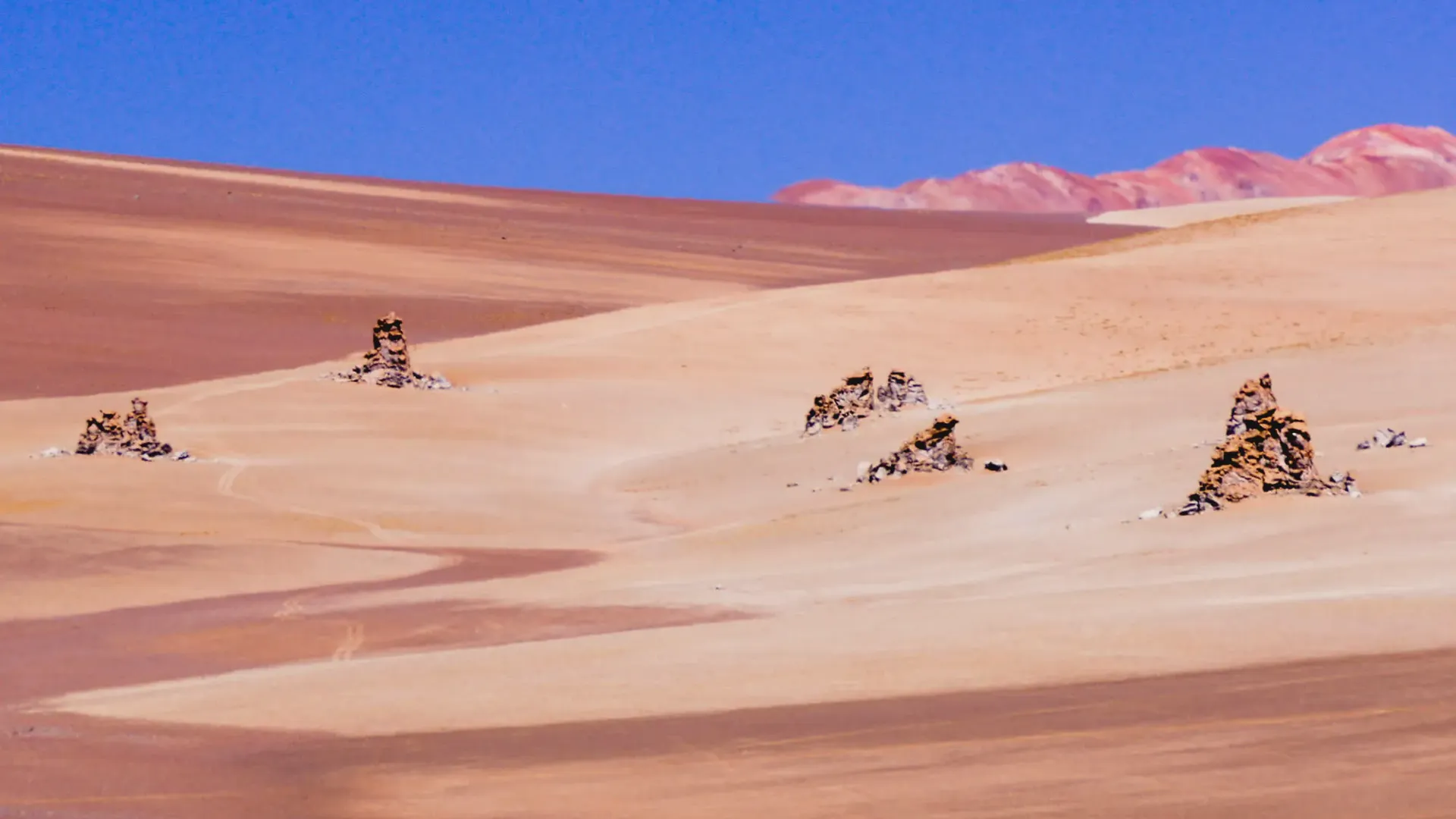
The Daliesque landscape is extraordinary and completely worth savouring.
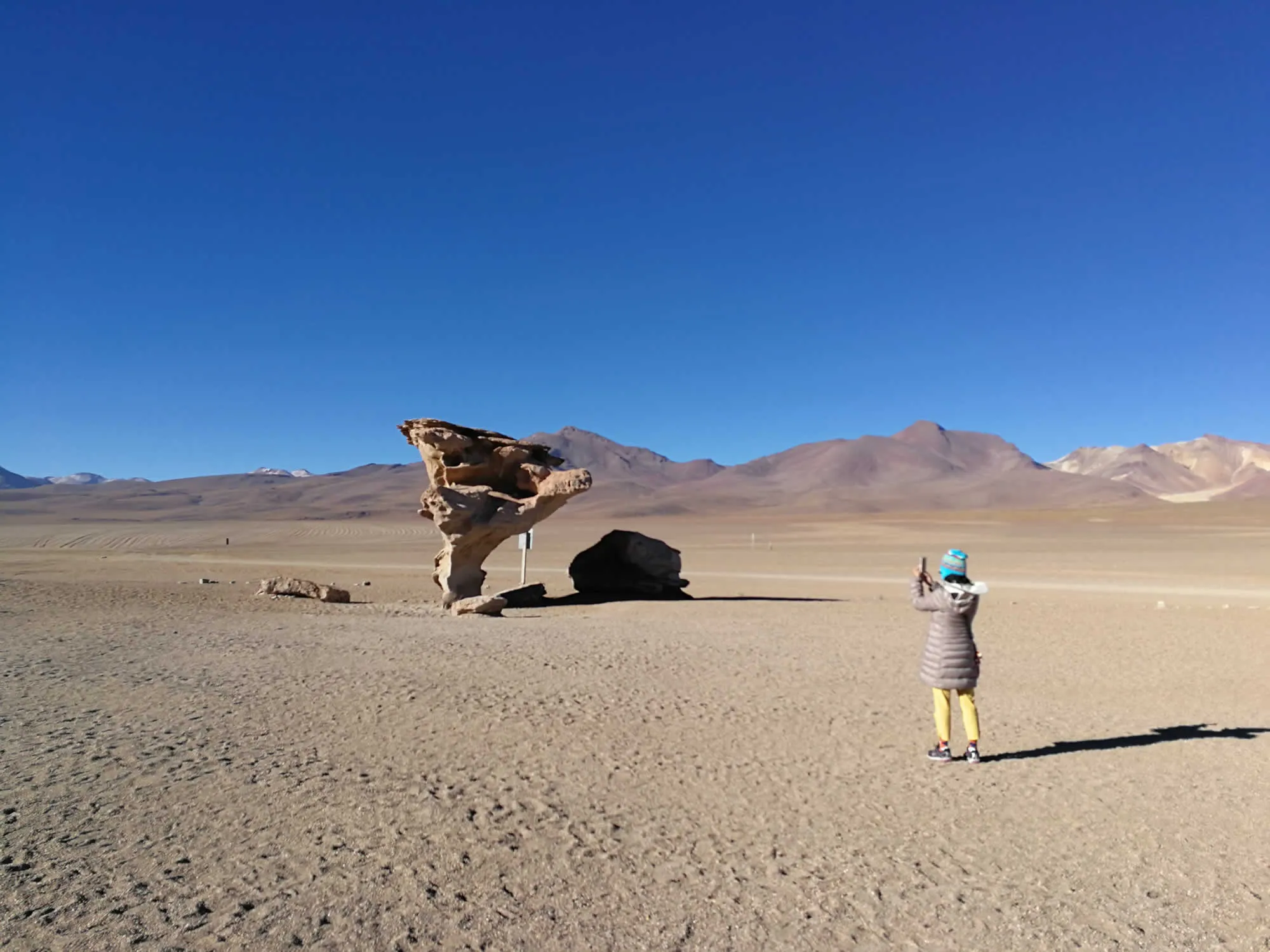
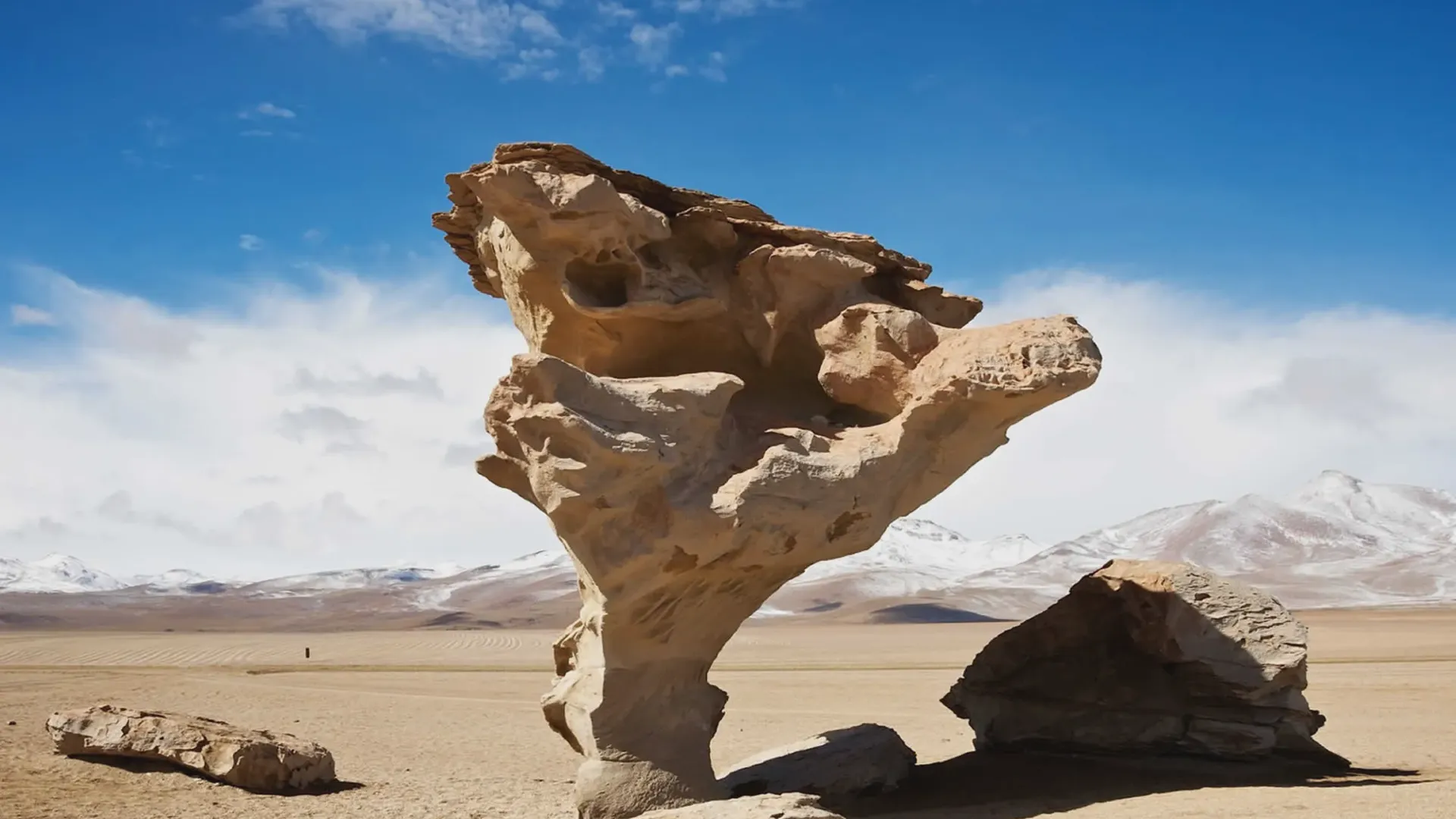
Stone Tree, Eduardo Avaroa Reserve, Uyuni, Bolivia

One of the classic photo opportunities that you won't be able to resist is The Árbol de Piedra (Stone Tree) which is a rock formation shaped by centuries of wind erosion in the Siloli Desert. The Siloli is geologically part of the same desert as the Atacama in Chile. It is a barren wilderness with roads that stretch beyond what the eyes can see.

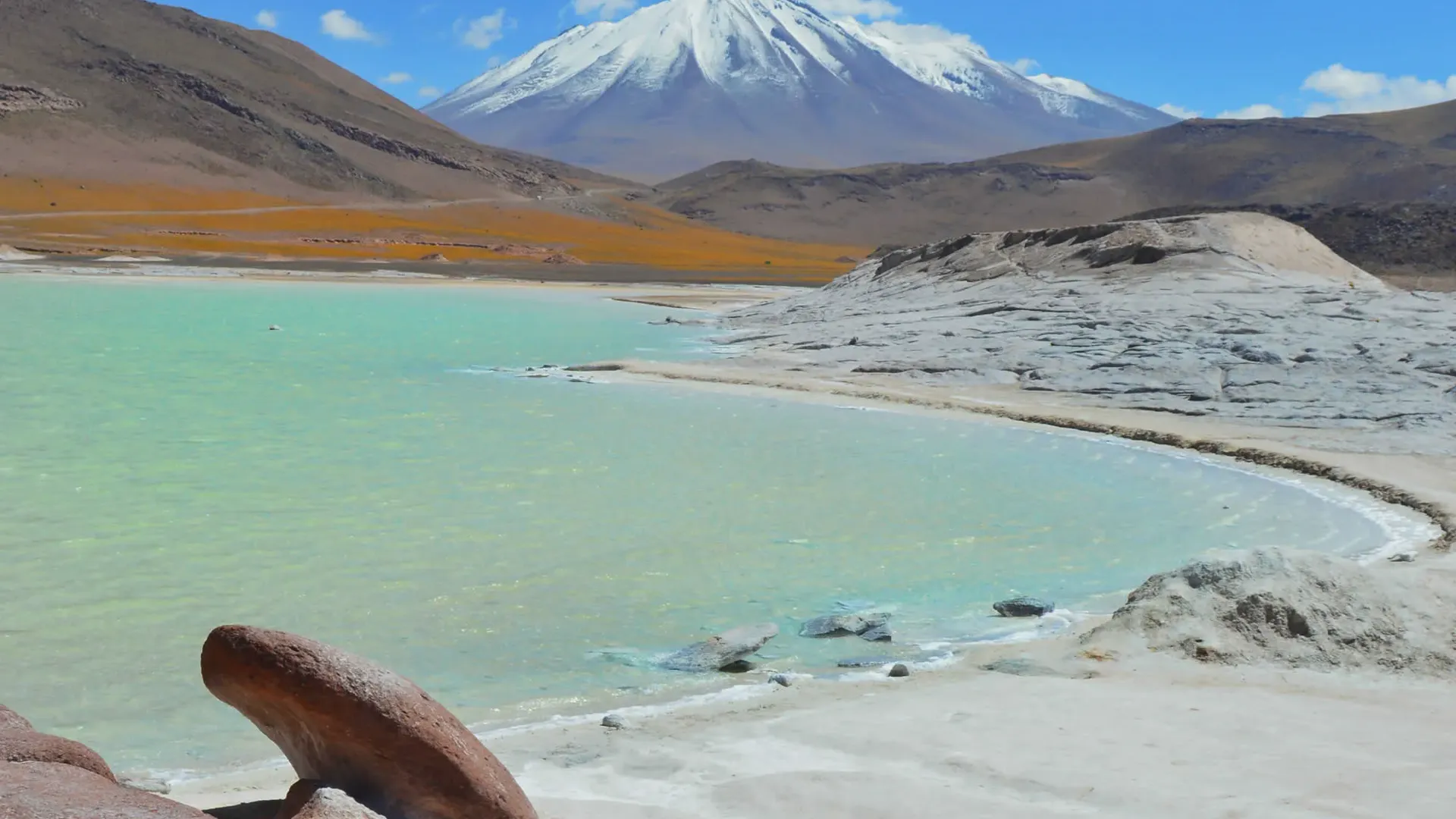
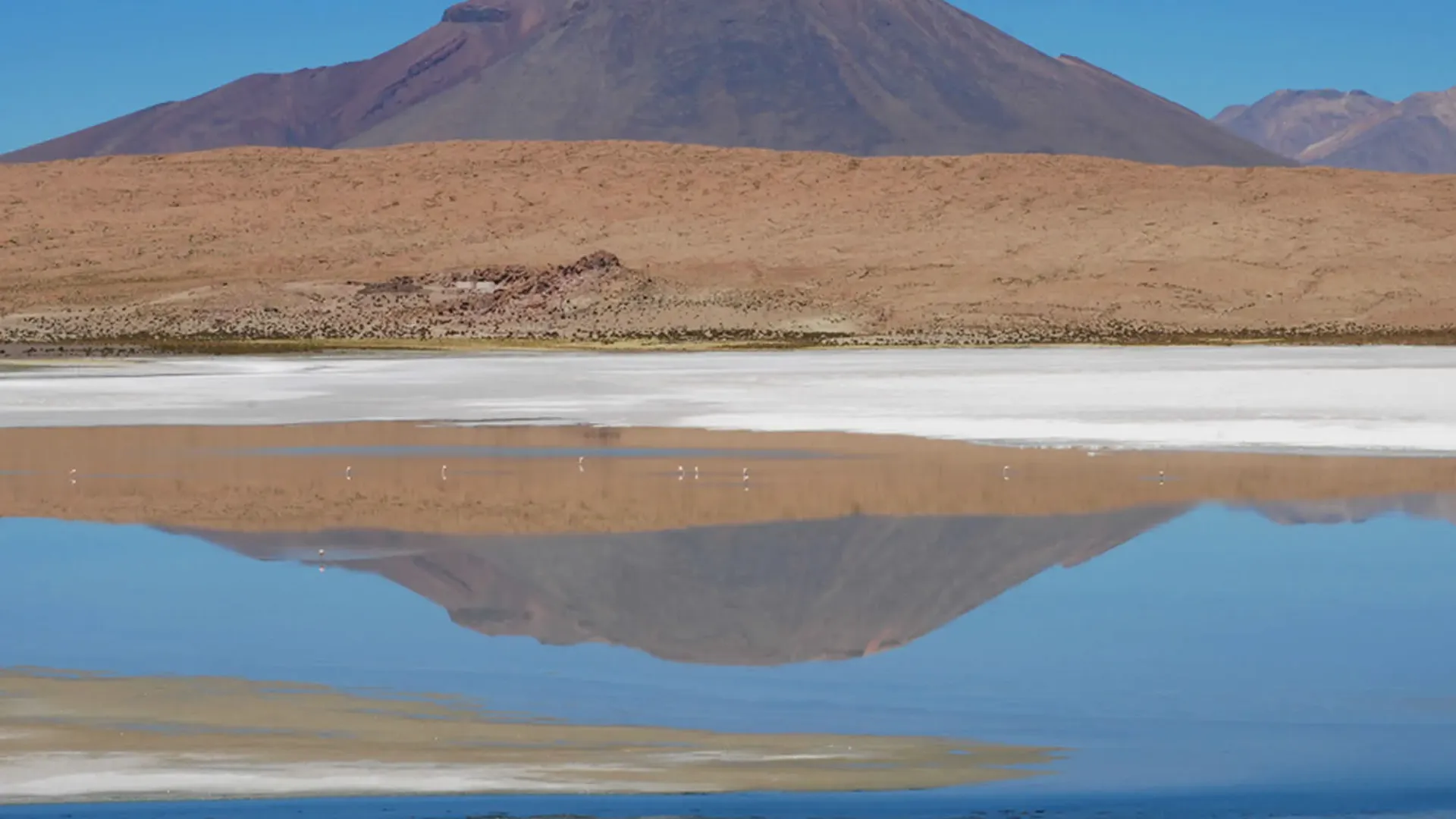
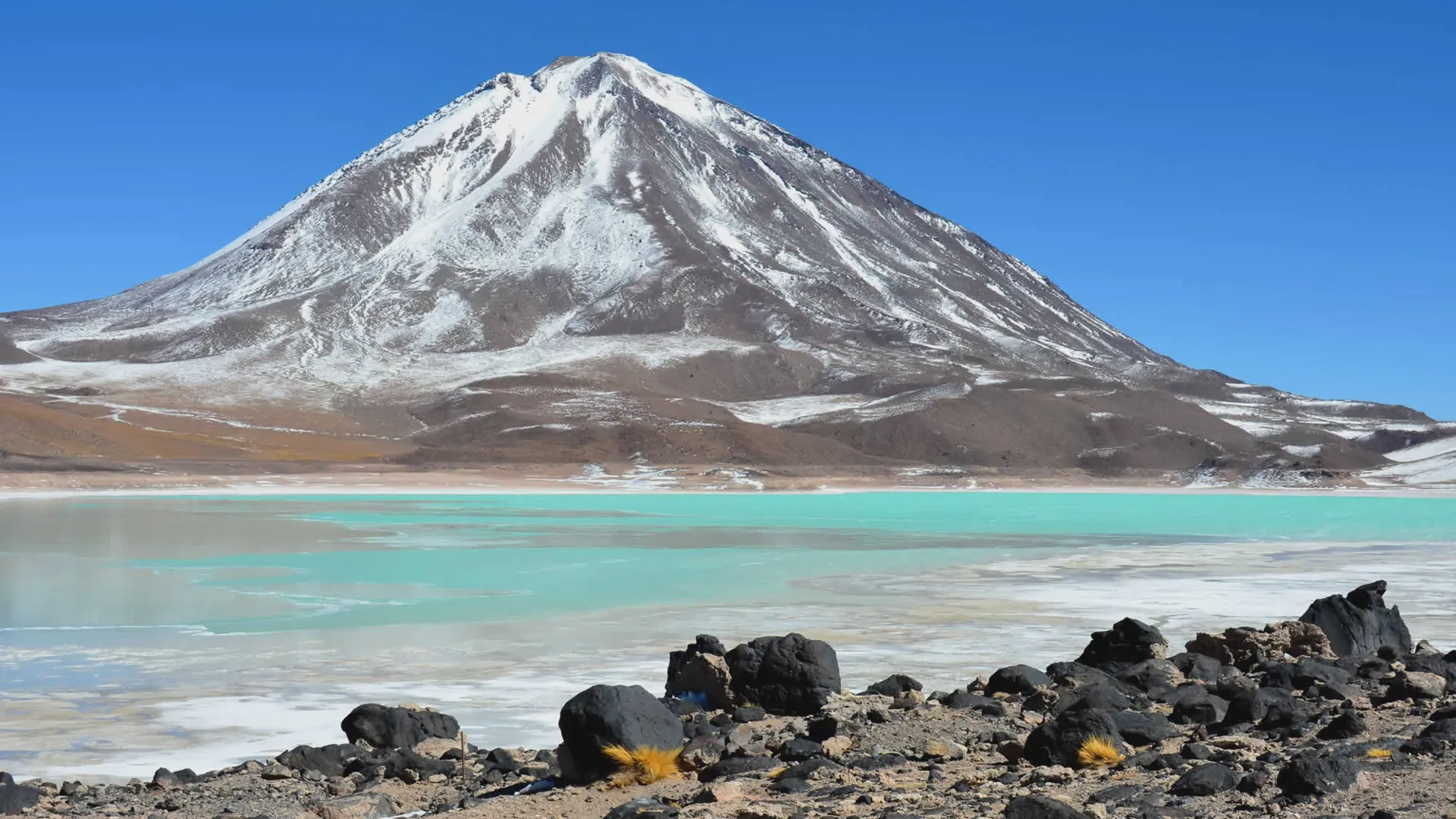
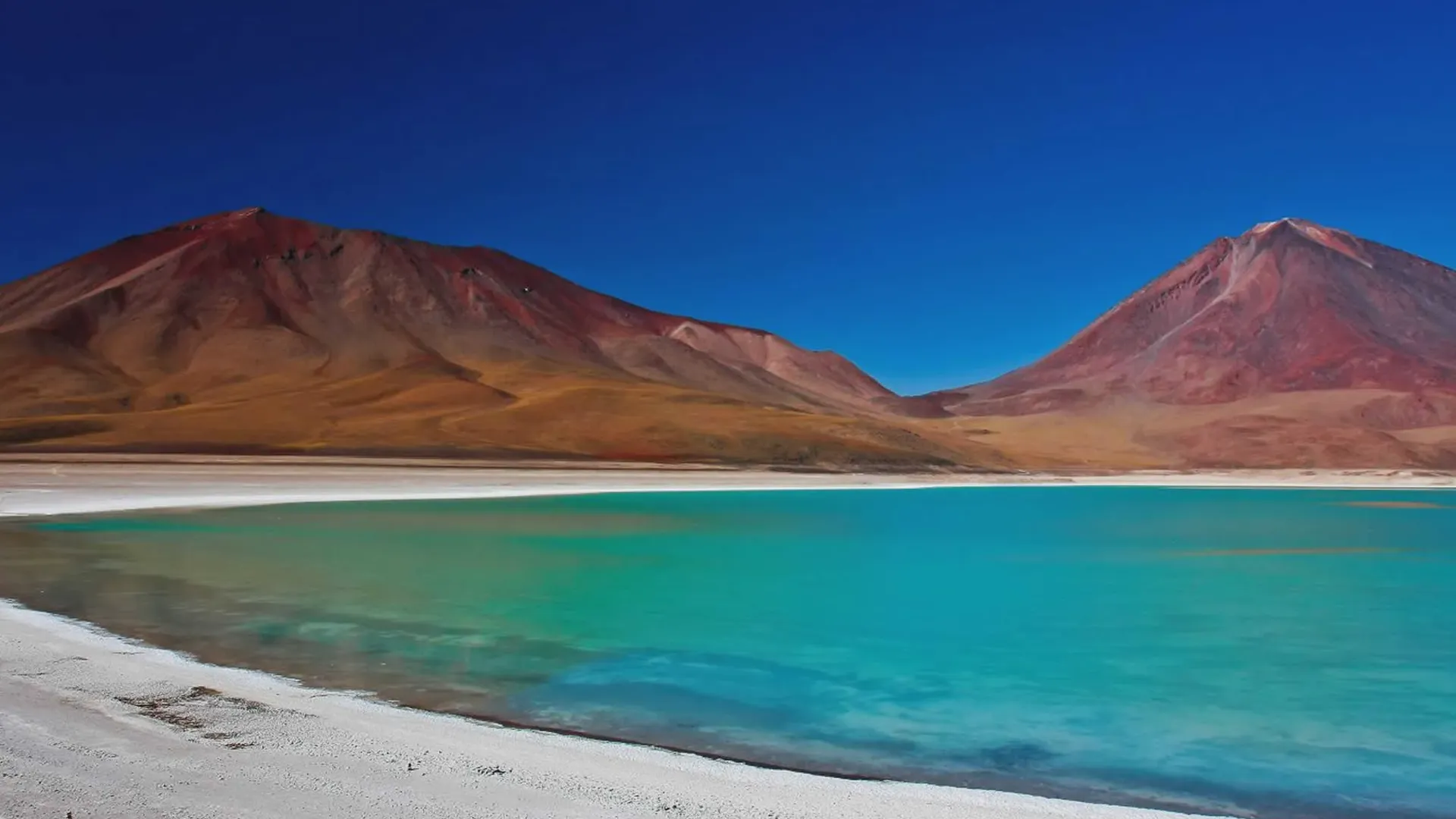
The Laguna Blanca (White Lagoon) is a breathtakingly beautiful lake near the border with Chile. It is separated only by a narrow stretch of land from the vivid green Laguna Verde. Both are located at the foot of the volcano Licancabur, which is visible from San Pedro de Atacama. The Green lagoon contains arsenic, copper and other minerals which render colour to the lake waters, and the disturbance by the winds usually cause it to evolve from turquoise to a dark emerald colour.
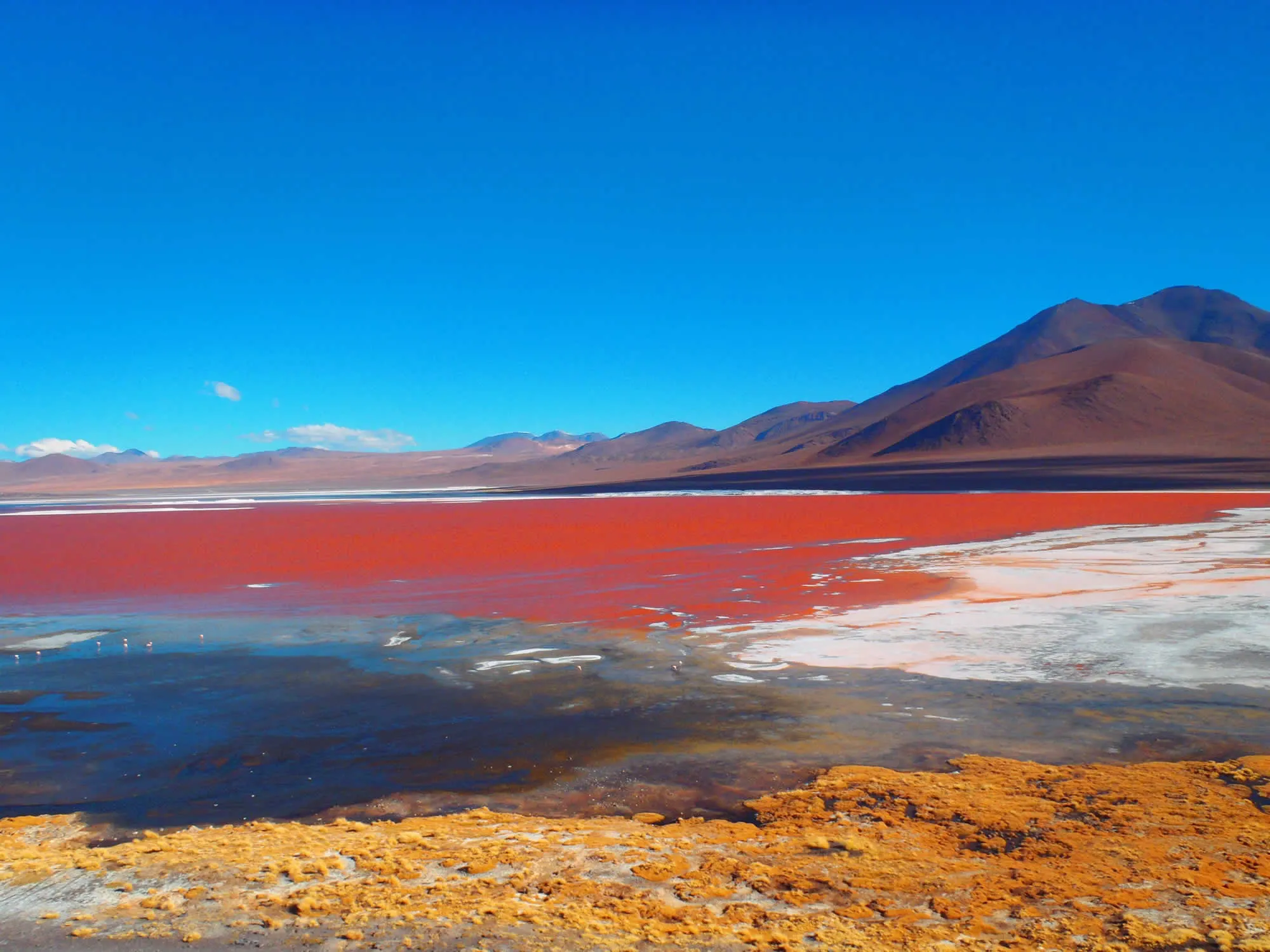
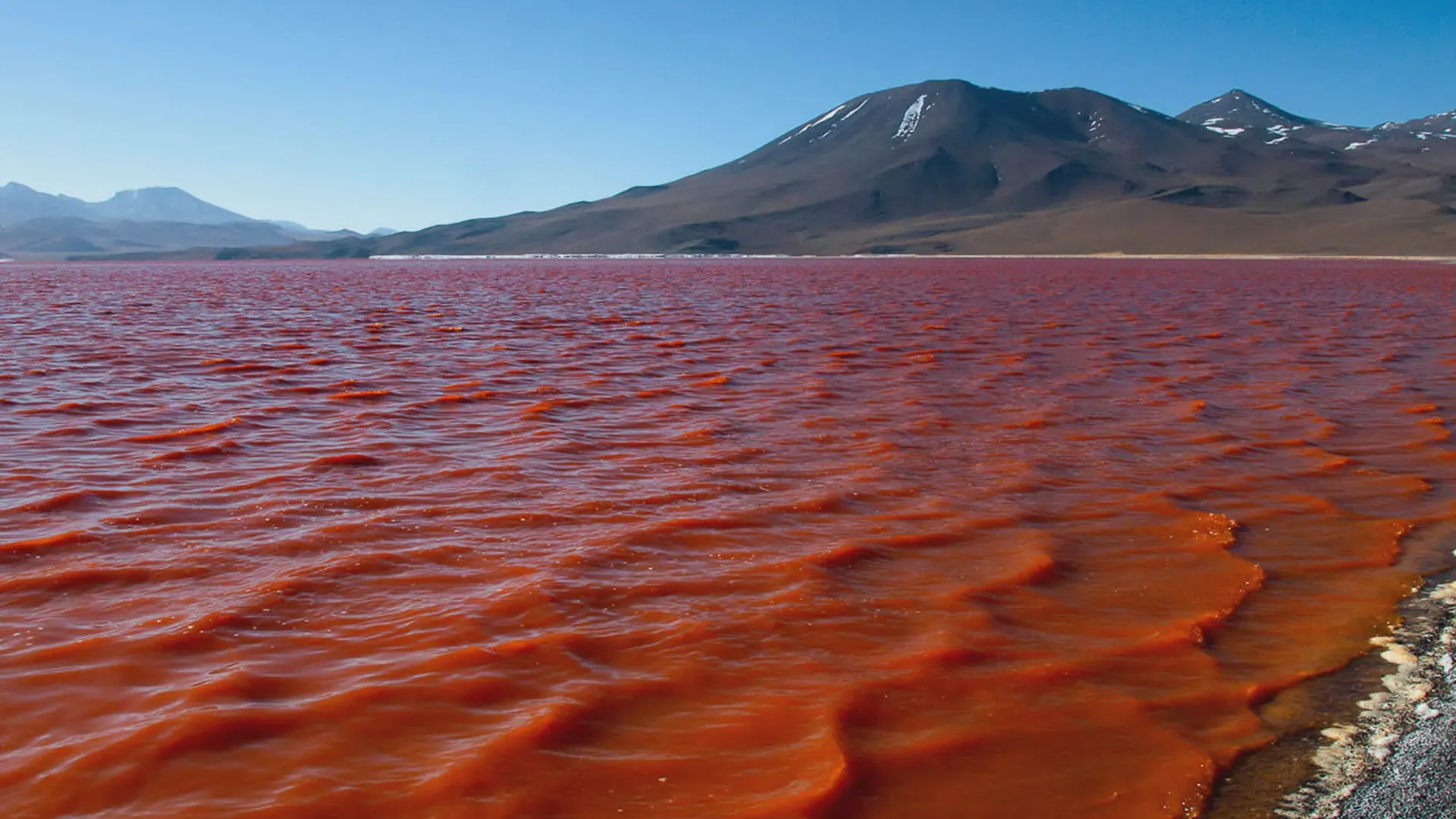
Red Lagoon, Eduardo Avaroa Reserve, Uyuni, Bolivia

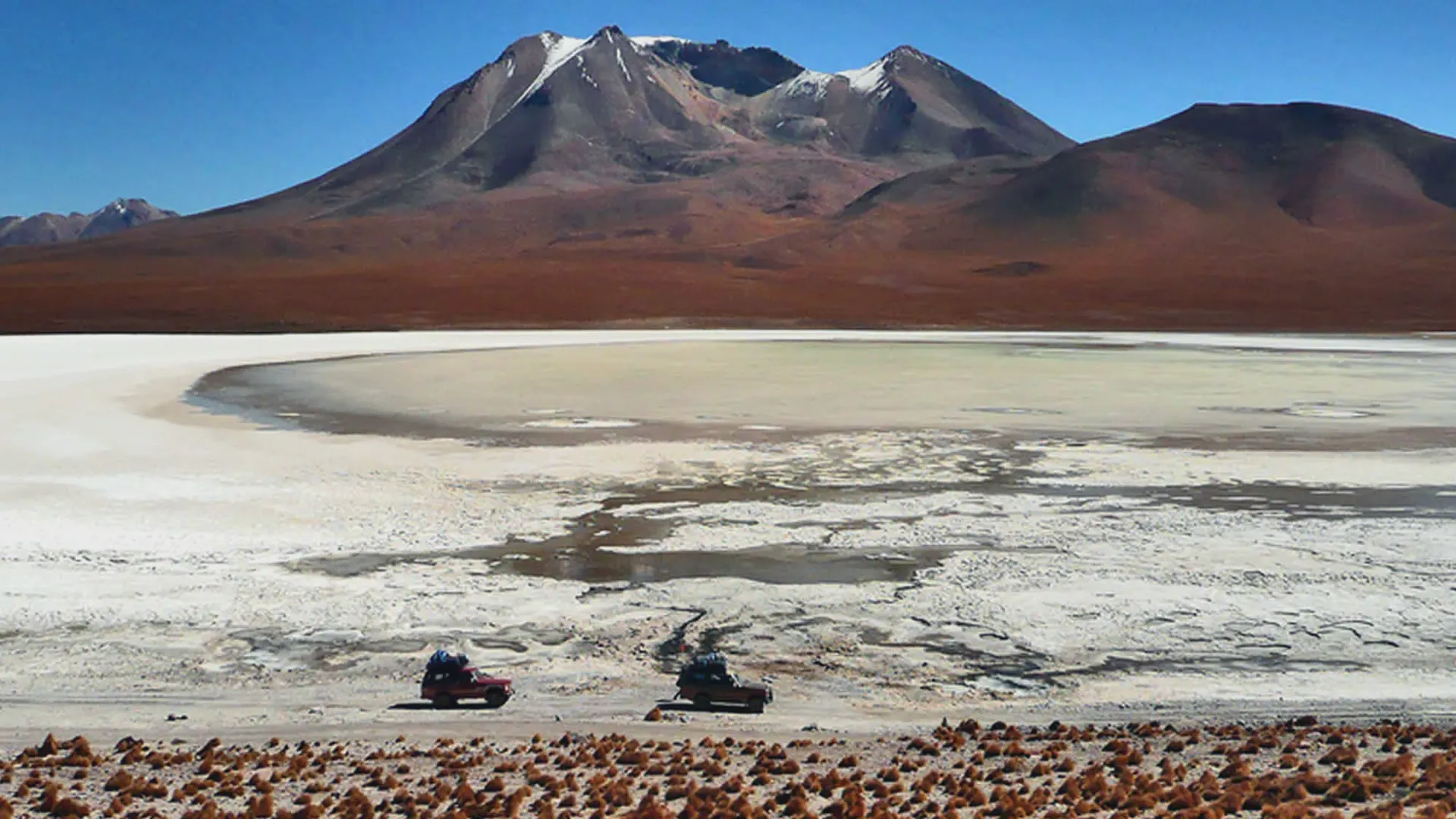
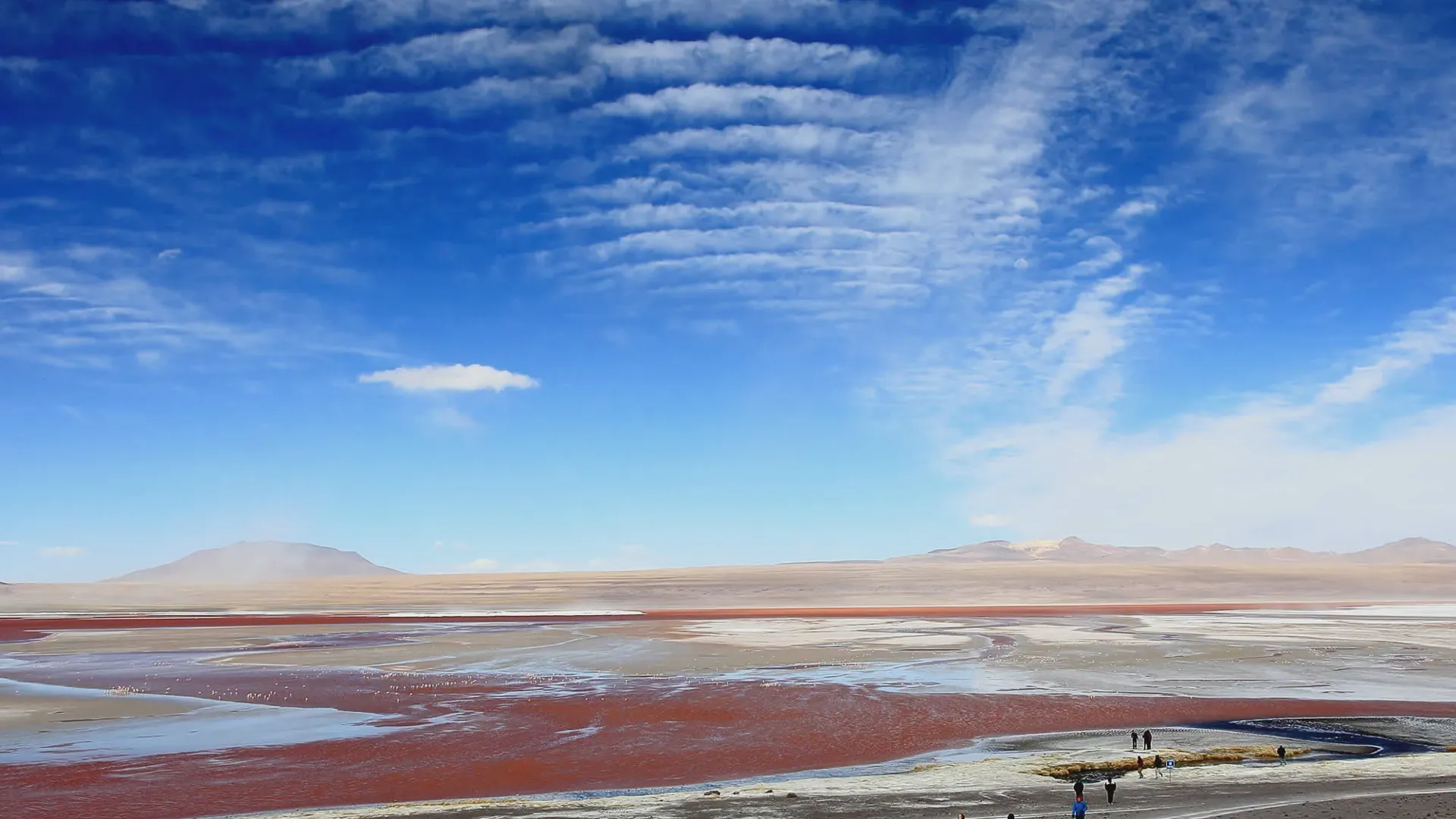
The Laguna Colorada (Red Lagoon) has crimson pools of water mottled by patches of contrasting white borax minerals, making it look both otherworldly and breathtaking.

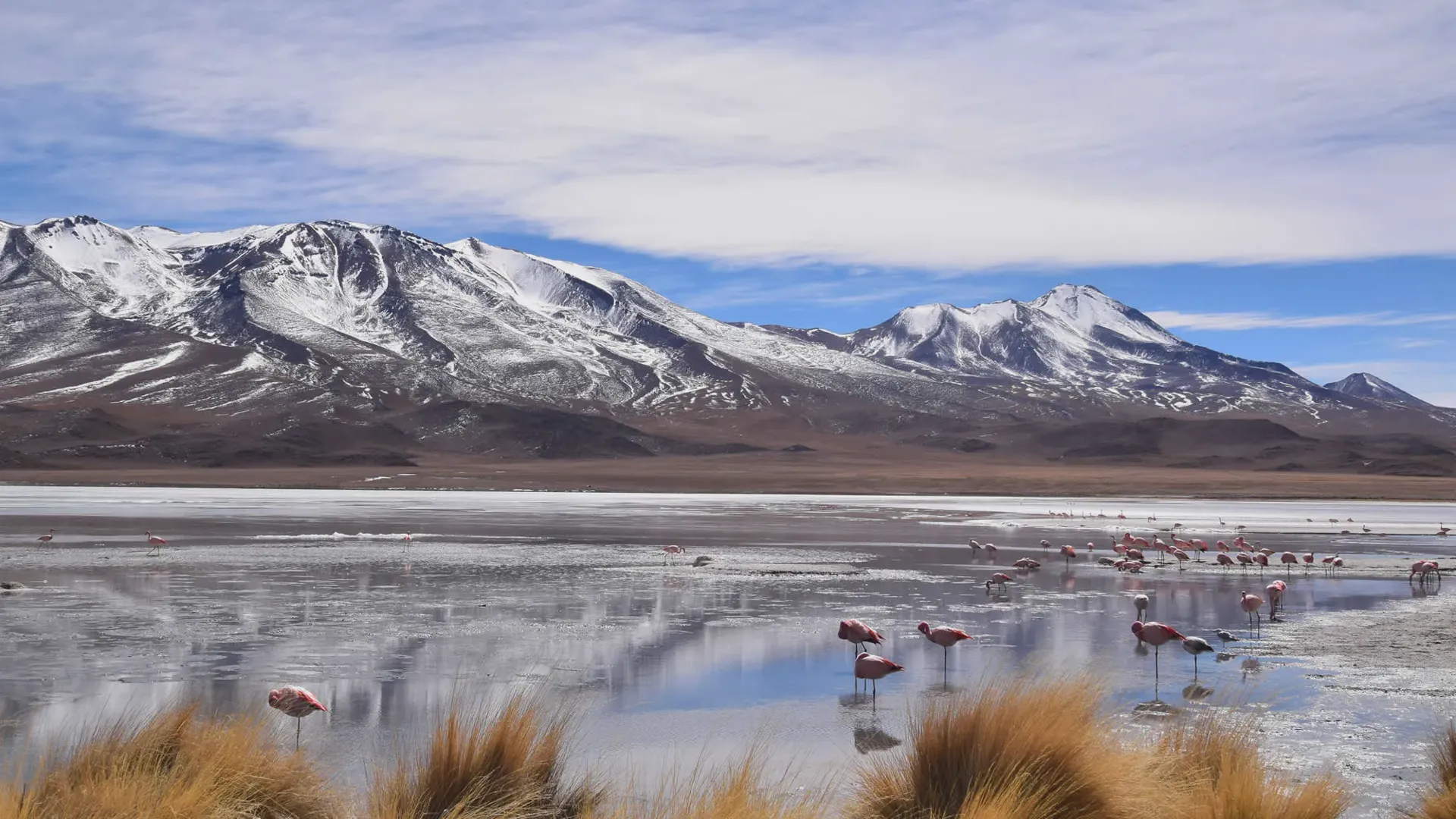
The reddish tones are caused mainly by the pigmentation of the salt-tolerant algae Dunaliella salin and the whole area looks like it belongs somewhere else in the Solar System. It is one of the most immaculate wildlife areas you can visit and if you come at the right time of the year you will be able to see thousands of flamingos nesting.
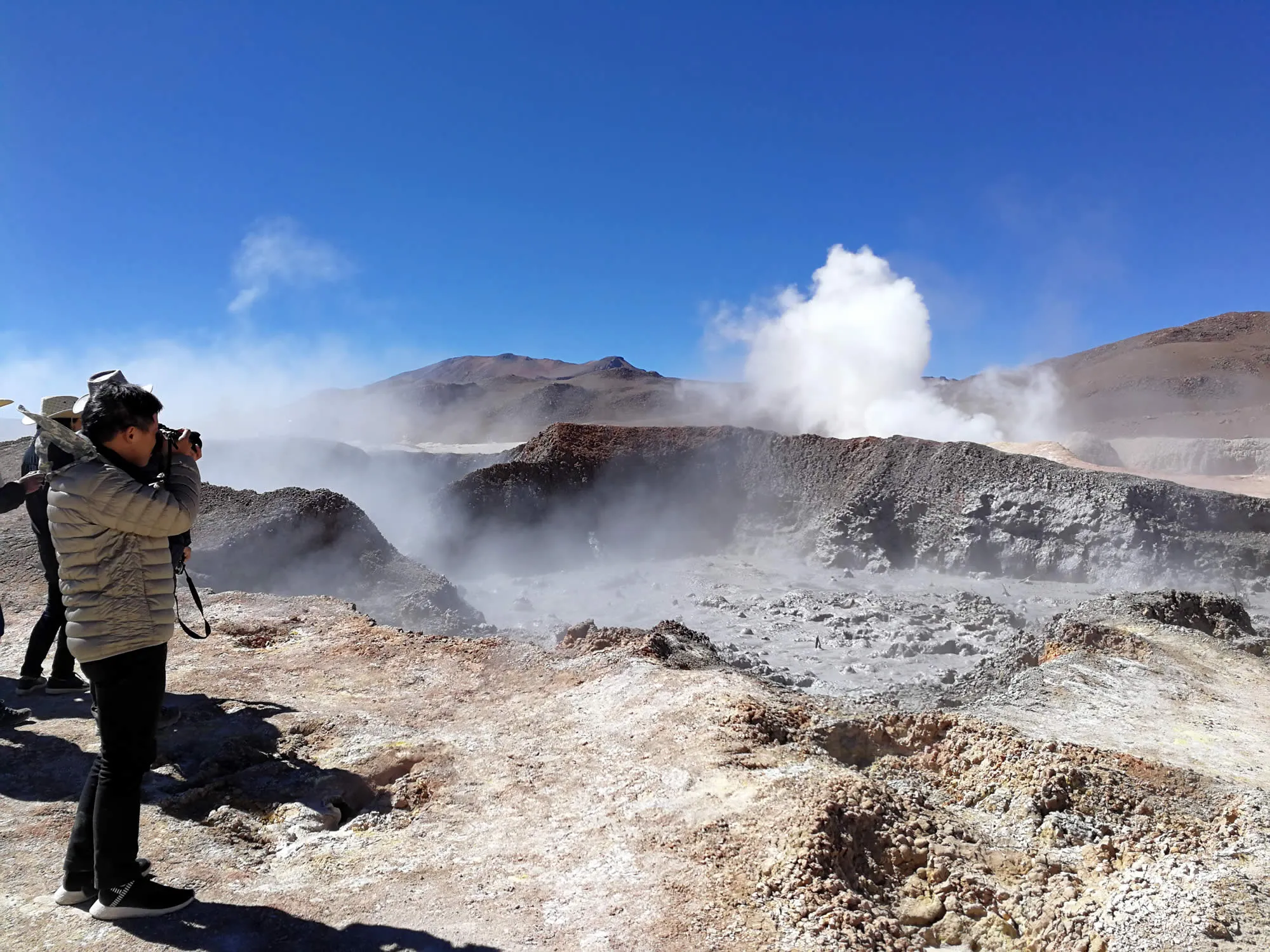
Sol de Mañana geysers, Eduardo Avaroa Reserve, Uyuni, Bolivia

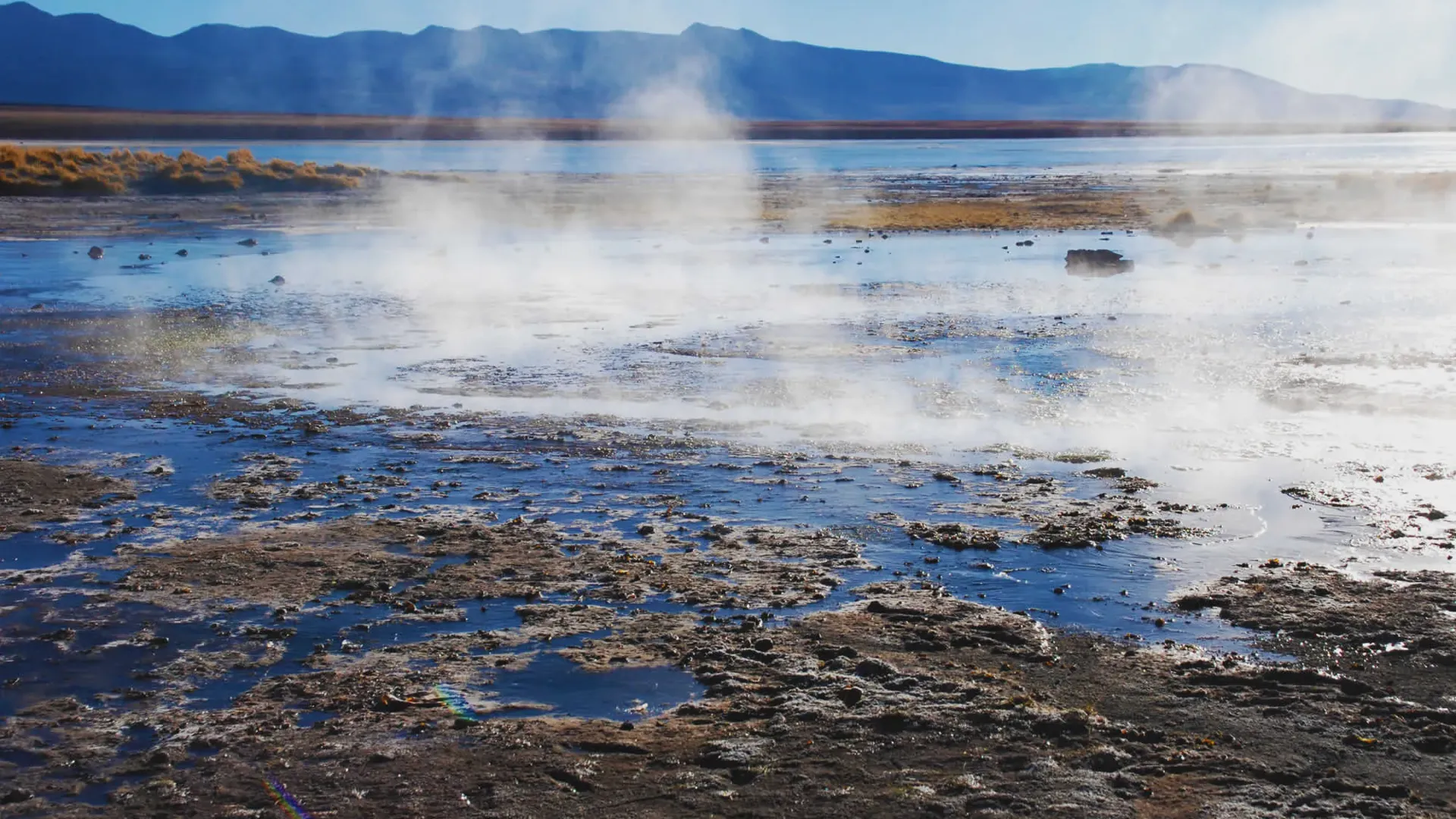
Sol de Mañana is an active geothermal field that is at its highest level during the early morning hours. Aim to arrive in time for sunrise and you will hear the rumble of the Earth's subterranean melting pot of minerals and liquids, before it gushes and spews the contents high up in the air through the crust. Be careful where you step though, as the ground is unstable and falling into the boiling mud can be fatal!
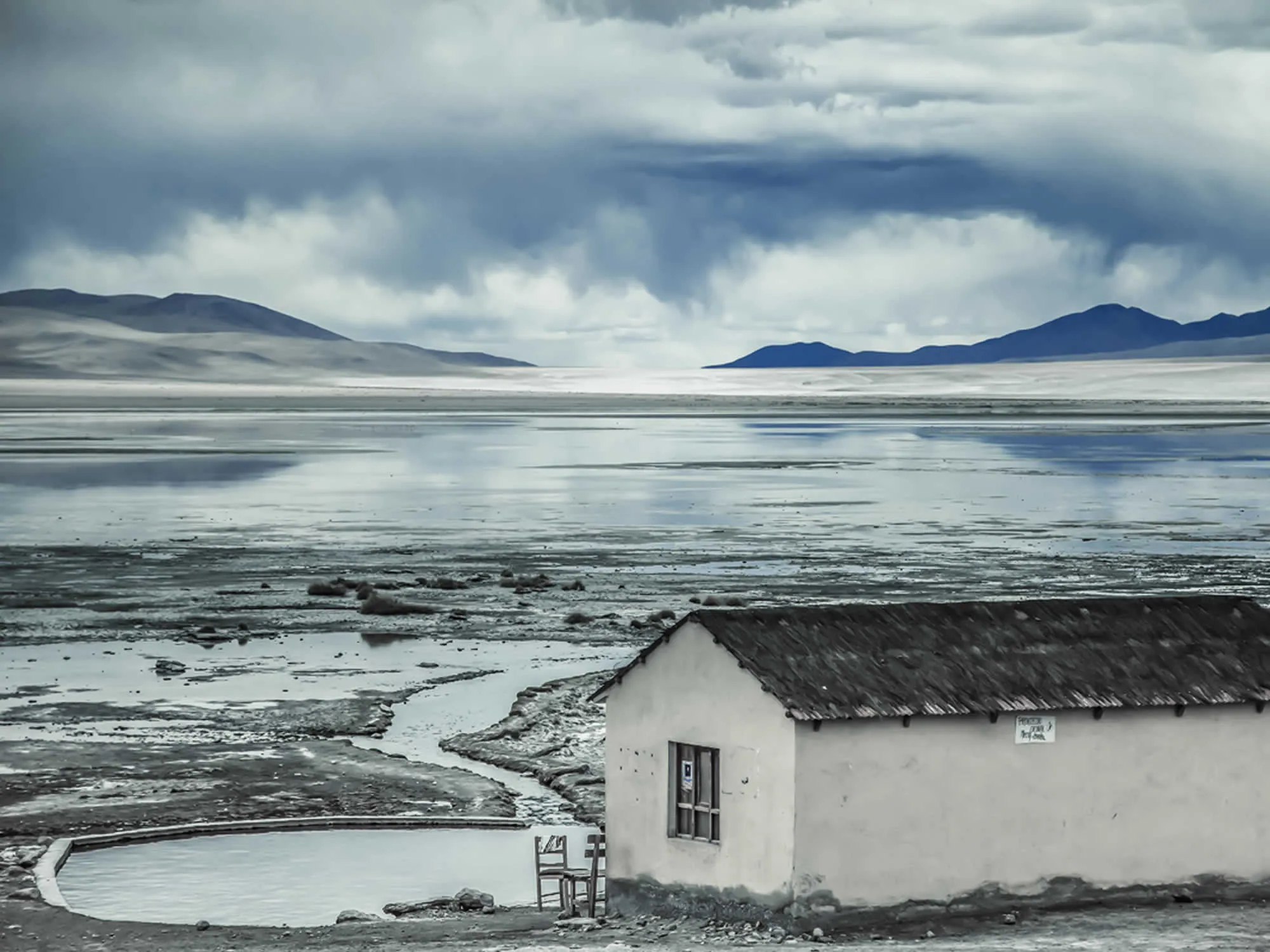
Polques thermal waters, Eduardo Avaroa Reserve, Uyuni, Bolivia

Not far, the hot springs of Aguas Termales de Polques will tempt you to change into your bathing suit in freezing temperatures. The setting of these hot water pools is both serene and surreal. The mineral-rich properties of the thermal water are said to relieve symptoms of arthritis and rheumatism.

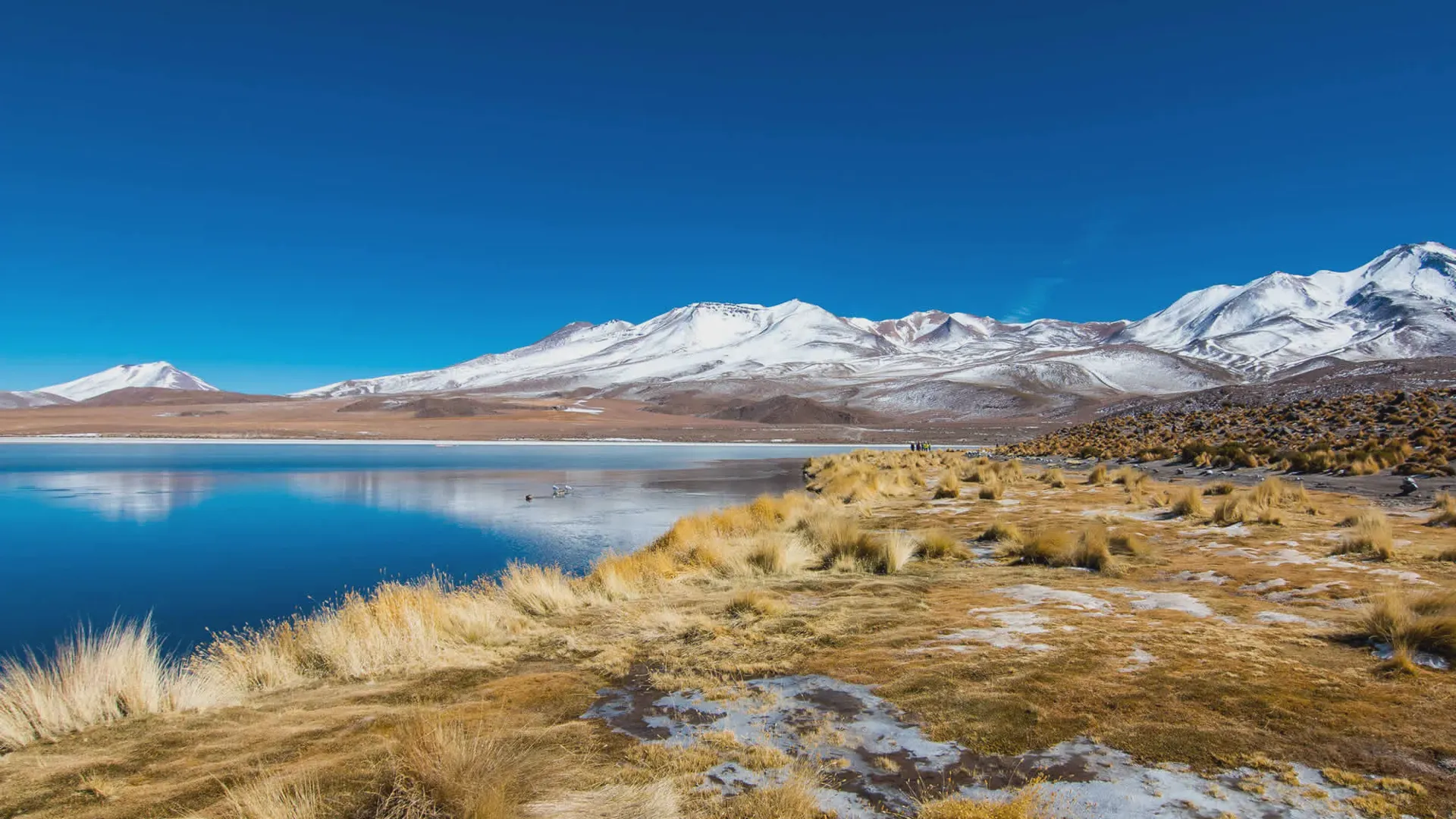
The Laguna Hedionda could not have a more descriptive name. Due to the sulfur in the lake the smell is horrible, but it is not very strong so it does not complicate the visit at all. The water is not fit for drinking and only flamingos live in it. It is a beautiful lagoon, full of flamingos and surrounded by snowy peaks.

Flora and Fauna
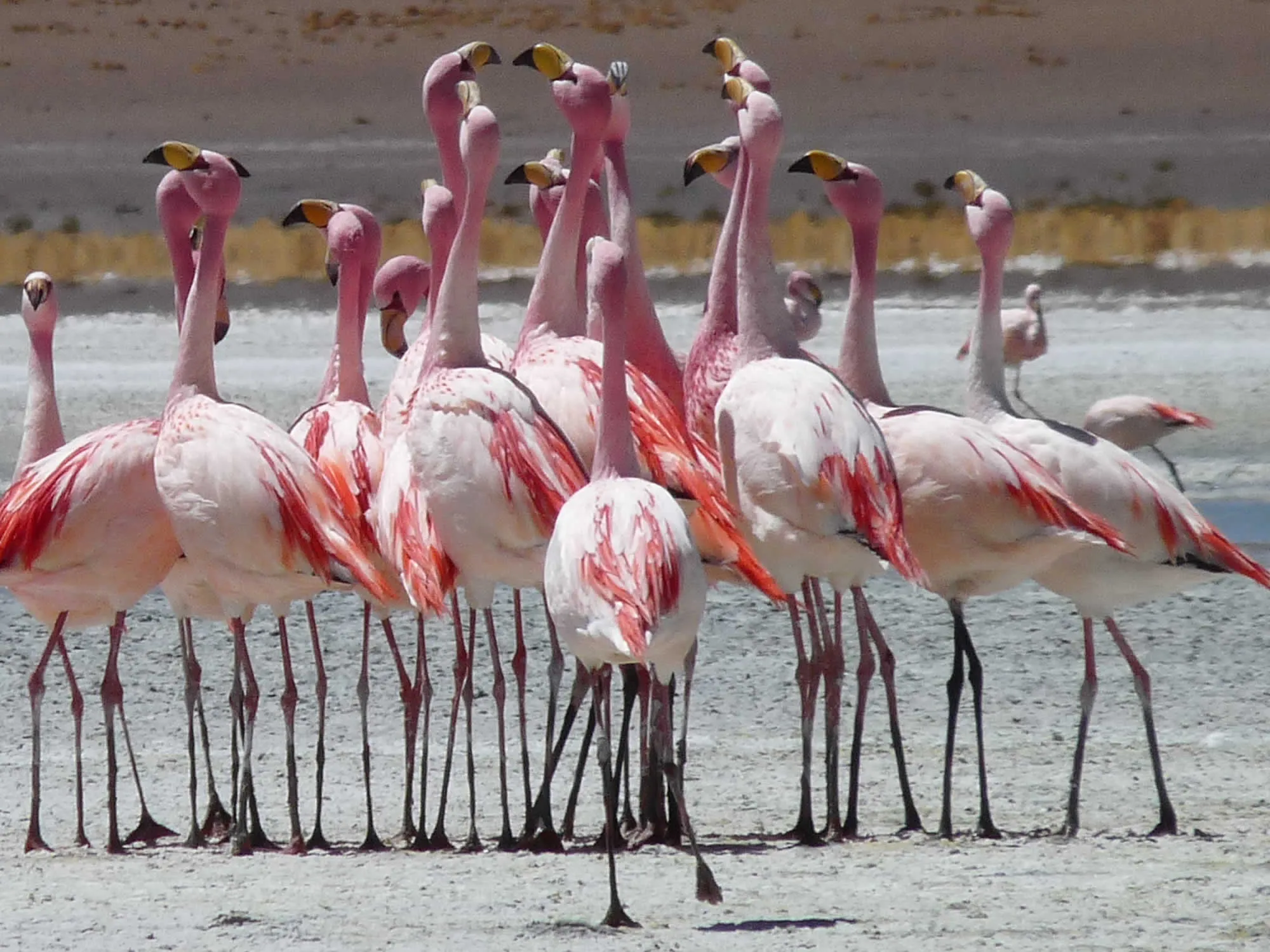
Flamingos, Eduardo Avaroa Reserve, Uyuni, Bolivia

No trip to the Reserve would be complete without a glimpse of a few flamingos, and three of the six global species of flamingo (Chilean, Andean and the endangered James flamingo) can be found here. Pigmentation in the algae found in these parts contains beta-carotene, which gives these flamingos their pink colouring. The flamingos flourish in this environment, despite temperatures often dropping to sub-zero.
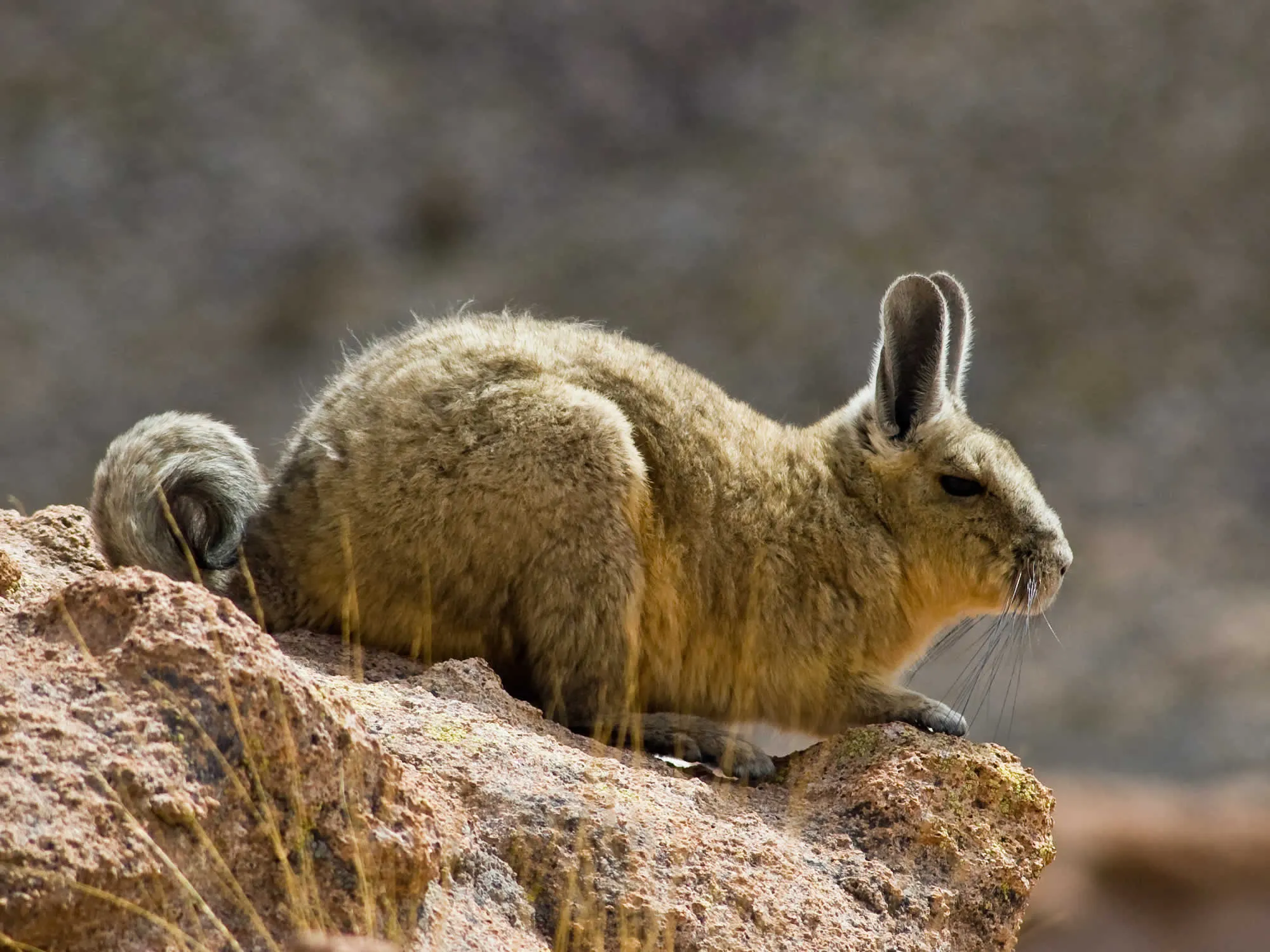
Viscacha, Eduardo Avaroa Reserve, Uyuni, Bolivia

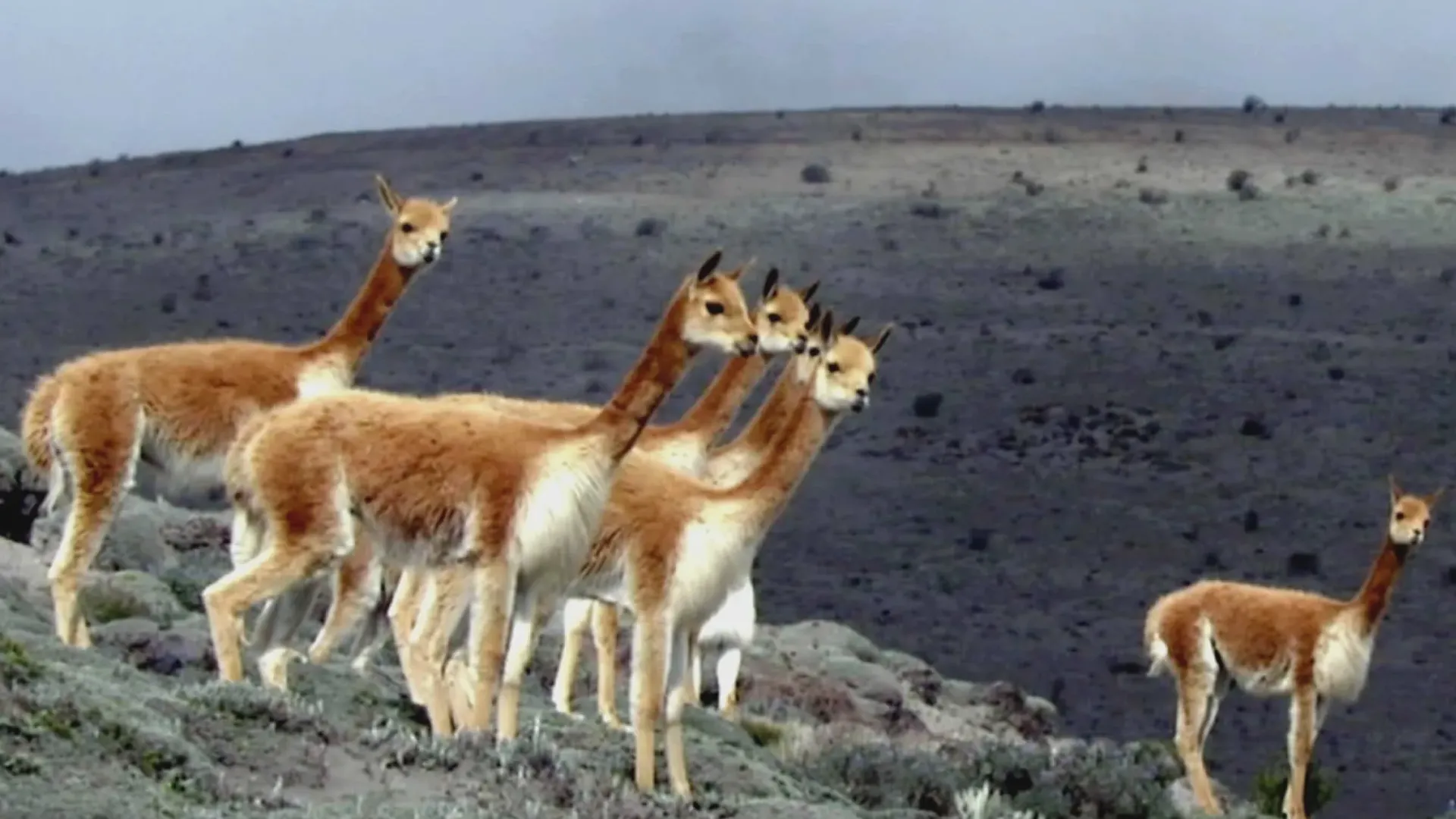
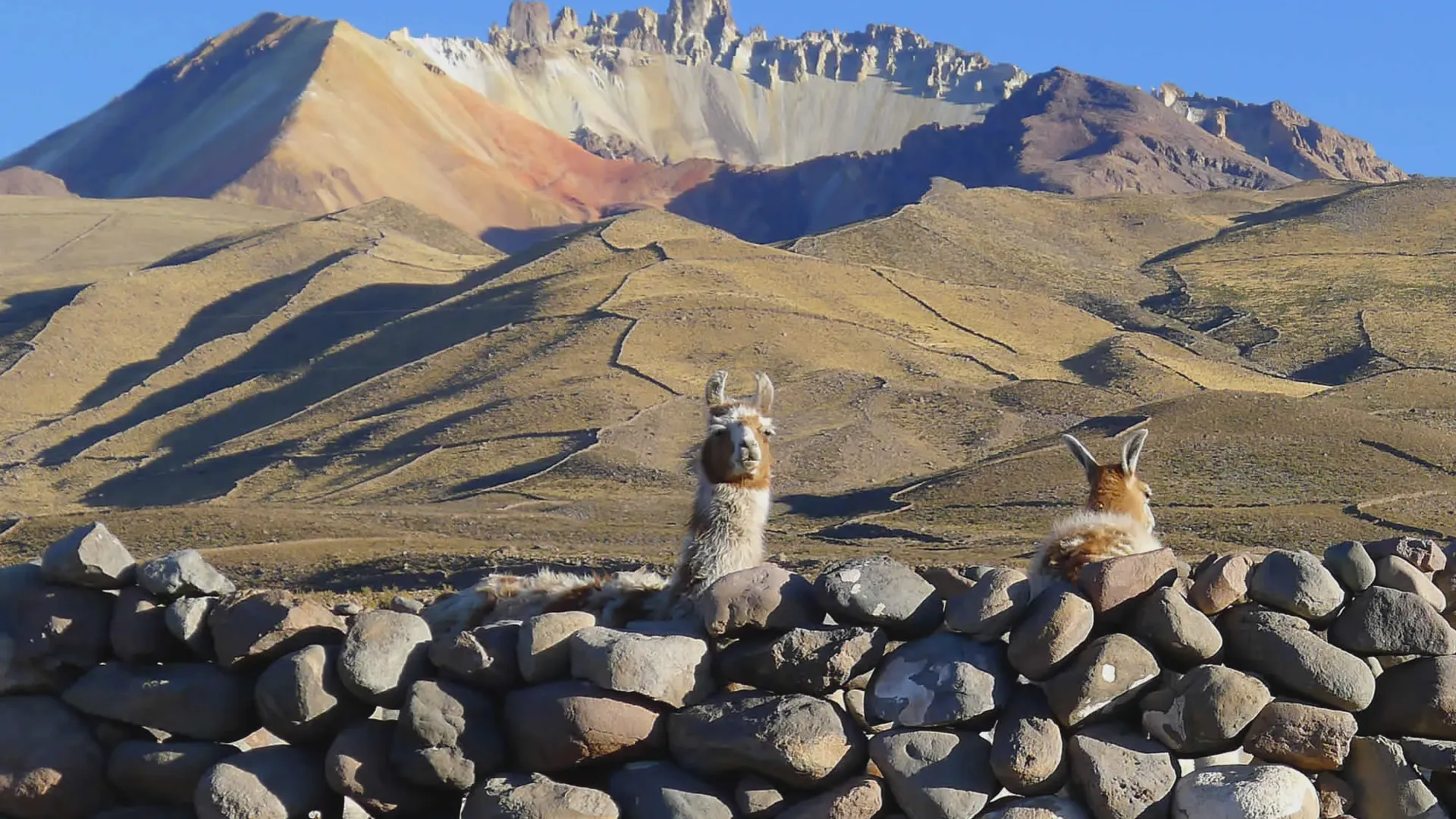
Lucky tourists can catch a glimpse of the cute, chinchilla-like viscacha. The are numerous free-roaming vicuñas. Herds of alpacas, llamas and guanacos are also common.
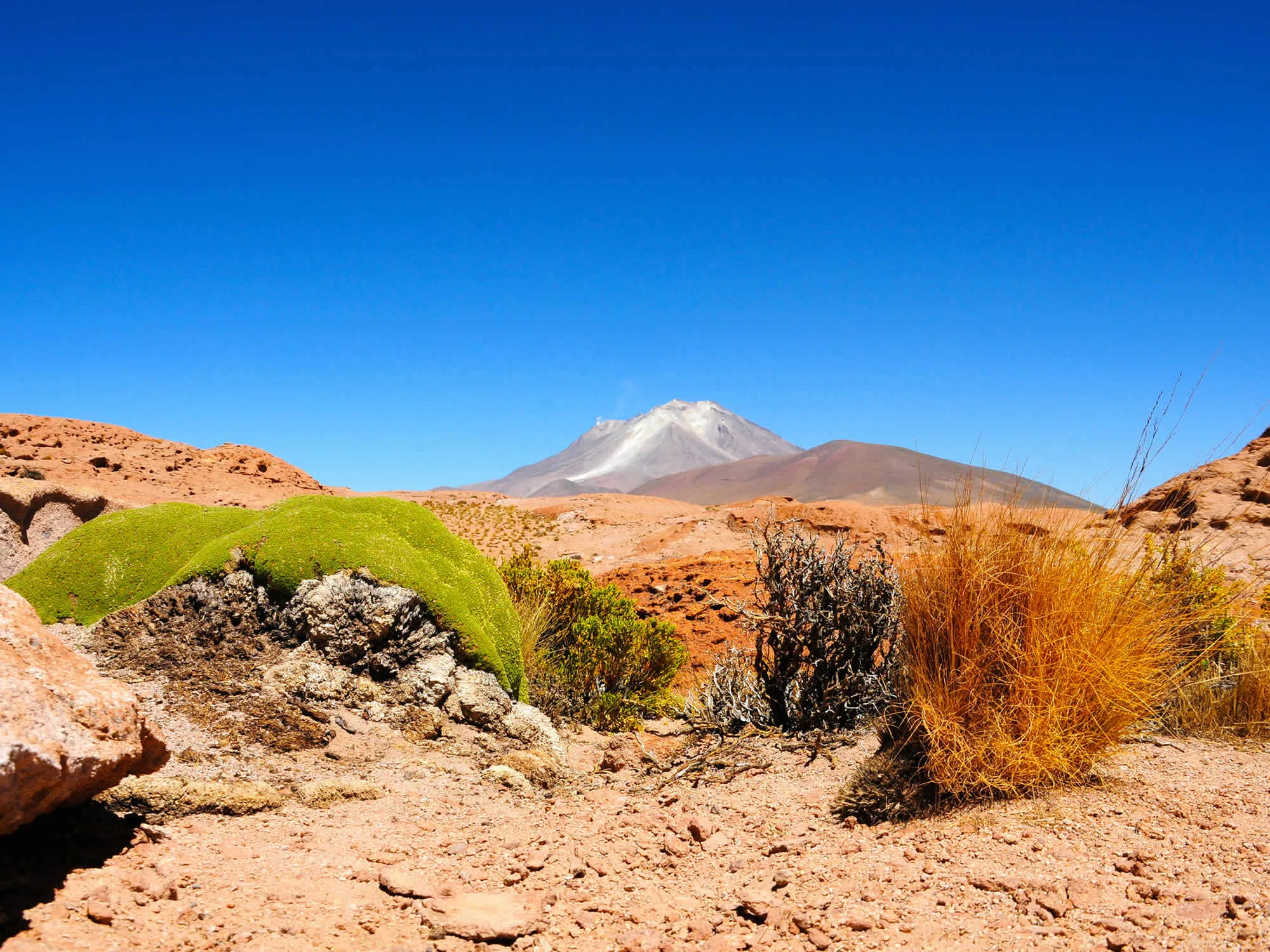
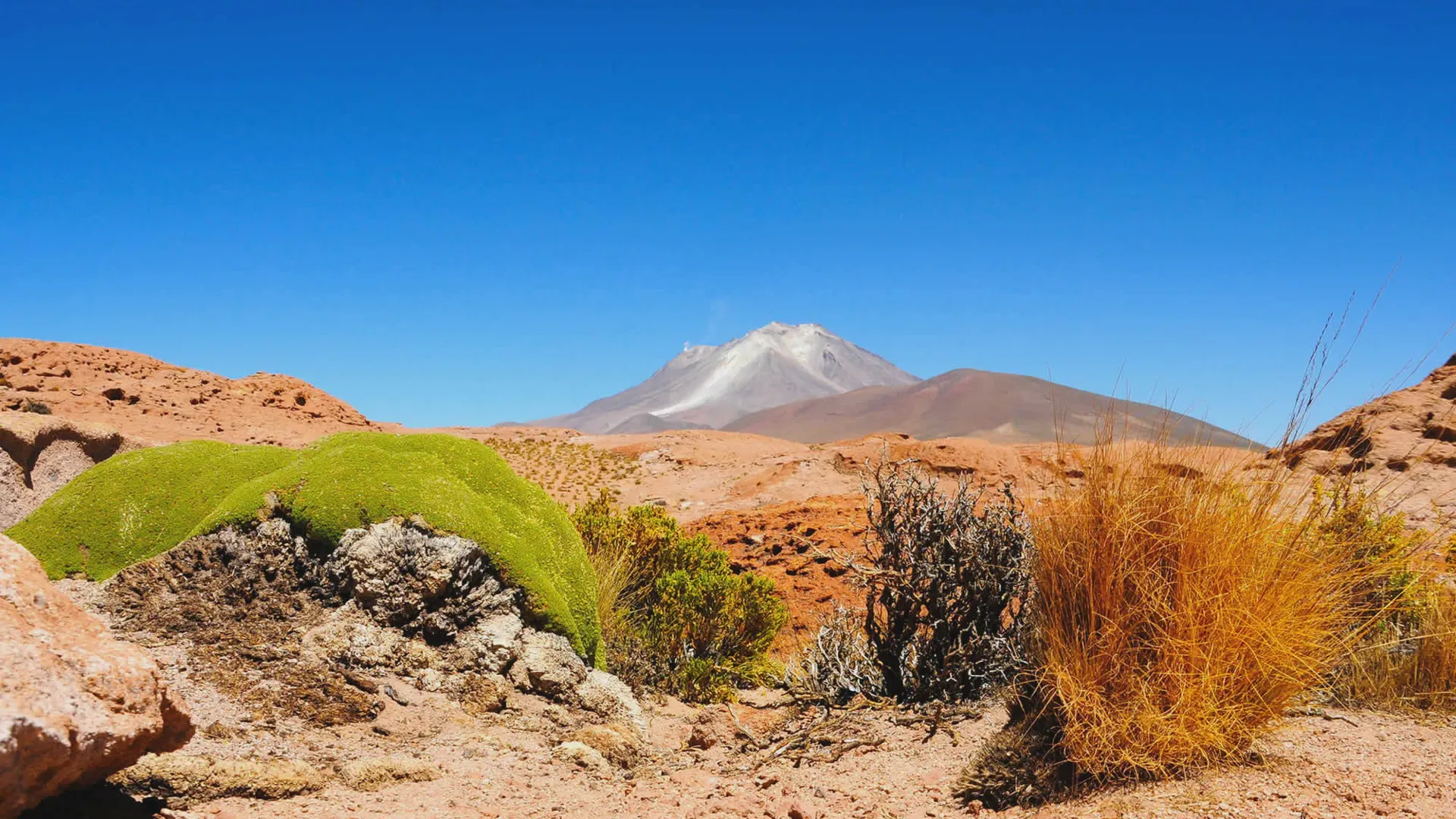
Yareta and the Ollague volcano, Eduardo Avaroa Reserve, Uyuni, Bolivia

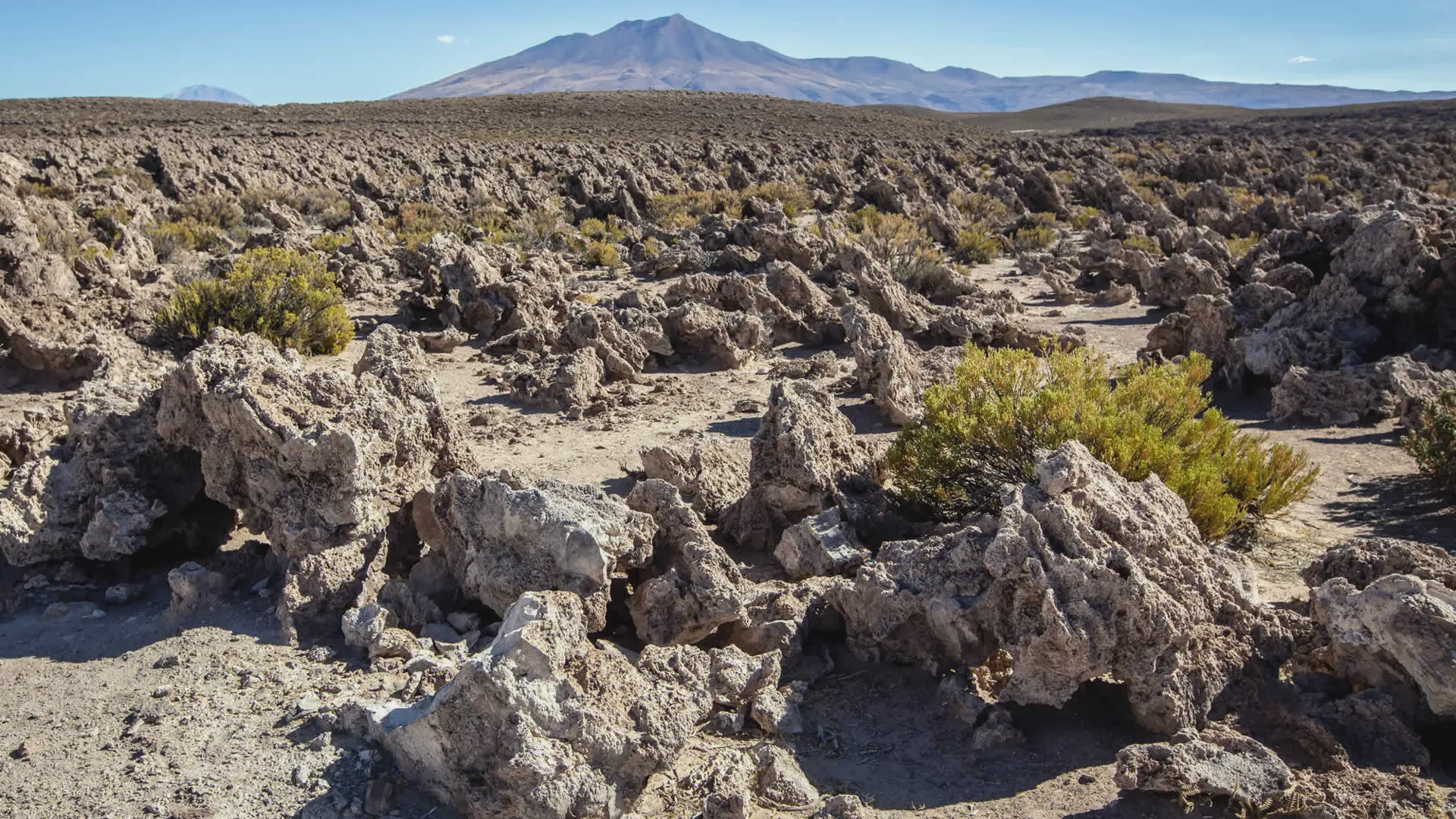
The fuzzy green lumps on the ground that dot the landscape are called yareta (or llareta), a hardy desert plant. It looks like a kind of mossy coating clinging onto groups of boulders, but don't be fooled by appearances or even touch – the firm mass you feel when you press down is not underlying rock, but thousands of densely-packed stems, and it's the tiny green buds that you see on the surface.

The most common plants here are amilies of tussock grass, or as it is commonly known in these parts, paja brava (tough straw). It propagates through clonal growth, where a single ancestor plant reproduces by cloning itself and spreading horizontally, often resulting in swirling clumps.
Tours Including This Destination

View All Tours →
San Pedro de Atacama to Uyuni Shared Tour
3 Days
Potosi
Featured
Potosi

San Pedro de Atacama to Uyuni Shared Tour

An attractive budget option for visiting the best attractions of the Uyuni area and the Eduardo Avaroa Reserve starting from San Pedro de Atacama.

San Pedro de Atacama - Uyuni - Calama Private Tour
3 Days
Potosi
Potosi

San Pedro de Atacama - Uyuni - Calama Private Tour

Take an exciting excursion into Bolivia from Chile and discover the wonders of the Uyuni Salt Flat and the Eduardo Avaroa Reserve!

Frequently Asked Questions

How many days do you need in Uyuni?

The honest answer is 3 days for most travellers. One day gives you the salt flat — the hexagons, Isla Incahuasi, and a sunset. Three days gives you the entire region: the salt flat on Day 1, then the Eduardo Avaroa National Reserve on Days 2 and 3 — Laguna Colorada, Sol de Mañana geysers, flamingos, and the chain of coloured lagoons that most people describe as the highlight of their Bolivia trip. If you genuinely only have one day, go — but know what you're choosing to skip.

What is the best month to visit Uyuni?

October is the best single month for most travellers. It is dry, warm enough at night to be comfortable, uncrowded compared to the June–August peak, and the daytime light is excellent for photography. If seeing the mirror effect is your priority, February offers the highest probability — but with more rain, crowds, and potential access restrictions.

Can you see the mirror effect in April?

Sometimes, yes. April is a transition month. In years with heavy rainfall, mirror conditions persist into early April. In drier years, the surface begins drying in late March. A knowledgeable local guide will know where remaining water pockets are. Late April is often recommended by Uyuni-based operators as a sweet-spot month — possible mirror, warmer nights, fewer tourists, and lower prices.

How cold does it get in Uyuni area?

During dry season nights in June, July, and August, temperatures regularly fall below -10°C and can reach -15°C on the open salt flat. Daytime is warmer — typically 13°C to 17°C in winter. From October through April, nights are significantly more manageable, rarely dropping below -5°C.

Is Uyuni worth visiting in July?

Yes, but go prepared. July is peak tourist season — book everything well in advance. The cold is serious and should not be underestimated. The trade-off is dry, clear skies and the best stargazing conditions of the year. If cold weather doesn't bother you and you've booked ahead, July is a spectacular month to visit

Where can I see flamingos in the Uyuni Salt Flat?

The flamingos are not on the Salar de Uyuni itself — they gather at Laguna Colorada in the Eduardo Avaroa National Reserve, approximately 4 hours south of Uyuni. Around 25,000 flamingos of three species (Chilean, Andean, and James) congregate there between November and March for breeding season. This reserve is visited on the standard 3-day Uyuni southwest circuit tour.

Can tours run year-round at the Uyuni Salt Flat and the Uyuni area?

Yes, with some limitations. Dry season tours operate across the full flat with no restrictions. Wet season tours adapt routes to water levels — some areas like Isla Incahuasi may be temporarily inaccessible after heavy rain. The Eduardo Avaroa Reserve southwest circuit occasionally closes during peak rainfall. Reputable operators monitor conditions daily and adapt accordingly.

Can you visit Incahuasi Island during the rainy season?

Generally no. When the salt crust dissolves into soft, muddy brine, heavy 4x4s risk sinking. Island access is typically restricted by park authorities between mid-January and late March.

Nearby Places & Attractions

Salar de Chiguana
Attraction

Salar de Chiguana

The Salar de Chiguana, not far from the border with Chile has a salt base, covered with brownish dust.

Salvador Dalí desert
Attraction

Salvador Dalí desert

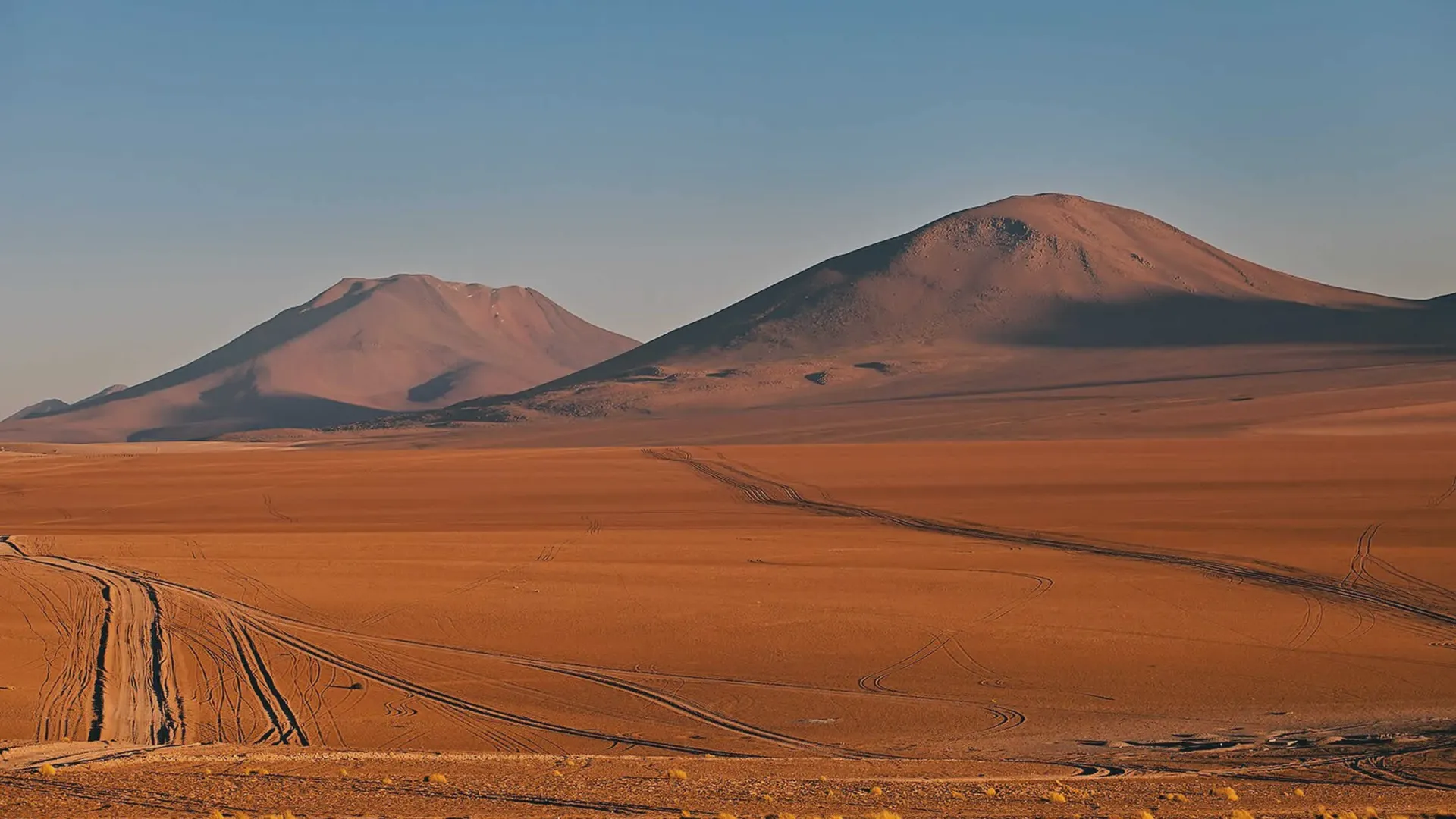
Salvador Dalí Desert (Desierto Salvador Dalí), also known as Dalí Valley (Valle de Dalí), is an extremely barren valley of southwestern Bolivia, in the Potosí Department.

Red Lagoon
Attraction

Red Lagoon

The Red lagoon (Laguna Colorada) is a shallow lake within the Eduardo Avaroa Andean Fauna National Reserve and close to the border with Chile. The lake is famous for its strong red colour caused by algae that provide food for large flocks of pink flamingos.

Green Lagoon
Attraction

Green Lagoon

Green lagoon (Laguna Verde) is a high-altitude mineral lake in the Eduardo Avaroa Reserve, known for its beautiful green color. It sits at the foot of 2 volcanoes, Licancabur and Juriques, which straddle the border with Chile and are reflected in the water when the weather is calm.

Rock Tree
Attraction

Rock Tree

The Rock Tree (Árbol de Piedra) is a tree-like rock formation in the Siloli Desert desert that offers great photo opportunities!

Andean Fauna
Attraction

Andean Fauna

The Andean fauna populating the surroundings of the Uyuni Salt Flat and the amazing lagoons is diverse and rich. During the most popular tours to the Eduardo Avaroa National Reserve it is possible to observe these species in their natural habitat and be amazed by nature.

Ready to visit Eduardo Avaroa National Reserve in Bolivia?

We can help you organize the perfect trip to this incredible destination.